
24 Hour Truck Tire Repair Near Me: What to Do
A truck tire failure at 2 a.m. can turn one late stop into a lost route. We help DFW fleets handle these calls with mobile repair, tire replacement, and roadside support at the truck’s location. Use these steps to stay safe, speed up dispatch, and get the right help without a tow.
Table of Contents
Step 1: Move to a Safe Location and Assess the Tire Problem
Yes, safety comes first when you need 24 hour truck tire repair near me. If the truck still moves, slow down with care and guide it toward a wide shoulder, truck stop, yard, or other firm area away from traffic.
Turn on the hazard lights. Set the parking brake once you stop. If you’re on a busy road, stay inside the cab when possible. If you must exit, move behind a guardrail or another solid barrier. Roadway safety guidance also stresses the risk of traffic around stopped commercial vehicles.
Look at the tire from a safe distance. Do not kneel beside moving traffic or reach under the truck. Check for a shredded tread, a sidewall bulge, a large cut, or a damaged wheel.
Do not pull out a nail or screw. A small tread puncture may be repairable, but a sidewall tear usually needs replacement. A tire driven while flat may need an internal inspection before anyone decides on a repair.

Write down the tire position if you can do so safely. Is it on the steer axle, drive axle, or trailer? If the tire size is visible, record it too. Note the nearest exit, mile marker, cross street, or GPS pin.
Key Takeaway:Get away from traffic first. Then collect only the tire details you can see without entering an unsafe work area.
Step 2: Call a 24-Hour Mobile Truck Tire Service
Need service? Choose a provider that comes to the truck, not one that leaves you arranging a tow. Mobile commercial tire repair brings the tools and replacement tire to the roadside, yard, warehouse, or job site.
For Dallas-Fort Worth fleets, 24 Hour Roadside Tire Service from The Tire Specialist covers on-site repair, replacement, and roadside assistance for commercial trucks and fleet vehicles. We focus on the tire problem first, which keeps the dispatch request clear.
Ask whether the provider is available at the time you need help. “24/7” should include nights, weekends, and holidays. Also ask for an arrival estimate before you approve the dispatch.
Response time depends on traffic, weather, the truck’s location, and the number of active calls. Some providers publish a target, while others do not. In either case, ask what the current estimate is for your exact location.
Inventory matters too. A service truck may carry common commercial sizes, but no provider should guess about your tire. Ask if the team can support your truck or trailer size and load needs before it heads out.
The Tire Specialist is a focused DFW option for fleets that need mobile commercial tire help. A wider service menu can sound useful, but it does not prove faster dispatch. Ask for the details that affect downtime instead.
Pro Tip:Save your fleet’s unit IDs, common tire sizes, and route map in one dispatch sheet. That cuts back-and-forth during a night call.
Step 3: Share the Details Needed for a Fast Dispatch
Yes, the right dispatch details can make 24 hour truck tire repair near me much easier to arrange. Start with the truck’s exact location, not just the name of a highway.
Send the nearest exit, mile marker, cross street, yard name, or GPS pin. Then share the unit number and vehicle type. Confirm the tire position and ask whether a repair is safe before assuming replacement is needed. You can also review our 24-hour mobile tire repair information .
Tell dispatch what you can see. Use plain terms such as “shredded tread,” “sidewall cut,” “slow leak,” or “flat after hitting debris.” Mention any vibration, pulling, or loud thump the driver felt before stopping.
Truck, tractor, trailer, or specialty vehicle
Steer, drive, or trailer tire position
Tire size and load information, if visible
Visible damage and whether the tire is still holding air
Whether the unit is loaded
Whether the truck can move safely
Tell the service team if the truck is blocking a lane or sitting on soft ground. A safe work area changes the equipment and approach. It also helps dispatch decide whether the unit needs extra roadside support.
If you manage several units, give the fleet contact and driver contact the same update. One clear record prevents a driver from repeating the same details to several people. It also helps the maintenance team log the event later.
Mobile Diesel Truck Repair lists coverage across Dallas, Fort Worth, Wylie, Denton, McKinney, Plano, Frisco, Garland, Addison, Carrollton, Mesquite, Richardson, Irving, Grand Prairie, Arlington, Lewisville, nearby suburbs, and rural routes. That broader footprint shows why coverage should be confirmed by exact location, especially outside the central metro.
We also need to be clear about what is not always published. Providers may leave response guarantees, certifications, and other service details off their public pages. Ask those questions directly before dispatch when the situation allows.
Step 4: Confirm the On-Site Repair and Get Back on the Road
It’s simple: don’t release the truck until the tire and wheel have been checked. When the technician arrives, keep the driver and other workers outside the work zone.
Give the technician the unit details and explain what happened. We’ll inspect the tire before choosing repair or replacement. A small tread puncture may allow an approved repair if the casing remains sound. Sidewall damage, a shredded tire, or damage from driving while flat often points to replacement.
Ask what the technician found. You should know whether the tire was repaired or replaced, whether the wheel showed damage, and whether another tire needs attention. A quick explanation helps the driver spot a repeat problem later.
After the work, confirm the tire has the correct air pressure for the vehicle. Check that the wheel sits correctly against the hub and that the fasteners were tightened. Correct inflation and regular inspection matter for safe tire use.
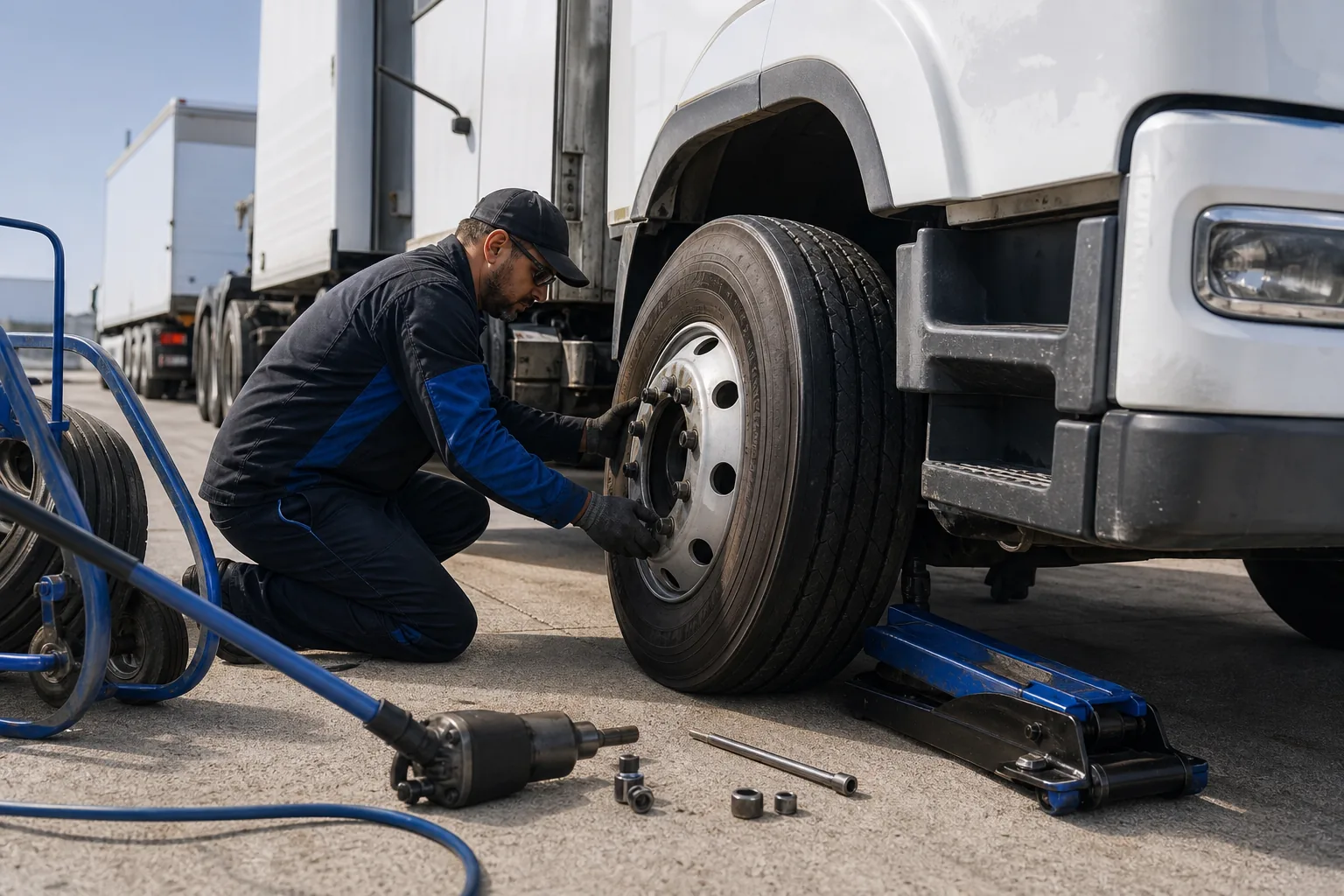
Take a short, cautious drive only when the technician says the truck is ready. Stop if the driver feels strong vibration, pulling, or a repeated thump. Stop as well if air pressure drops again.
Log the repair in your fleet maintenance program. Record the unit, tire position, damage, repair or replacement decision, and any follow-up work. That record helps you spot repeat failures and plan tire checks during scheduled downtime.
For a fleet manager, the job ends when the truck is safe and the event is documented. A fast fix that leaves no service record can become the same problem on the next route.
FAQ
Is 24 hour truck tire repair near me available at night?
Yes, many mobile commercial tire services provide emergency coverage at night, but you should confirm after-hours dispatch before relying on it. Ask whether the team handles tractor-trailers and fleet vehicles. Then share the exact location, tire position, and visible damage so dispatch can give a useful arrival estimate.
Can a truck tire be repaired on the roadside?
Yes, a truck tire may be repaired roadside when the damage is limited and the tire structure remains safe. A technician must inspect the tread, sidewall, casing, and wheel first. Sidewall damage or a tire that was driven while flat may require replacement instead. Do not attempt a roadside repair beside active traffic.
How fast can a mobile truck tire service arrive?
Arrival time depends on location, traffic, weather, equipment, and current demand. Some DFW providers publish a target, while others disclose no fixed response time. Ask for the current estimate for your GPS location. A clear estimate helps fleet managers plan driver updates and customer notifications.
Do mobile services repair trailer tires too?
Yes, commercial mobile tire providers may support trailer tires as well as tractor tires, but confirm this during dispatch. Share the axle position and tire size if you can read them safely. Tell the provider whether the trailer is loaded. That detail helps the team prepare for the work area and the vehicle’s condition.
What should I tell a 24-hour truck tire repair service?
Give the service your exact location, unit number, vehicle type, tire position, tire size, and damage description. Also say whether the truck is loaded and whether it can move. These details help the provider send the right equipment and avoid delays caused by missing information.
Conclusion
Move away from traffic, record the tire details, and contact a mobile provider that supports commercial trucks. For DFW fleets, The Tire Specialist can arrange on-site repair or replacement at the truck’s location. Save our service page with your fleet dispatch notes, then send the exact GPS position when a tire failure occurs.


Comments