
Are Retread Tires Safe? What You Need to Know
Retread tires get a bad rap, but the data tells a different story. Here’s the straight‑up truth about safety, cost, and the rules you need to follow.
Safety and Reliability of Retread Tires
Retread tires meet the same safety standards as brand‑new tires. Research has found that failures stem from road hazards and under‑inflation, not the retreading process itself. Inspection analysis backs this claim with a large debris sample across multiple states.
Fleet operators who track pressure and rotate tires see fewer blowouts. Studies indicate that many failures are due to low pressure, regardless of tire type.
When a retread passes rigorous inspections, its casing is as strong as a new tire’s. That’s why major fleets trust retreads for drive‑axle positions.
Key Takeaway:Proper maintenance levels the safety gap between retreads and new tires.
We recommend working with a certified retreader. The Tire Specialist partners with vetted facilities to ensure each retread meets safety specs.
How Retread Tires Are Made: Step‑by‑Step Process
The retread process starts with a visual and ultrasonic check of the used casing. Any hidden damage causes the tire to be discarded.
Next, the old tread is buffed away, leaving a clean surface. A rubber “liner” is applied, then a new tread pattern is wrapped around the casing. The assembly goes into an autoclave where heat and pressure cure the rubber into a smooth bond. Regulatory guidelines specify the exact requirements for this step.
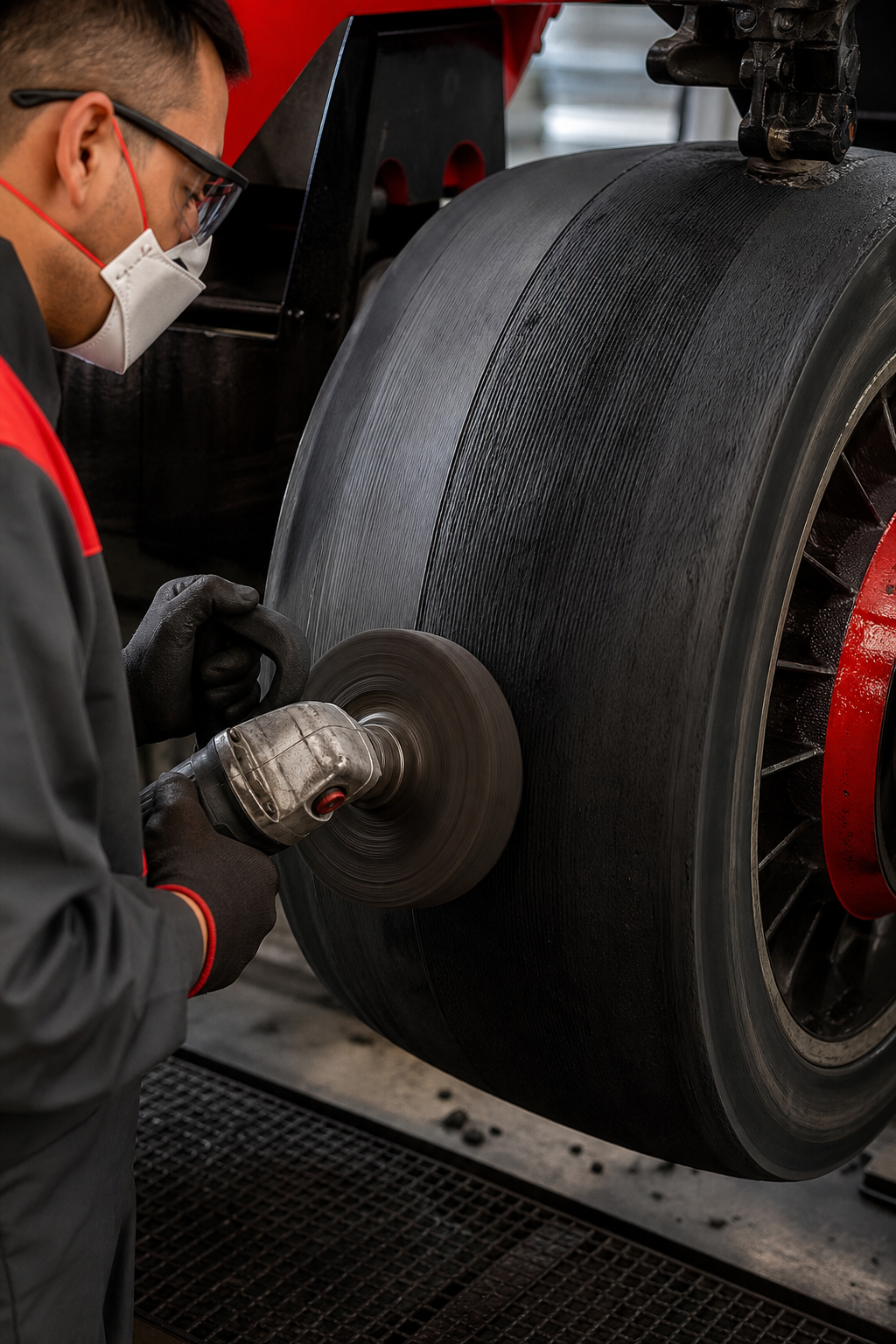
After curing, the tire undergoes a final inspection for tread depth, uniformity, and sidewall integrity. Only tires that pass every checkpoint earn the appropriate regulatory label.
Our mobile service team can verify that the retreads on your trucks came from a facility that follows this exact protocol.
Cost Savings and Environmental Benefits
Retreading saves between 30 % and 50 % of the cost of a new tire. Industry analyses note that fleets collectively save billions each year by choosing retreads for drive and trailer positions.
48%of all replacement tires in North America are retreads
Beyond dollars, retreading cuts the demand for raw rubber, oil, and carbon black. Retreading avoids the energy use of producing a brand‑new tire, lowering greenhouse‑gas emissions.
Because the casing is reused, landfill waste drops dramatically. One study shows that a single retread can keep a tire out of a landfill for up to 500 % longer than a disposable new tire.
For fleets, the double win of lower expense and a smaller carbon footprint makes retreads a smart choice.
We see this play out daily when we swap worn casings for fresh tread on Dallas‑area trucks.

Legal Status, Regulations, and Government Mandates
Retreaded tires are legal on most truck axles, with some restrictions for certain vehicle types.
Federal fleets, including many military and government vehicles, are mandated to use retreads where possible. This policy cuts taxpayer spending and meets sustainability goals.
When buying retreads, ask your supplier for certification and a traceable barcode. Those details prove the tire meets all regulatory checkpoints.
Our team stays up‑to‑date on the latest regulations, so you never have to wonder if a retread is compliant.
Best Use‑Cases, Maintenance Tips, and Warranty Expectations
Retreads shine on drive‑axle and trailer positions where mileage runs high. Steer‑axle tires, which steer the vehicle, are best kept new because they bear the most stress.
Maintain retreads by checking pressure weekly, rotating tires per the manufacturer’s schedule, and inspecting for sidewall cuts after each long haul. A simple tread‑depth gauge can confirm you stay above the legal minimum.
Most manufacturers offer a 1‑year warranty on retreads, provided the casing passes their inspection. If a retread fails within that period, the retreader typically replaces it at no cost.
For Dallas‑based fleets, heat‑resistant compounds help retreads last longer in hot summer weather. The Tire Specialist can match the right compound to your routes.
Pro Tip: Keep a log of each retread’s generation count. After two or three cycles, the casing may fatigue, and it’s safer to retire the tire.
FAQ
Are retread tires as safe as new tires?
Yes , when they pass required safety inspections, retreads perform just as safely as new tires. Studies show that most failures are due to road hazards, not the retreading process.
Can I use retread tires on the front (steer) axle?
No , most fleet policies avoid retreads on steer axles because they handle steering forces. Regulations allow them only on light‑load steer positions, but new tires are the safer standard.
How much money can a fleet save with retreads?
Typically 30 % to 50 % per tire. For a 14‑wheel tractor‑trailer, that can mean thousands of dollars each retread cycle, especially when you factor in reduced landfill fees.
Do retread tires affect fuel efficiency?
Not significantly. Fuel economy depends more on tread design and proper inflation. A well‑maintained retread can match the fuel performance of a new tire.
What warranty do retread tires carry?
Most reputable retreaders offer a one‑year warranty covering tread separation and premature wear, assuming the tire is used within the recommended load and pressure limits.
How do I know if a retread is high quality?
Look for an identification tag, a traceable barcode, and documentation of a thorough inspection. Certified retreaders publish their rejection rates; a lower rate usually means stricter quality control.
Conclusion
Retread tires are safe when you choose a certified provider and follow proper maintenance. Read our guide on fleet retreading benefits to plan your next tire strategy.


Comments