
Best Fleet Roadside Assistance Services for Dallas‑Fort Worth
Truck breakdowns cost time and money. Below are the 10 fleet roadside assistance services that keep Dallas‑Fort Worth fleets rolling.
1. The Tire Specialist (Our Top Pick) , Mobile fleet roadside experts in Dallas‑Fort Worth
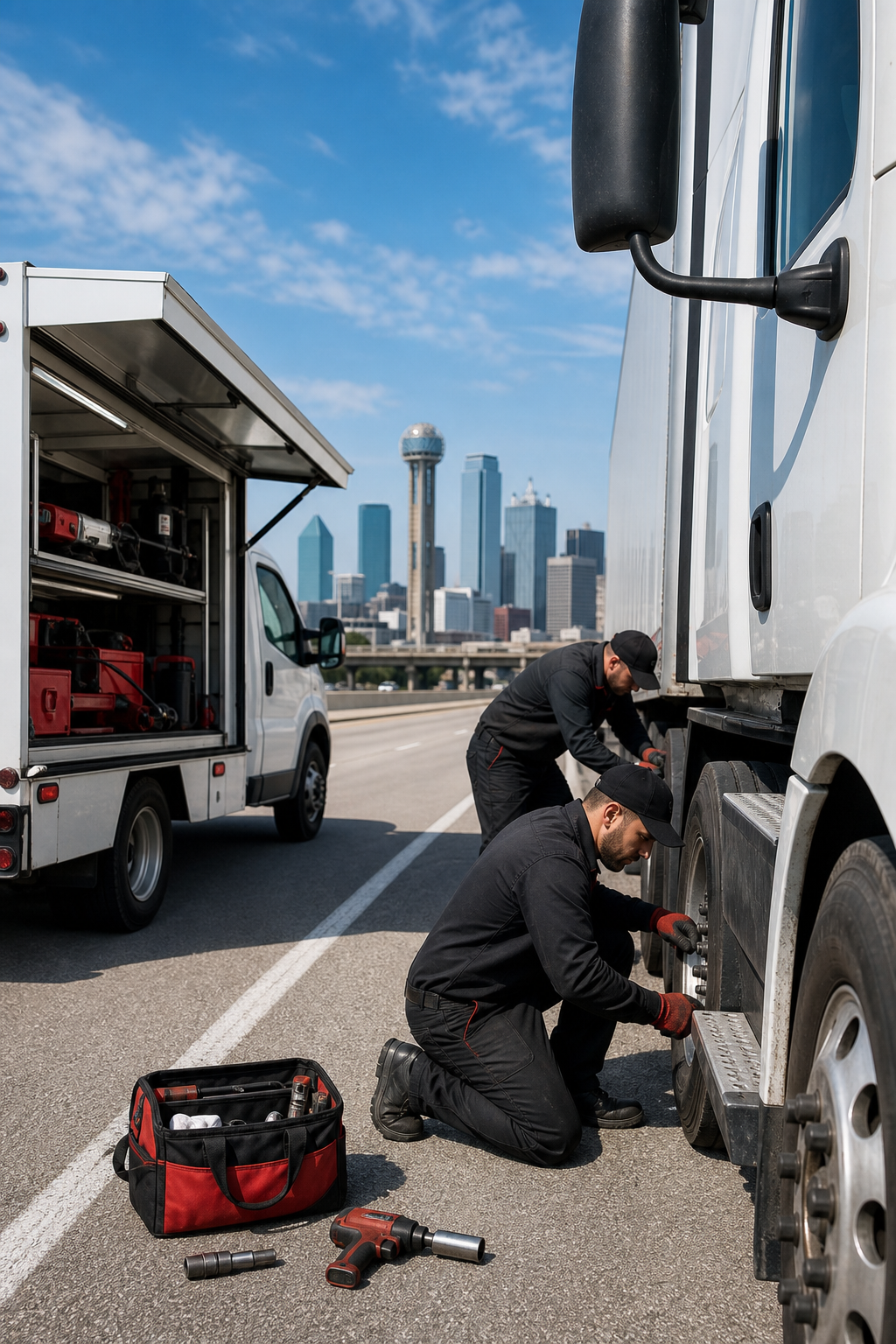
The Tire Specialist is a Dallas‑Fort Worth mobile tire service that repairs, replaces, and assists commercial trucks on‑site. It’s built for fleets that need fast, reliable help without a tow. Our research shows a dedicated on‑site team and a proven local network give the quickest response in the DFW area. For deeper insight into how on‑site tire repair minimizes fleet downtime, see our On‑Site Tire Repair guide . Learn more about our top mobile tire repair services for commercial trucks in Dallas . The crew is TIA‑certified, so they follow industry safety standards. They cover the entire DFW metro, from Irving to Arlington, and can handle flat‑tire repairs, blowouts, and valve replacements right where the truck sits.
One caveat: the service focuses on tires and basic roadside fixes, so major mechanical failures still need a tow partner.
2. Nationwide fleet roadside assistance provider, broad coverage with recognized brand
Many nationwide fleet roadside assistance providers offer services for vehicles of all sizes, from delivery vans to 18‑wheelers. Their programs typically include tire changes, battery jumps, fuel delivery, and lockout assistance. With locations across the country, drivers can rely on a familiar network when traveling beyond their home state. Some programs include a limited number of service calls per year and real‑time updates via a mobile app, though response‑time guarantees may not be publicly disclosed.

3. Integrated insurance‑linked assistance
A major insurer runs a white‑label roadside platform that ties directly into its insurance policies. When a driver requests help, the system uses AI to match the nearest qualified provider and sends status updates via SMS. The service works 24/7 and includes a digital tracker that shows the provider’s ETA. This integration can simplify billing for fleets that already carry the insurer’s coverage. A limitation is that the offering is tied to that insurer’s policies, so non‑insured fleets need a separate contract.
4. Dedicated fleet platform with AI‑driven dispatch
A dedicated fleet platform runs a cloud‑based dispatch system that uses AI to predict the fastest provider for each call. The system records every rescue in a digital chart, giving fleet managers full visibility into response times and costs. Clients report average on‑scene times under 60 minutes for heavy‑duty calls.
The platform’s focus on data helps fleets audit high‑cost towing events and keep expenses in check. However, it requires integration with existing telematics, which can add setup effort for smaller operators.
Key Takeaway:AI‑driven dispatch can shave minutes off response times, but you need the right data feeds.
5. Insurance‑linked roadside assistance, low‑cost add‑on for insured fleets
Insurance‑linked providers bundle emergency roadside service with auto policies for a modest annual fee. The mobile app lets drivers request help with a few taps, covering flat‑tire changes, jump‑starts, and lockout support. Because the service is tied to the insurance policy, billing is simplified. A downside is that coverage limits vary by state, and some heavy‑duty services may be excluded. Fleets should verify that the plan includes Class 8 trucks before signing up.
6. Comprehensive fleet roadside assistance
A comprehensive fleet roadside assistance program built for fleets using integrated logistics platforms. The service includes a mobile app for drivers to request help, and can dispatch a substitute vehicle if needed. Services include towing, minor repairs, and remote diagnostics. Because the provider owns its service network, response times are fast on major corridors. The program is most valuable for companies that already have an integrated logistics contract; others may find the integration effort unnecessary.
7. Comprehensive Fleet Roadside Assistance Service
The service provides a data‑driven health platform that includes roadside assistance. Plans may include mileage limits, with higher tiers offering more coverage. The analytics help fleets predict failures before they happen, reducing unplanned stops. Mileage caps can be a limitation if a vehicle breaks down far from a depot, so larger fleets might consider higher‑coverage options.
8. Mobile tire repair service, specialized tire repair and quick‑swap solutions
A fleet‑focused mobile unit carries a stock of common commercial tire sizes. Technicians can perform on‑site patching, plug‑ins, or full tire swaps, getting the truck back on the road in under two hours. The service shines on short‑notice calls, but it’s limited to tire work; any brake or engine issue still requires a tow.
9. Nationwide fleet roadside assistance, Broad geographic reach with 24/7 dispatch
Nationwide fleet roadside assistance providers claim coverage across the contiguous United States and operate a 24/7 dispatch center. The network typically includes thousands of service providers, giving trucks a high chance of finding a nearby helper. Availability can be sparser in remote areas, which may lead to longer wait times after hours. The upside is the peace of mind of broad reach; the downside is the variability in provider quality across regions.
Tech‑focused provider with real‑time tracking
A tech‑first roadside platform gives fleet managers a live map of every active service call. Drivers receive push notifications with ETA updates, and the dashboard logs all expenses for easy accounting. The real‑time visibility helps managers coordinate multiple calls at once, though the service relies on a stable cellular signal, which can be spotty in rural areas.
How to Choose the Right Provider , Quick Checklist
Confirm the provider covers the specific truck class you run (e.g., Class 8).
Check for a response‑time guarantee or average on‑scene time.
Verify 24/7 availability in the regions and corridors your fleet travels.
Look for integration with your telematics or fleet management software.
Consider tiered pricing versus flat‑rate plans based on your call volume.
Pro Tip:Ready to keep your fleet moving? Try The Tire Specialist free →
FAQ
What does fleet roadside assistance include?
Fleet roadside assistance typically covers tire repair or replacement, battery jump‑starts, fuel delivery, lockout help, and light mechanical fixes. Some plans also add towing for heavy‑duty trucks.
How fast can I expect a response in Dallas‑Fort Worth?
Local specialists like The Tire Specialist often guarantee arrival within 60‑90 minutes, while national networks may average 2‑4 hours depending on location and time of day.
Can I use my insurance provider’s roadside service for my fleet?
Yes, many insurers, including GEICO, bundle roadside help with auto policies, but you should verify that the coverage includes commercial truck classes and that response‑time guarantees meet your operational needs.
Is there a difference between 24/7 and business‑hours only plans?
24/7 plans ensure help any time a driver breaks down, which is vital for night‑time routes. Business‑hours only plans may be cheaper but can leave you stranded after hours.
Do I need a separate contract for each state my trucks travel in?
No, most nationwide providers cover all 48 states, but you should ask about regional provider density and any after‑hours surcharges that could affect remote routes.
Conclusion
For Dallas‑Fort Worth fleets, The Tire Specialist delivers the fastest on‑site tire repair and a clear local focus. Start a free trial on our website to lock in rapid response for your trucks.


Comments