
Best 24/7 Roadside Assistance for Trucks

A flat or dead battery can stop a truck, a load, and a delivery plan in minutes. Here are the best options and who each one fits.
Table of Contents
National truck roadside networks: Extensive multi-state dispatch
Fleet-focused roadside programs: One contact for recurring truck support
Mobile commercial tire providers: Flat repair and replacement at the truck
Heavy-duty towing providers: Recovery for disabled commercial vehicles
Technology-enabled roadside platforms: Tracking and remote diagnostics
Local emergency truck service companies: Fast regional arrival
1. The Tire Specialist: DFW mobile truck tire response
Yes, The Tire Specialist is our recommendation for fleets based in Dallas-Fort Worth. We provide on-site repair, tire replacement, and roadside assistance for commercial trucks and fleet vehicles.
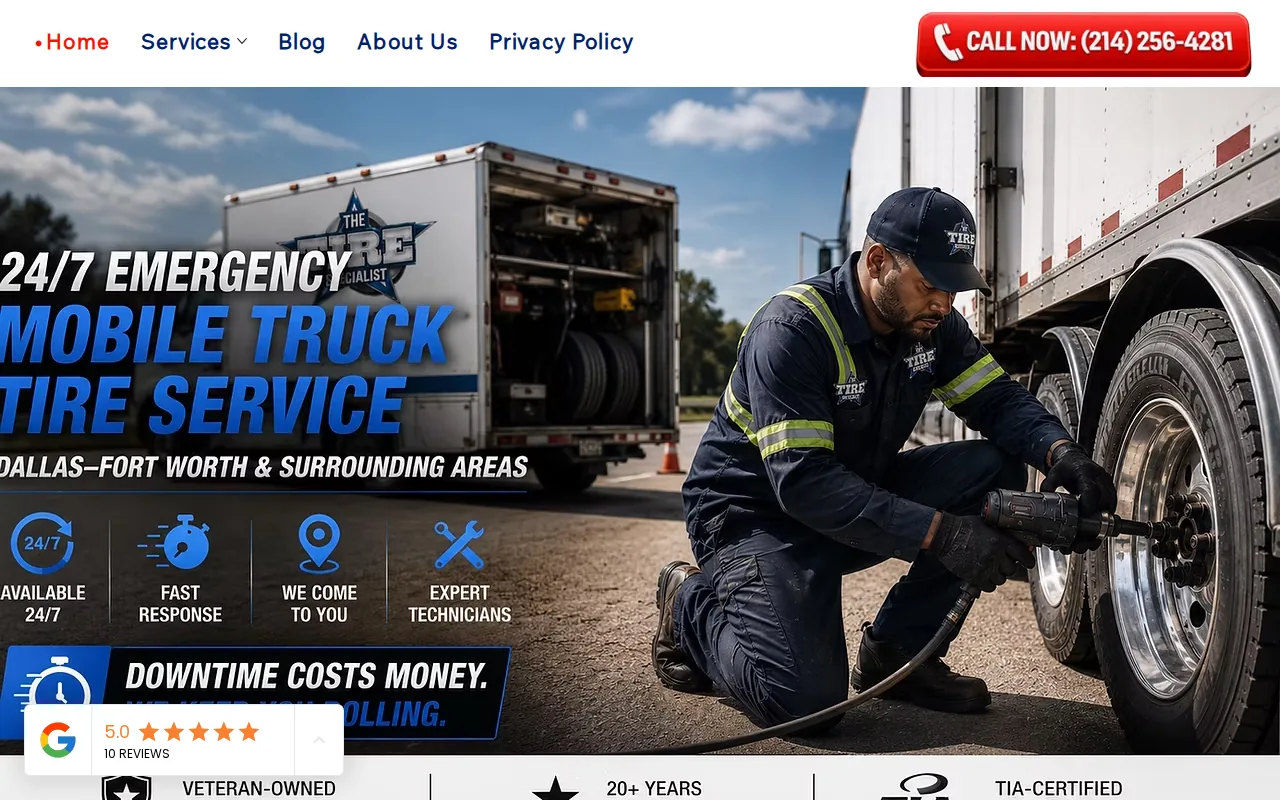
That defined service scope matters during a blowout. A fleet manager can send one service request for a flat repair or on-site tire replacement instead of searching for a shop while a driver waits. We focus on the DFW corridor, so this option makes the most sense for trucks that run there often.
We also make the service fit the truck. A commercial tire response differs from a passenger-car call, especially when the vehicle sits near active traffic or carries a time-sensitive load. Our 24 Hour Roadside Tire Service page explains the type of mobile help fleets can request.
Best fit:DFW fleets that want a truck-focused regional partner. The limit is geographic coverage, since a Dallas-Fort Worth specialist won't replace a nationwide dispatch network.
2. AAA: Broad U.S. and Canada roadside coverage
AAA is a broad coverage choice for 24/7 roadside assistance for trucks across the U.S. and Canada.
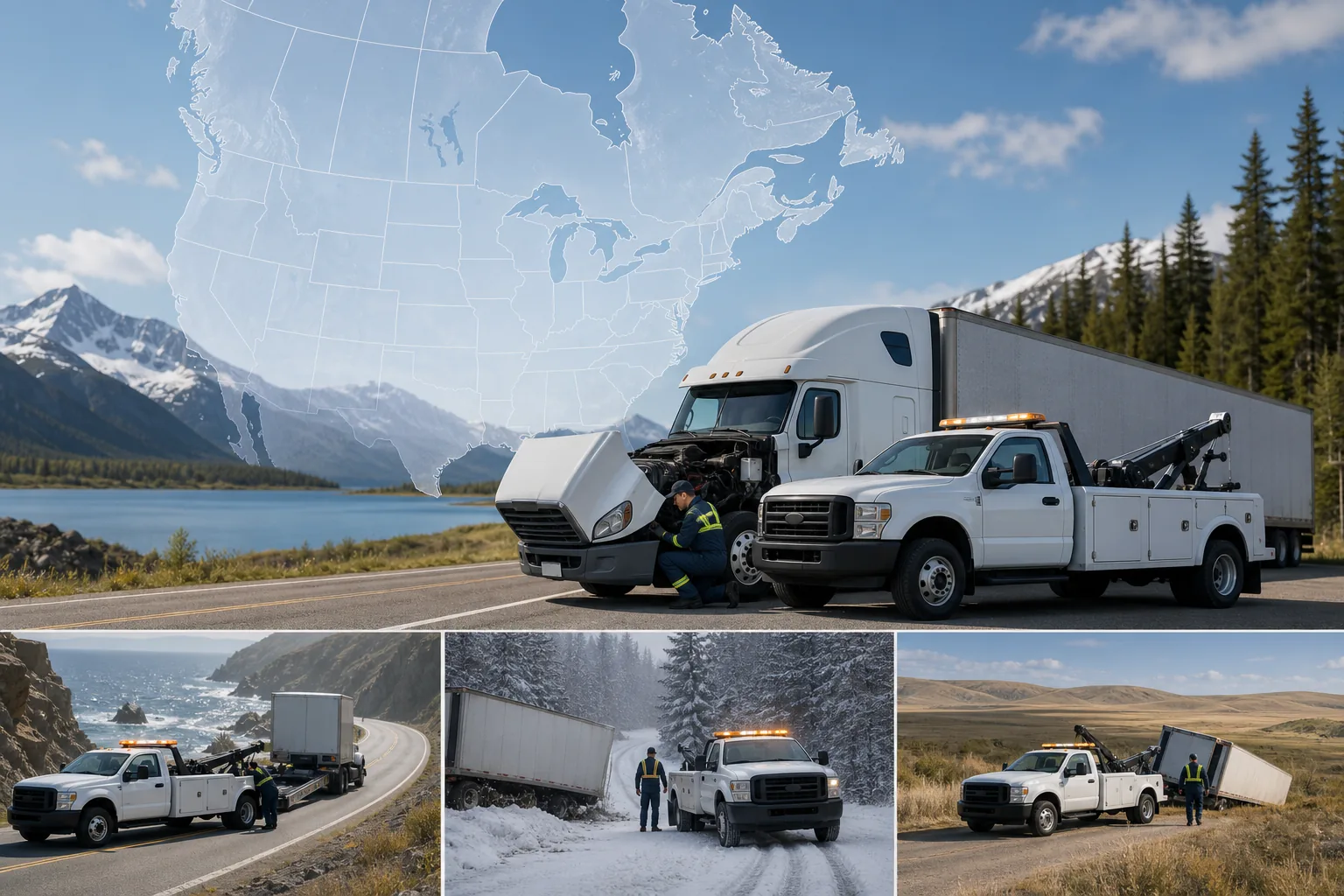
AAA also supports digital roadside requests. That can help a driver share the vehicle location and track the technician while waiting. The service is tied to membership, and benefits can vary by club and membership level, so fleet managers should confirm that commercial truck use fits the selected plan.
We like AAA when geographic reach matters more than a truck-tire specialty. Its service description includes battery testing, jump-starts, and battery replacement, though battery work isn't available for every vehicle or location.
The trade-off is simple. Broad coverage can help a driver far from home, but a fleet still needs to confirm vehicle limits and the type of tow available.
3. Service Tire Truck Centers: Northeast mobile tire support
Service Tire Truck Centers, or STTC, is a Northeast option for mobile commercial tire work. Its mobile units are described as supporting tire replacement, retread installation, casing work, and high-strength chemical repair.
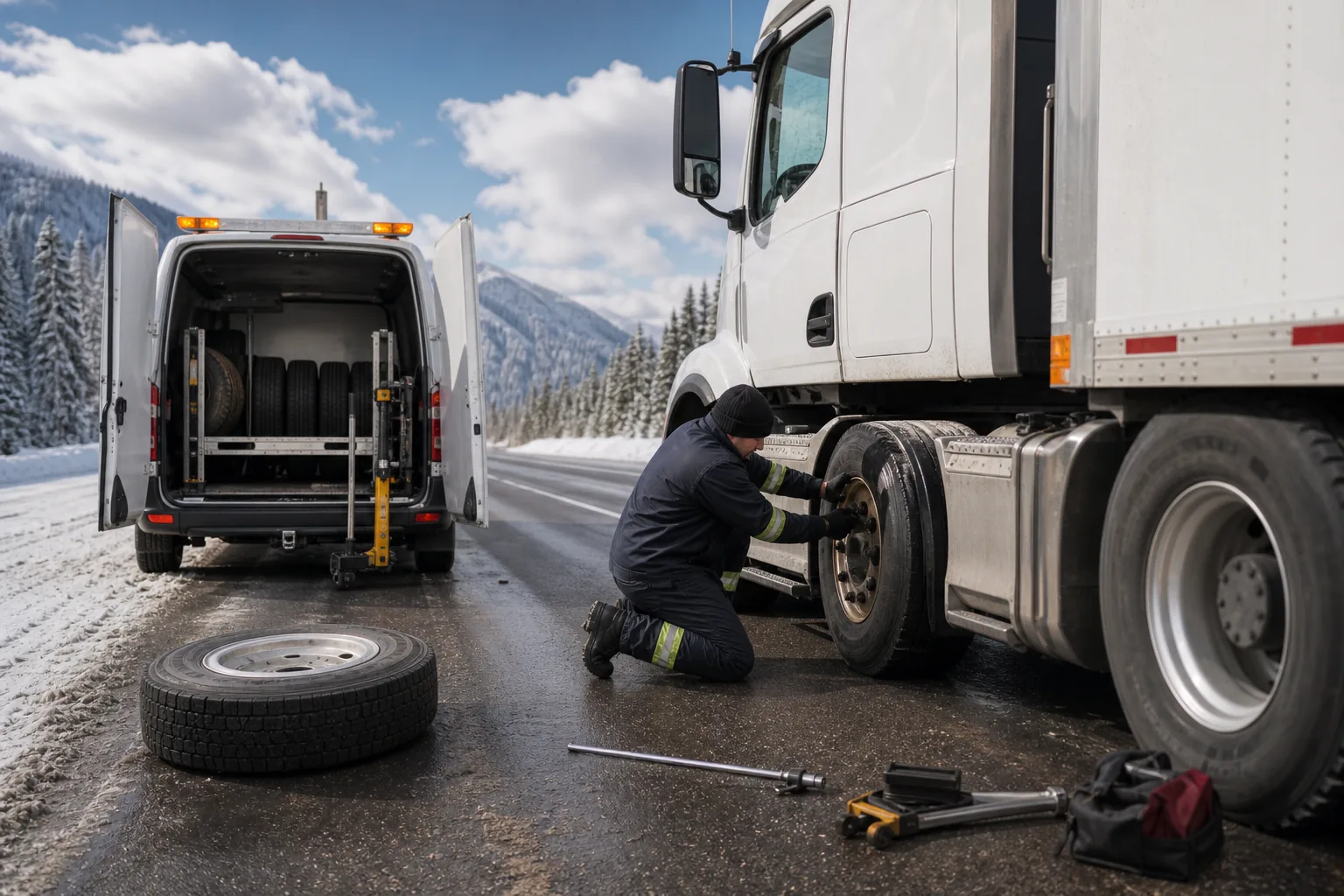
That service mix fits fleets that need more than a spare tire. Retread installation involves fitting a prepared tread onto a suitable casing, while casing work deals with the tire body beneath the tread. Fleet teams should ask which repairs can happen roadside and which require a shop visit.
STTC also describes dispatch updates that include status information, estimated arrival times, and digital tickets. Those records can help a maintenance manager track an open roadside event instead of relying on scattered driver messages.
We see STTC as a strong regional fit when tire support and service records matter. Its Northeast focus makes it less useful for a fleet that mainly runs in Texas or the Mountain West.
4. Winkler Brothers Towing: Wyoming towing-focused response
Winkler Brothers Towing is a Wyoming option for towing services.
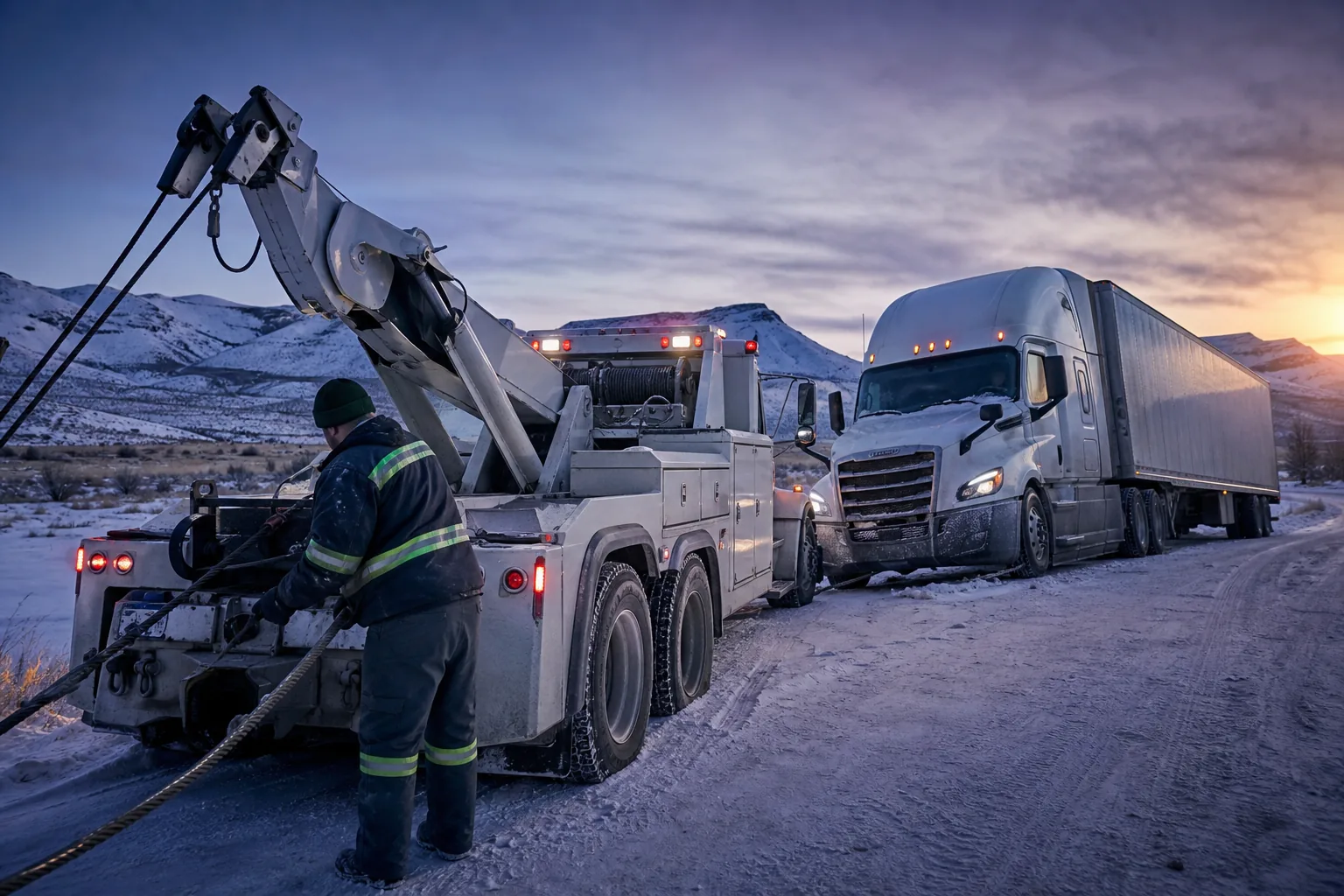
This option makes sense when the main need is towing. Fleet managers should confirm the equipment available for the specific tractor, trailer, or recovery scene.
We would place Winkler on a regional emergency list for Wyoming operations. We wouldn't treat it as a national fleet program. Coverage is in Wyoming, and fleet managers should confirm the equipment available for the specific tractor, trailer, or recovery scene.
For trucks moving through the area, regional knowledge can be useful. The right question is whether the provider can handle the vehicle and the conditions at the scene.
5. National truck roadside networks: Extensive multi-state dispatch
National truck roadside networks give fleets one dispatch path when a truck breaks down far from its home terminal. These programs may connect drivers with in-house technicians or screened third-party providers.
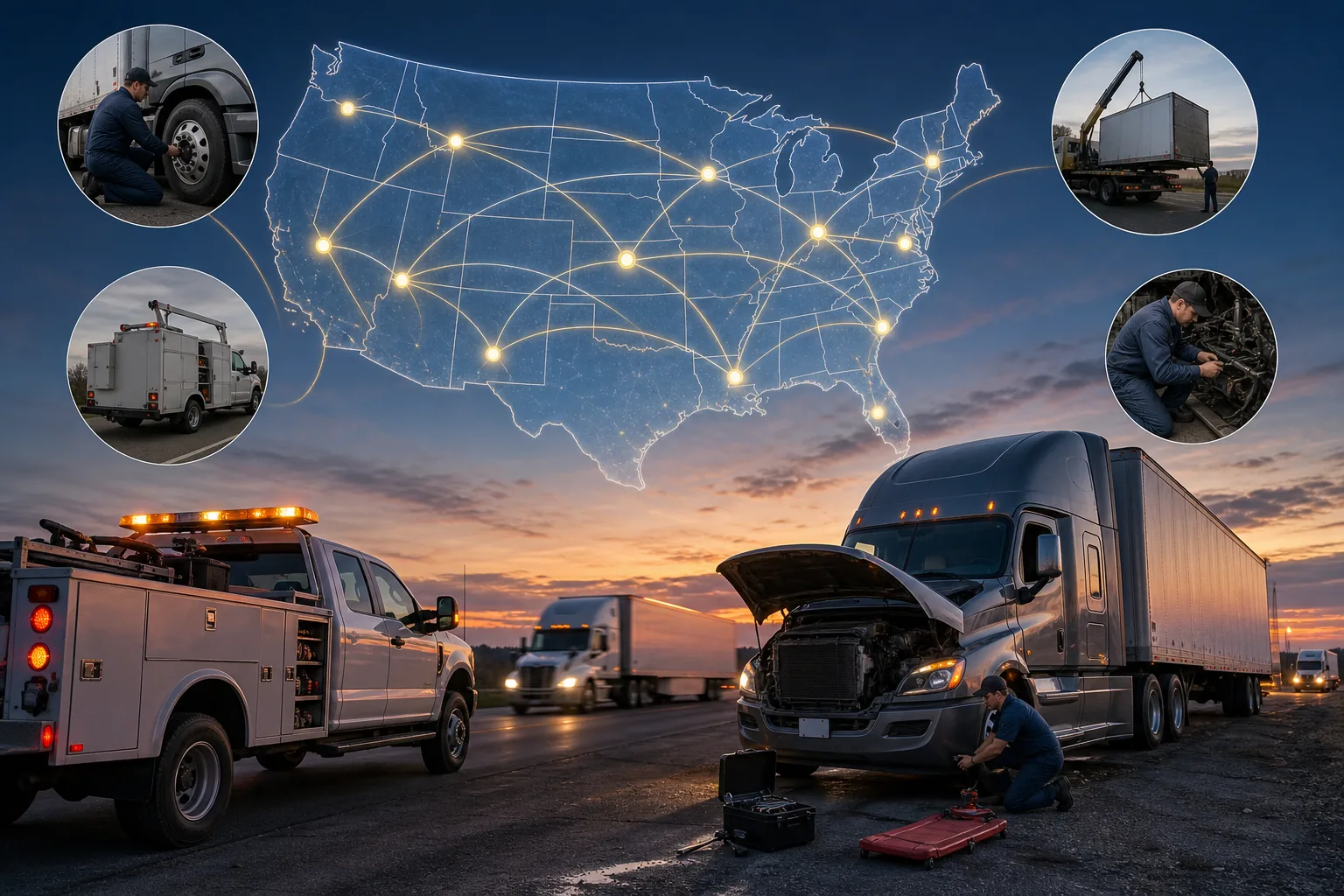
The best networks cover more than a basic tow. A fleet may need a field repair, tire help, accident response, emergency permits, or cargo support. Some networks also provide technical support to the field technician, which can reduce the risk of sending out the wrong repair resource.
We tell fleet managers to ask how the network handles handoffs. Find out who owns the case after dispatch, how the driver receives updates, and how the fleet gets a final service record. A national name does not automatically mean a short arrival time.
A provider can promise 24/7 access without promising a fixed arrival window. Put any turnaround requirement in the fleet agreement instead of assuming it is included.
6. Fleet-focused roadside programs: One contact for recurring truck support
Fleet-focused roadside programs fit companies that manage repeated breakdowns across several trucks. Instead of treating each event as a separate retail request, the program can keep service records tied to the fleet.
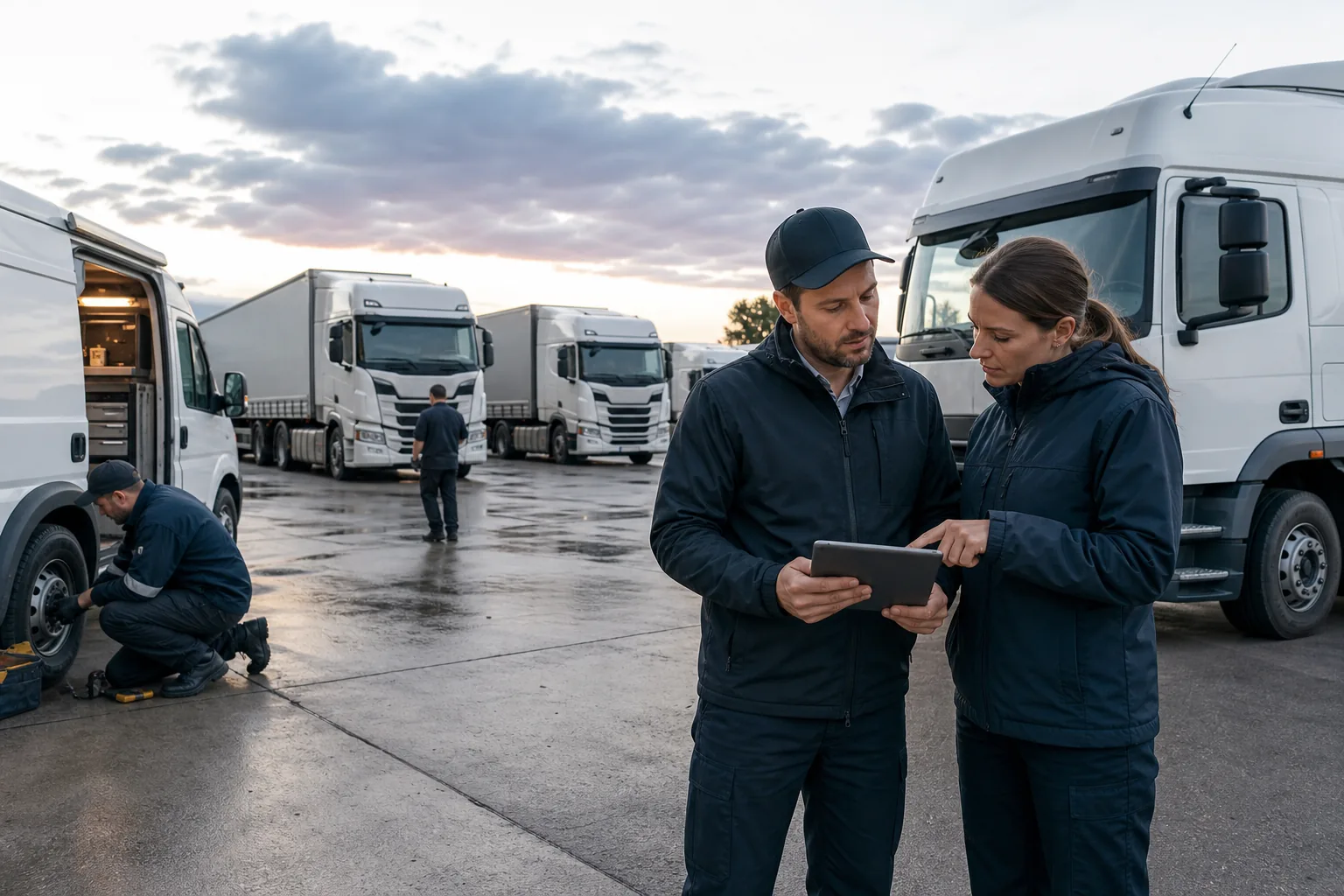
Useful features may include a central dispatch desk, driver updates, digital tickets, and a record of the repair outcome. Fleet managers should also ask if the program can support cargo protection or load transfer when a truck cannot continue safely.
We recommend testing the workflow before an emergency. Give dispatch a sample vehicle number and location. Ask what the driver must provide and how quickly the manager receives status updates. That short test can expose gaps before a real roadside event.
For DFW operators, The Tire Specialist can pair this fleet mindset with local mobile truck tire support. We can help keep tire events in one regional workflow, while a national program may make more sense for long-haul coverage.
7. Mobile commercial tire providers: Flat repair and replacement at the truck
Mobile commercial tire providers focus on the problem that stops many trucks first: tire damage. They send a service vehicle to the truck instead of requiring a tow to a tire shop.
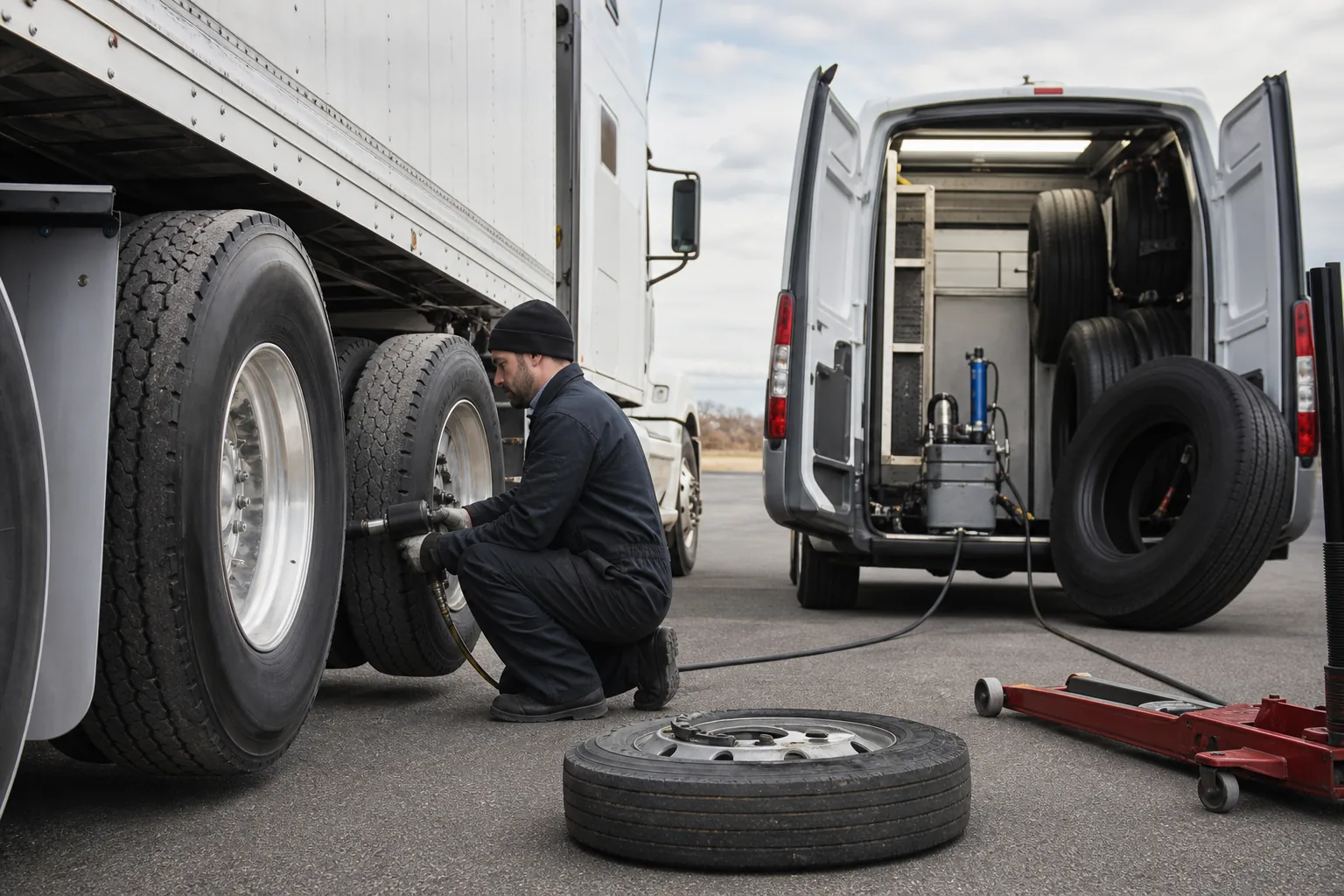
Common work can include leak checks, flat repair, valve service, tire replacement, and inflation. The exact repair depends on the damage, tire position, vehicle weight, and road safety. A tire that looks repairable may still need replacement if the casing or sidewall is damaged.
We favor a mobile tire provider when the engine still runs and the main issue is a flat or blowout. For safety steps after a blowout, see how to handle an 18 wheeler tire blowout safely . The driver should move away from traffic when possible and share the exact road position. A clear location helps dispatch send the right vehicle to the right shoulder.
Mobile tire service does have limits. It may not solve a driveline failure, collision recovery, or a problem that needs a shop lift. In those cases, the tire provider may need to work with a towing or repair partner.
8. Heavy-duty towing providers: Recovery for disabled commercial vehicles
are the right category when a commercial vehicle cannot be made safe at the roadside. They handle recovery with equipment suited to the truck's size and position.
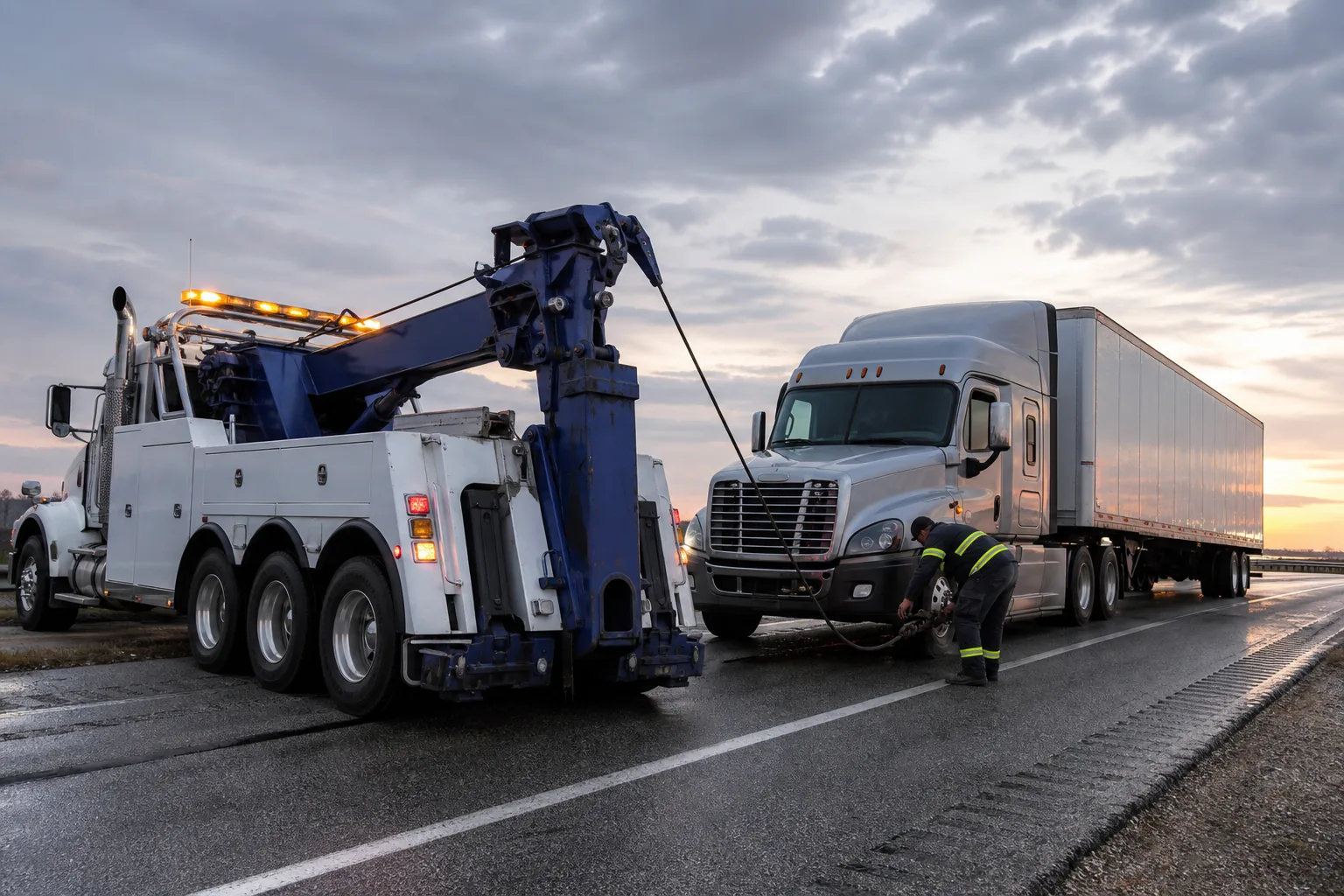
A good dispatch request should include the tractor type, trailer status, cargo concerns, road position, and whether the vehicle is upright. Those details help the dispatcher choose the correct tow unit. A small tow truck can create a second delay if it arrives without enough capacity.
We also want fleet managers to ask where the truck will go after recovery. The nearest yard may not be the best repair location. A longer tow could affect the handoff, the load, and the next driver's schedule.
Heavy-duty towing is a recovery service first. It may not include tire replacement or mechanical repair. Confirm the boundary before an incident so the driver knows whether a second vendor might be needed.
9. Technology-enabled roadside platforms: Tracking and remote diagnostics
Technology-enabled roadside platforms add a digital layer to 24/7 roadside assistance for trucks. They may use vehicle data, remote diagnostics, location sharing, case tracking, or automated driver updates.
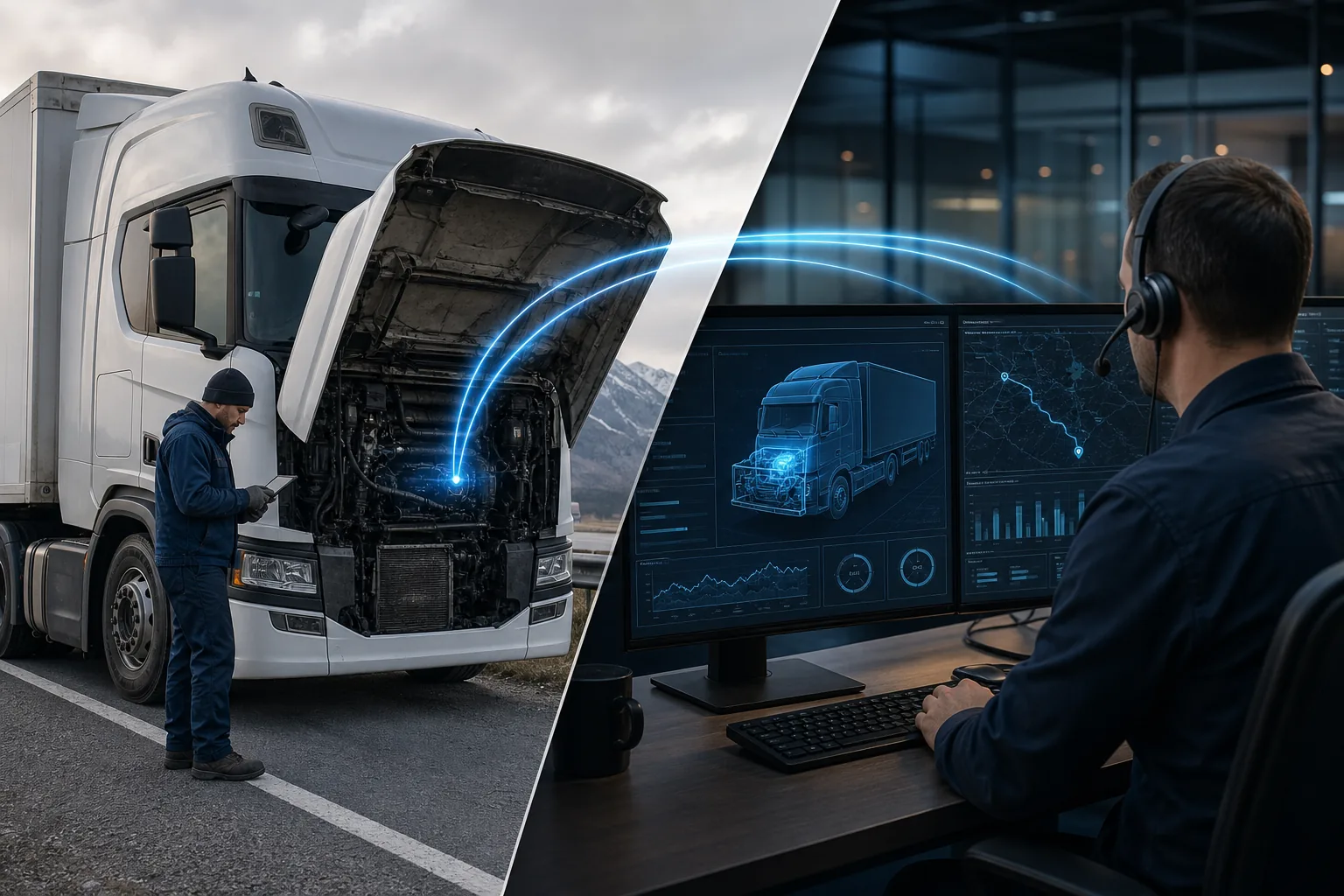
Remote diagnostics can help an agent understand the fault before dispatch. If the issue cannot be solved through guidance, the dispatcher can send a technician with better information. That may reduce an avoidable second visit, though remote data cannot replace an on-site inspection.
Tracking also helps the fleet office. A manager can see whether the request is open, assigned, en route, or complete. The record becomes more useful when it includes the work performed and the vehicle status after service.
We would not choose a platform based on an app alone. Ask whether the technology connects to your fleet maintenance process and whether drivers can use it under stress. A simple fallback path still matters when a device has no signal.
10. Local emergency truck service companies: Fast regional arrival
Local emergency truck service companies can be a strong fit when a fleet runs within one metro area or corridor. A nearby provider may know the roads, common truck routes, and local repair shops.
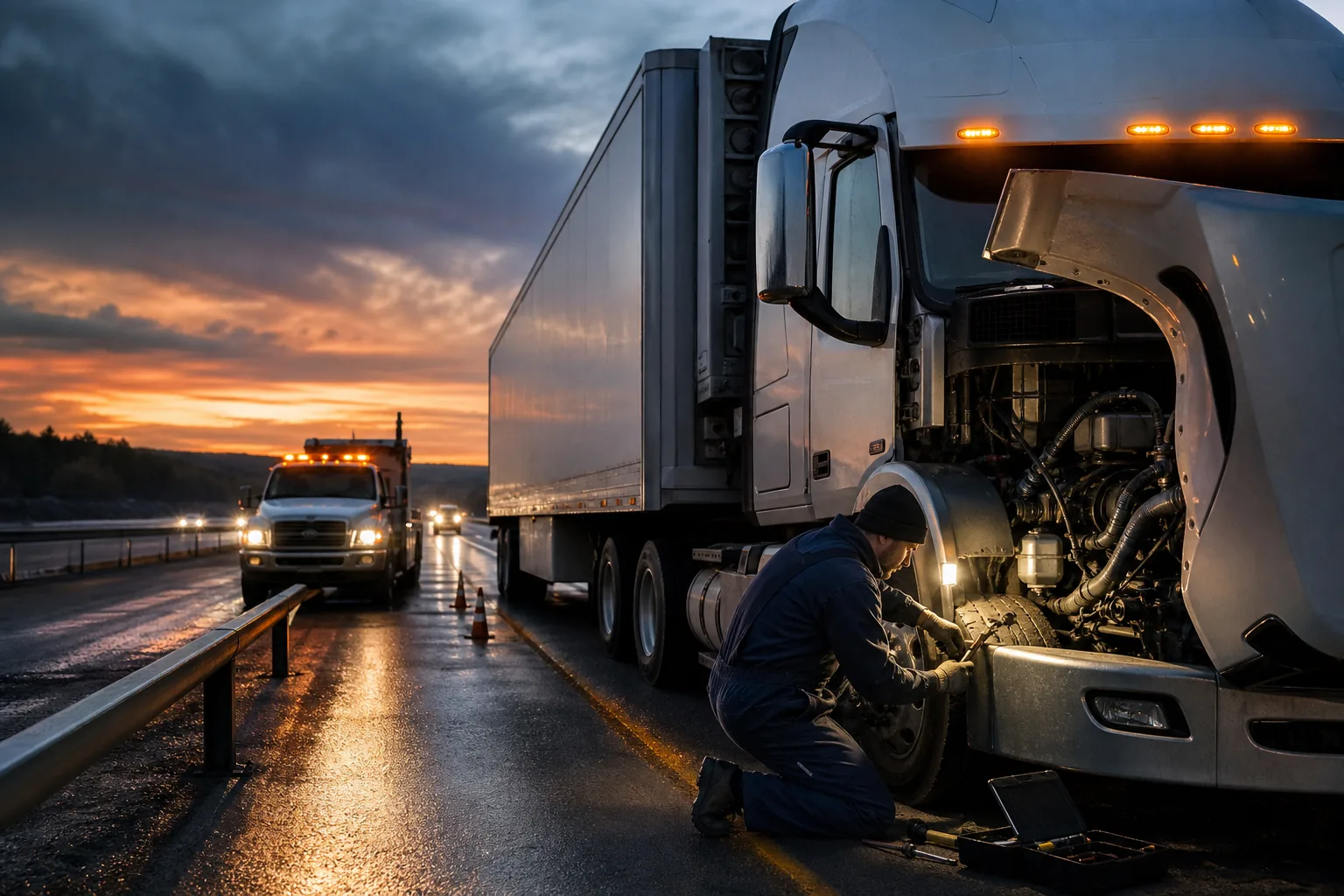
The best local match depends on the fault. A tire specialist suits a blowout. A diesel repair team fits an engine or electrical issue. A heavy-duty tower fits a disabled tractor that cannot roll.
We suggest building a short regional vendor list before a driver needs it. Record the service area, truck types supported, after-hours process, and escalation contact. Then give that list to dispatchers and drivers.
Local coverage can be faster in practice, but it isn't guaranteed. Traffic, weather, road access, equipment, and call volume all affect arrival. Ask what the provider can confirm instead of relying on a general 24/7 label.
Compare the 10 truck roadside assistance options
The options below are organized by the problem they solve best. The table avoids a false promise that one provider works equally well for every route and truck.
Option | Best fit | Main strength | Watch for |
The Tire Specialist | Dallas-Fort Worth fleets | On-site commercial tire repair and replacement | Regional coverage |
AAA | Broad U.S. and Canada needs | Wide roadside service range | Membership and vehicle limits |
Service Tire Truck Centers | Northeast fleets | Mobile tire work and digital service updates | Regional reach |
Winkler Brothers Towing | Wyoming emergencies | Commercial towing and recovery | Local service area |
National truck roadside networks | Long-haul fleets | Central dispatch across many states | Confirm provider handoffs |
Fleet-focused programs | Recurring service events | Case records and manager visibility | Check truck service scope |
Mobile commercial tire providers | Flats and blowouts | Repair at the truck | May not handle engine faults |
Heavy-duty towing providers | Disabled trucks | Recovery equipment | Confirm destination and capacity |
Technology-enabled platforms | Connected fleets | Tracking and remote fault details | Need a low-tech backup |
Local emergency truck companies | Metro or corridor fleets | Regional knowledge | Coverage varies by provider |
Our recommendation is to match the provider to the failure type and route. For a DFW fleet with a tire issue, The Tire Specialist is the clearest fit. For a truck traveling across several regions, combine a local tire partner with a broader breakdown program.
Before signing up, ask four questions:
Does the provider support our tractor and trailer types?
Can it repair the issue on-site, or will it tow first?
How will the driver and fleet manager receive updates?
What response commitment is written into the agreement?
FAQ
What is the best 24/7 roadside assistance for trucks?
The best choice depends on the truck's route and failure type. For commercial fleets in Dallas-Fort Worth, The Tire Specialist is a strong fit because we provide on-site truck tire repair, tire replacement, and roadside assistance. Long-haul fleets may also need a national dispatch program for areas outside the DFW service region.
Does truck roadside assistance include tire replacement?
Many truck roadside assistance providers can handle tire work, but coverage varies. Mobile commercial tire teams focus on flat repair, inflation, and replacement at the truck. Before an emergency, confirm whether the provider carries commercial tire sizes and can reach the tractor's location after hours.
Can roadside assistance tow a semi-truck?
Yes, some roadside assistance programs can arrange heavy-duty towing for a semi-truck. The dispatcher needs the vehicle type, trailer details, location, and condition. Ask whether the assigned provider has the right recovery equipment and where the truck will be taken after the tow.
Is 24/7 truck roadside assistance available nationwide?
Yes, nationwide programs exist, but the service experience still depends on the local provider and available equipment. A national network can dispatch across many states, while a regional company may know one corridor better. Fleets should confirm coverage by route and avoid assuming that 24/7 access includes a fixed arrival time.
What should a fleet ask before choosing roadside assistance?
A fleet should ask about vehicle types, service areas, tire support, towing capacity, driver updates, repair records, and response commitments. We also suggest testing the dispatch process with a sample vehicle location. That shows whether the program can support the driver and fleet office when a real truck is down.
Conclusion
For DFW fleets, we recommend starting with The Tire Specialist for commercial tire repair, on-site replacement, and regional roadside support. Next, write down your common routes and failure types, then confirm which partner handles each one before the next breakdown. That small plan can protect your driver, load, and schedule.


Comments