
Tire Retreading: A Step-by-Step Guide
A worn truck tire can get a second life, but the process is far more exact than most fleet managers expect. Tire retreading uses a sound casing, removes the old tread, adds new rubber, then bonds it under heat and pressure. We’ll walk through each stage, explain the two main methods, and show what to ask before adding retreads to your fleet plan.
Table of Contents
Step 1: Inspect and Select the Tire Casing
Yes, casing inspection decides whether tire retreading should begin at all. The casing is the tire’s inner structure. If it has hidden damage, new tread won’t make it safe.
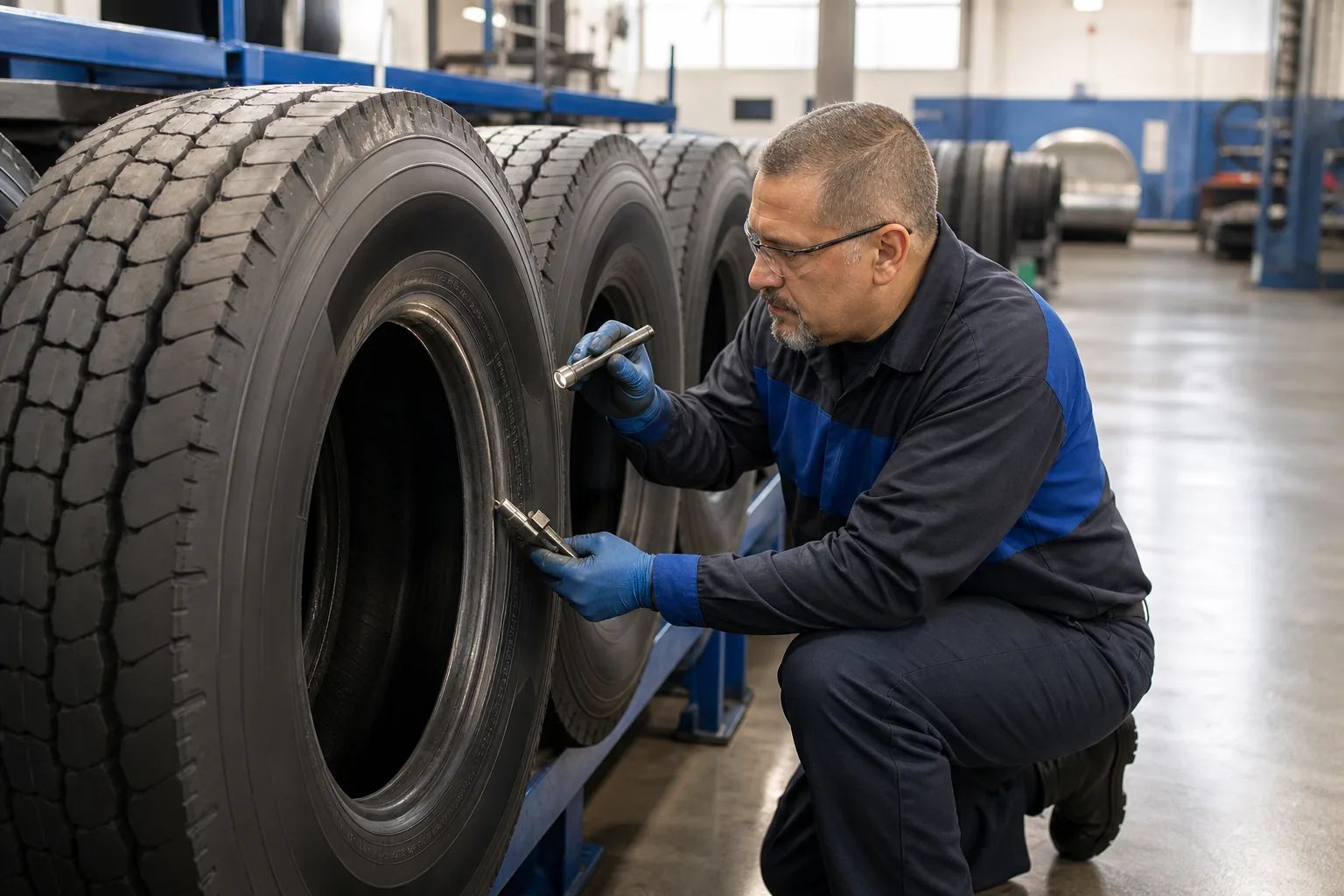
Start with a full visual check. Inspect both sidewalls, the inner liner, bead areas, shoulder, and crown. Look for cuts, punctures, bulges, exposed cords, rust, or signs of heat damage. Remove rocks, nails, and screws before the next test.
Then use electrical inspection to find injuries that the eye can’t see. Some retread plants also use shearography . This test applies vacuum pressure while cameras scan the casing for ply separation and other defects.
A plant should assign a work order and barcode to every casing. That record follows the tire through inspection, repair, tread application, curing, and final review. It gives the fleet a traceable history if a question comes up later.
Reject a casing when its damage can’t be repaired within the retreader’s approved process. A rejected casing may still go to a recycling or energy recovery stream. It should never move forward because a fleet needs a tire quickly.
For Dallas-Fort Worth fleets, we can help plan safe retread tire use around the right axle and vehicle duty. That choice starts with the casing, not the tread design.
Step 2: Prepare the Casing by Testing and Buffing
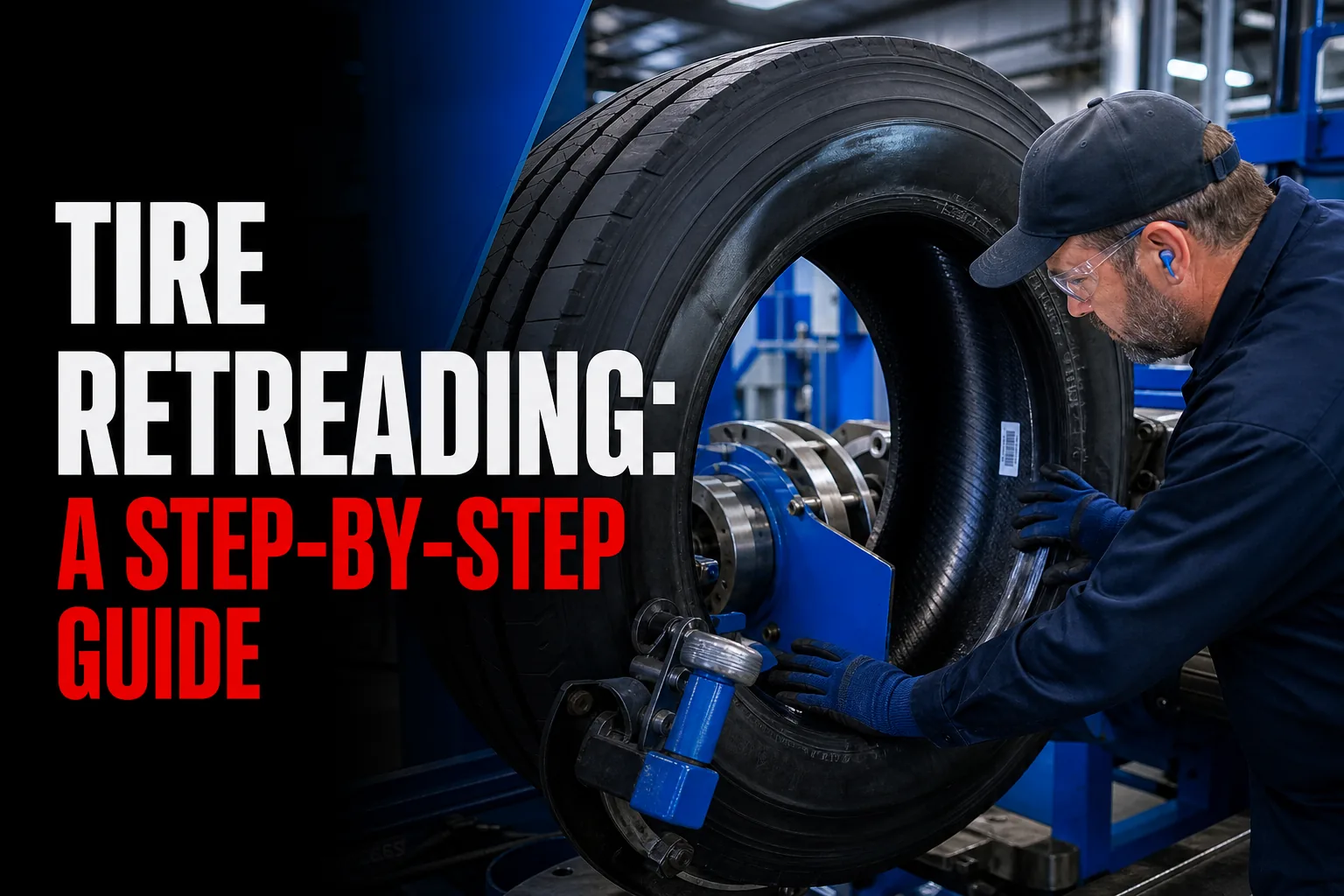
Yes, preparation gives the new tread a clean surface to bond with. The operator first inflates the casing to its working shape, then places it on a buffer.
The buffer removes the worn tread rubber. It also shapes the casing to a set crown width, radius, and profile. The goal is an even surface around the full tire. Removing too little rubber can leave weak spots. Removing too much can reduce the casing’s remaining strength.
After buffing, the operator checks the exposed surface again. This stage may reveal small injuries that were hidden under the old tread. The operator marks each defect before repair.
Skying removes damaged or rusted steel from the casing. The technician trims back to sound material, cleans the area, and treats the surface so new rubber can bond well. Repairs may involve punctures, bead damage, shoulder injuries, or sidewall splits.
Repair work must match the casing and the retread system. A patch that looks fine from the outside can fail if the inner liner was not cleaned or textured well. The repair area must also be free of loose cords and trapped air.
Modern plants often scan the work order at each station. That simple step reduces mix-ups when many tires share the same size and tread pattern. It also helps a fleet manager see where a casing was rejected or delayed.
Buffing is a skilled task. A casing that leaves this station with an uneven profile can create balance problems later. Ask a retreader how it controls buffing depth and how it records repair work before approving a program.
Step 3: Apply the New Tread and Choose the Retreading Method
Tire retreading uses one of two main tread application methods: pre-cure or mould-cure . Both bond new tread to a prepared casing, but they use different production steps.
Pre-cure retreading
With pre-cure retreading, the tread pattern is already formed and cured before it reaches the casing. The technician applies cushion gum to the buffed surface. Then the pre-cured tread strip is wrapped around the tire and joined at the ends.
Rollers press the tread into place and push out trapped air. The tire then receives a flexible rubber envelope. The envelope is sealed around the beads and vacuum-tested before curing.
Mould-cure retreading
With mould-cure retreading, uncured rubber is applied to the casing. The built tire goes into a mould. Heat and pressure shape the rubber while the bond cures.
This method resembles new tire production because the tread pattern forms inside the mould. It can create a continuous tread surface without a visible tread splice. The plant must control rubber volume, mould fit, heat, and pressure with care.
Decision point | Pre-cure | Mould-cure |
Where the tread pattern forms | Before application, on a cured tread strip | Inside a mould during curing |
What bonds the tread | Cushion gum between the strip and casing | Uncured rubber that cures in the mould |
Best question for a fleet | How does the plant control the splice and vacuum seal? | How does the plant control mould fit and cure settings? |
Main handoff risk | Trapped air beneath the tread | Uneven rubber placement before moulding |
Neither method is automatically right for every fleet. Match the process to casing supply, route demands, axle position, and the retreader’s quality controls. We can help fleet managers compare retreads with new tires for Dallas fleets without treating every truck the same.
Before the tire leaves this stage, the tread should sit evenly around the casing. The splice, if the process uses one, must be secure and smooth. The builder should stitch the tread to remove air pockets before enveloping.
Step 4: Cure the Retread and Complete Quality-Control Checks
Yes, curing turns the prepared assembly into one bonded tire. The tire enters an autoclave or curing chamber inside an envelope. Heat and pressure act on the cushion gum or uncured rubber.
The envelope matters. It presses against the tread and casing so the force stays even across the tire. The operator seals the envelope at the beads, then runs a vacuum test. A leak can prevent the right pressure from reaching the bond.
Temperature and pressure must match the retread system. A plant may use different settings for different casing sizes and tread compounds. Operators should record the cycle, not rely on memory or a general shop rule.
After curing, the tire cools before final review. The technician checks tread placement, splice quality, sidewall condition, shoulder shape, and signs of separation. The tire may also be trimmed or painted for protection and identification.
Final inspection should confirm that the correct process was followed for that casing. It should also confirm the customer’s requirements. Relevant industry technical guidance can be a useful reference point when a fleet reviews retread training and quality procedures.
The final warm-tire inspection includes DOT details and unique identification for audit records. Keep that information with the casing history. A tire without a clear record is harder to manage after it returns to service.
Step 5: Evaluate Safety, Service Life, and Environmental Savings
Tire retreading can support a fleet program when the casing history is sound and maintenance stays consistent. It doesn’t remove the need for pressure checks, load control, or routine inspection.
Use retreads only where the vehicle maker, tire maker, and fleet policy allow them. Many fleets place new tires on steer axles and consider retreads for drive or trailer positions. The right choice depends on axle load, route heat, road hazards, and the tire’s rating.
Retreads can reduce raw material use because the casing is reused.
The environmental gain also depends on casing recovery. Every casing that passes inspection avoids immediate disposal. Casings that fail should still move through a lawful recycling or recovery channel.
Service life varies with the casing, tread compound, inflation, alignment, load, and route. Don’t promise a fixed mileage number. Instead, track tread wear, pressure history, repairs, and removal reasons across your own fleet.
Ask the retreader for a clear record that includes:
Casing identification and inspection result
Repair work completed
Tread pattern and application method
Cure record and final inspection result
Recommended axle position and maintenance limits
We at The Tire Specialist can support fleet managers with mobile commercial tire service in the Dallas-Fort Worth area. On-site tire replacement helps reduce the time a truck spends waiting when a retread or new tire needs attention.
A good fleet maintenance program also sets rules for inflation checks, damage reports, rotation, and removal. Retreading works best when it fits that larger system instead of acting as a last-minute substitute.
Frequently Asked Questions
What is tire retreading?
Tire retreading replaces worn tread on a usable tire casing. A retreader inspects the casing, removes old rubber, repairs damage, adds new tread, then cures the assembly with heat and pressure. The casing must pass every inspection before work begins. A worn tread alone doesn’t mean the whole tire needs disposal.
Are retread tires safe for commercial trucks?
Retread tires can be safe for commercial trucks when the casing passes approved inspections and the tire stays within its load and pressure limits. Safety depends on the retreader’s process and the fleet’s maintenance habits. Ask for traceable identification, inspection records, and clear axle-position guidance before placing a retread in service.
How long does tire retreading take?
The full turnaround varies by plant, casing condition, workload, and method. The checklist used for this guide reports 90 to 120 minutes for curing alone. It gives no public time estimate for inspection, buffing, repairs, building, or final checks. Ask for a written turnaround range before sending a fleet batch.
What is the difference between pre-cure and mould-cure retreading?
Pre-cure retreading applies a tread strip that was cured before it reached the casing. Mould-cure retreading shapes uncured rubber inside a mould during the cure cycle. Both methods can work well when the plant controls bonding, heat, pressure, and inspection. The better fit depends on your fleet’s casing flow and operating needs.
How do fleets maintain retread tires?
Fleets maintain retread tires with regular pressure checks, damage checks, proper loading, and timely removal from service. Record tread wear and casing history for each tire. Inspect sidewalls after difficult routes and investigate repeated failures. The Tire Specialist can help coordinate on-site commercial tire support when a truck can’t reach a shop.
Do retreads reduce environmental waste?
Yes, retreads reduce waste by reusing a sound casing instead of replacing the full tire assembly. They also reduce demand for some new raw materials and manufacturing energy. The result depends on casing quality and the retreader’s process. Ask how rejected casings are handled and keep recovery records in your fleet program.
Conclusion
Choose retreading as part of a planned fleet maintenance program, not as a shortcut around inspection. Start by asking a qualified retreader for its casing tests, tracking method, cure records, axle guidance, and expected turnaround. If you operate in Dallas-Fort Worth, The Tire Specialist can help you plan the next service step around your routes and downtime needs.


Comments