
Top Guide to On‑Site Truck Tire Replacement for Fleets
When a flat stops a rig, every minute costs money and safety. Your fleet can stay moving if you know the exact process for on‑site truck tire replacement for fleets. Below is the step‑by‑step workflow that cuts downtime to minutes.
Table of Contents
Step 1: Capture the Tire Problem and Truck Location
First, get the driver to pull off the road safely. Turn on hazard lights, set wheel chocks, and note the exact axle and tire position. Ask for the tire size if the driver knows it; most trucks carry the size on the sidewall.
Next, call the mobile service and give them the location, truck make, and any load‑specific constraints (lift‑gate, refrigeration unit, oversized cargo). The dispatcher will check inventory and confirm the right tire is on the truck before it leaves the yard.
Having the size and location in hand lets the technician bring the correct spare and tools, so they don’t waste time searching for a match once they arrive.
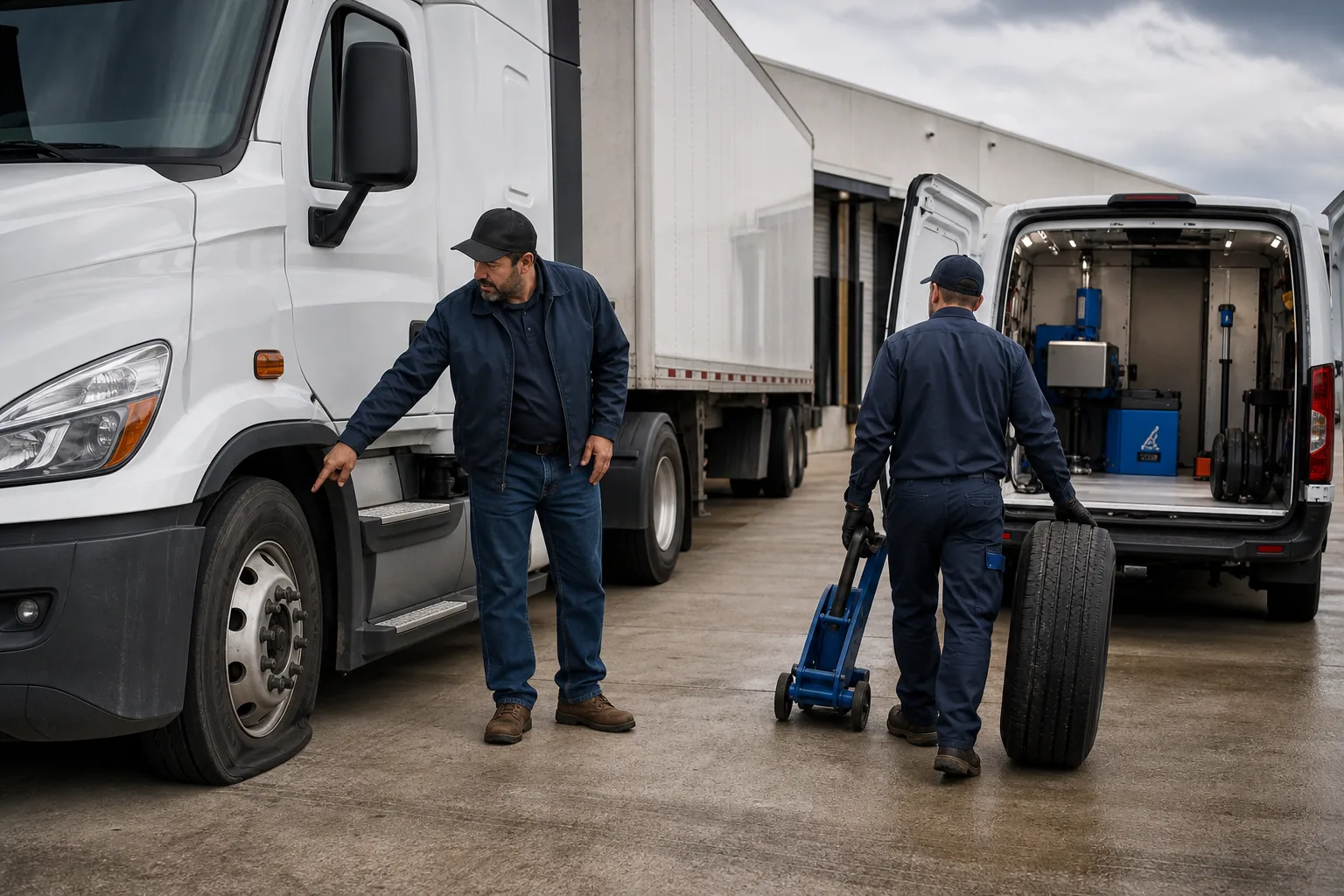
When the call is logged, the system creates a service ticket that ties the event to the fleet’s maintenance record. That ticket will later help you track costs and spot recurring problem tires.
Step 2: Choose On‑Site Help That Covers Your Fleet’s Needs
Look for a provider that carries the tire sizes you run and can dispatch within the hour. The Tire Specialist offers 24/7 emergency service across Dallas-Fort Worth. Ask any provider for its typical arrival time on your routes.
Ask about technician training (for example TIA commercial tire service training) and whether the crew handles both repairs and full replacements. Trained techs follow the same torque and safety standards you’d expect in a shop, but they bring the shop to you.
Ask about fleet‑wide tracking. A digital after‑action report lets you upload the service details straight into your fleet‑management software.
We also recommend checking the provider’s coverage area. A local service that knows DFW routes will reach you faster than a national firm that has to route a truck from another state.
Review provider options .
Pro Tip:Keep a list of the most common tire sizes in your fleet on the dispatch console. When a call comes in, you can instantly confirm stock and shave seconds off the ETA.
Step 3: Prepare a Safe Work Area for the Service Call
Safety starts with a clear zone around the truck. Deploy wheel chocks on the opposite side of the flat, engage the parking brake, and place warning triangles as federal rules require: within 10 feet of the truck on the traffic side, and about 100 feet behind and ahead of it (up to 500 feet behind on hills or curves).
Make sure the area has enough clearance for the service truck’s lift. The technician will need space to work and to position a heavy-duty jack safely.
Check local DOT regulations for roadside work zones.
Once the zone is marked, turn off the engine and let the brakes settle. This prevents the rig from rolling while the tire is off.
Finally, verify that the technician has the required PPE: high-visibility vest, safety glasses, gloves, and steel-toe boots. A well‑prepped site lets the tech work fast and reduces the chance of a second incident.
For more information, see this service-call guide .
Step 4: Have the Technician Confirm Fit and Complete the Replacement
The tech starts by reading the sidewall of the existing tire. The size, load index, and speed rating must match the replacement or a manufacturer‑approved alternative. Tire markings include details used to check fit.
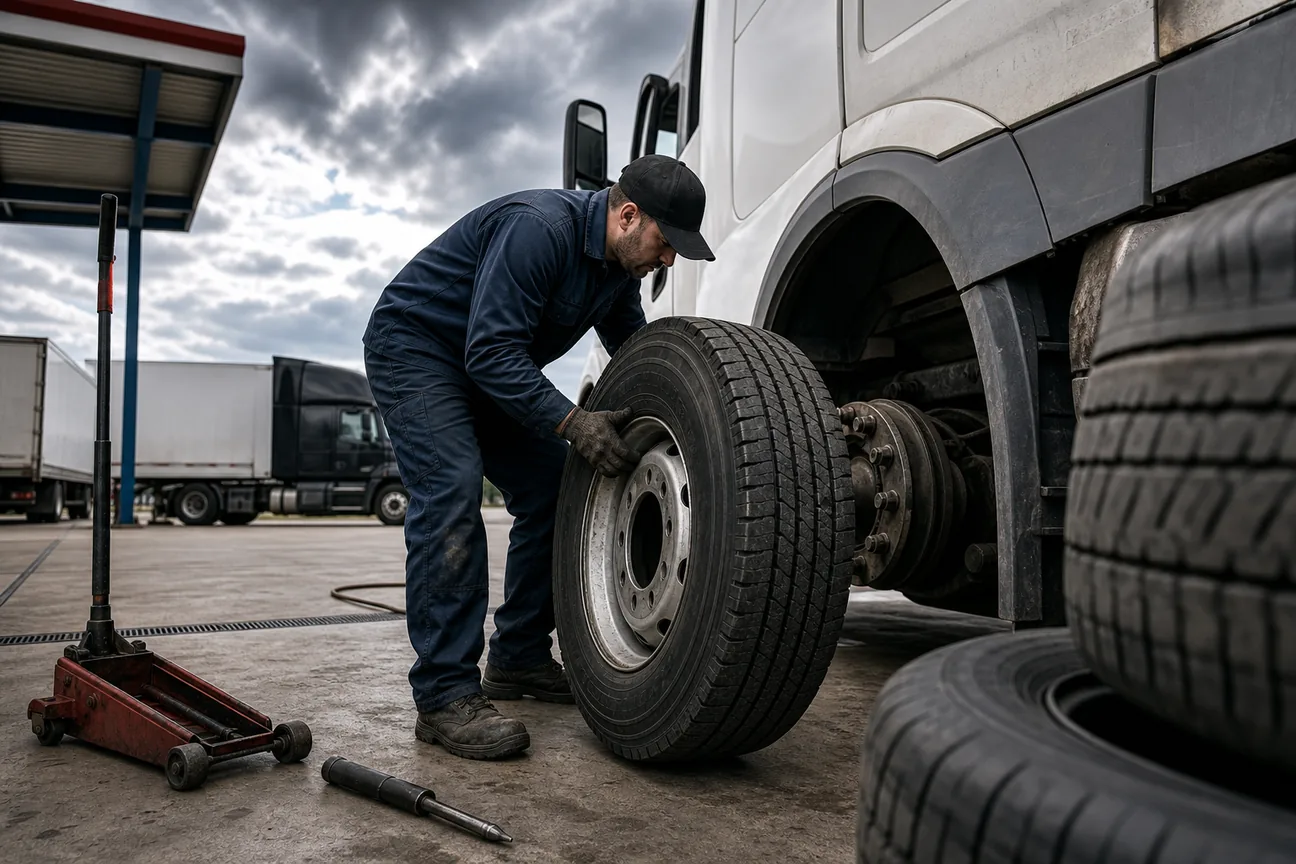
Next, the technician checks the rim for damage. Even a small crack can cause a wheel‑off event if it’s not repaired. Using a calibrated torque wrench, they will mount the new tire and torque each lug to the exact specification listed in the vehicle’s service manual.
After mounting, the tech inflates the tire to the manufacturer’s pressure and checks it with a calibrated gauge. They also verify that the tire’s clearance is adequate for the axle’s travel.
When everything checks out, the tech performs a short roll‑out test. The driver may be asked to take the rig a few miles to listen for vibrations or wobble.
Once the test passes, ask for a written work order and plan a lug-nut re-torque check after the first 50 to 100 miles.
Key Takeaway:Confirming fit isn’t just about size; load index, speed rating, and rim condition all matter for safe operation.
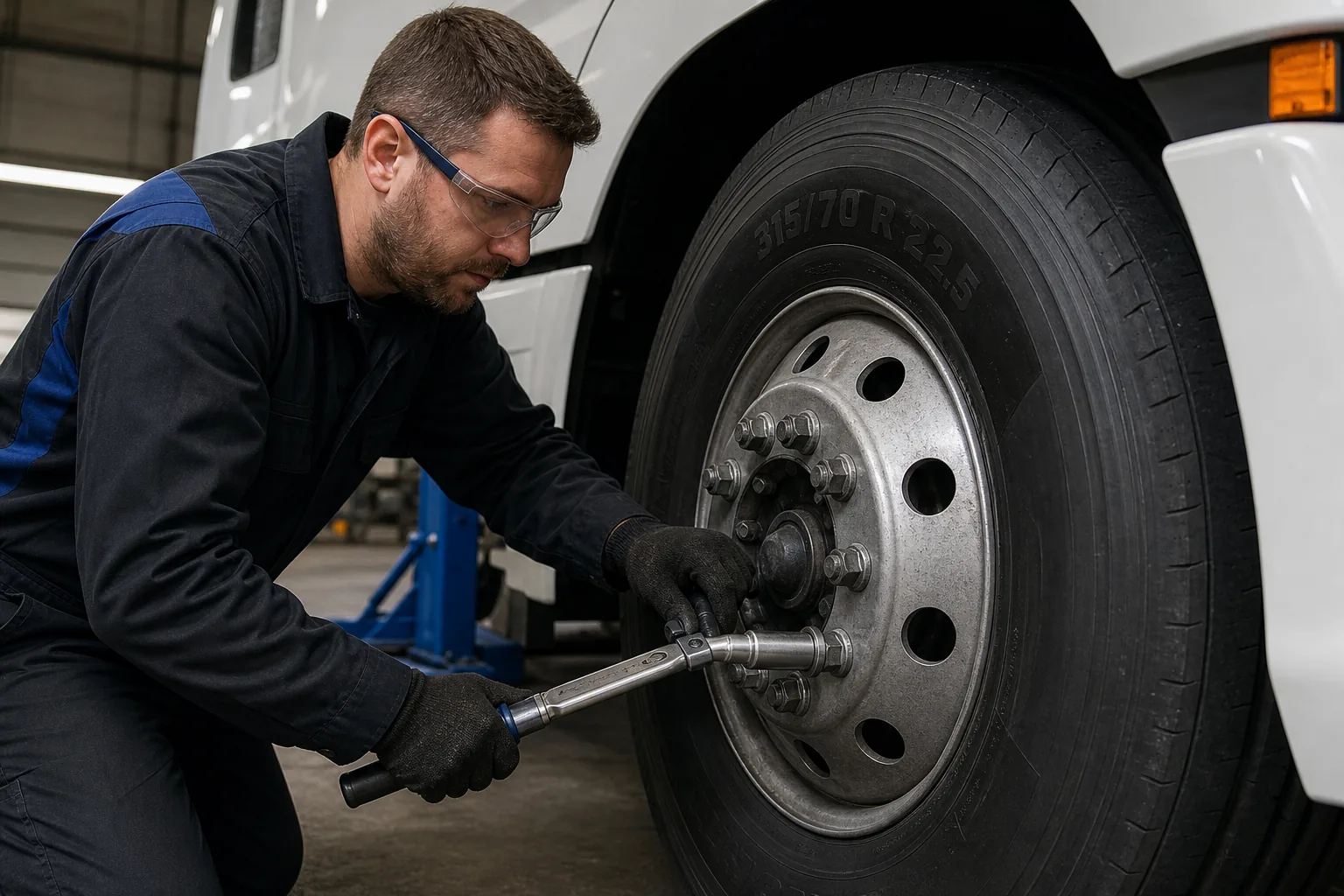
Step 5: Verify the Truck Is Ready and Record the Service
Before the driver heads back out, the tech does a final visual inspection. They look for loose tools, debris in the wheel well, and proper lug nut torque.
The driver then takes a short test drive. The tech watches for any unusual noise and checks that the steering feels straight.
When the driver signs off, ask for a service report with the tire size, part numbers, pressure settings and torque values.
Upload the report to your maintenance software. It becomes part of the vehicle’s service history, helping you spot patterns, like a specific axle that blows out more often.
For information about fleet-management platforms, see this fleet guide .
Finally, schedule the next preventive tire inspection. Most fleets rotate tires on a preventive schedule; setting a reminder now avoids another emergency.
Frequently Asked Questions
What is the typical response time for on‑site truck tire replacement?
Response times vary with traffic and location. The Tire Specialist offers 24/7 emergency service across Dallas-Fort Worth; ask for a typical arrival time on your routes.
Can a flat tire be repaired on the spot?
Yes, if the puncture is in the tread and smaller than ¼ inch, a plug‑and‑patch repair can be done safely; sidewall damage requires a full replacement.
Do I need special insurance for mobile tire service?
Yes, you should confirm that the provider’s liability coverage matches your fleet’s risk profile and that the tech carries workers’ comp for on‑site work.
How do I keep track of tire service records?
Use a digital work order system that syncs with your fleet‑management software; the report should include tire size, pressure, torque values, and technician certification.
Is it better to use new tires or retreads?
Both work, but retreads may be considered for long‑haul routes; new tires give higher mileage on high‑speed regional runs. Choose based on your fleet’s mileage pattern and load requirements.
Keeping your trucks rolling takes a clear process and a partner that moves fast. The Tire Specialist offers 24/7 emergency service for commercial trucks and fleets across Dallas-Fort Worth. Start by adding a service ticket today and watch your downtime drop.
Comments