Commercial Truck Tire Replacement Near Me: Next Steps
Your rig broke down and you need a new tire fast. We’ll walk you through the exact steps to get a safe spot, the right info, a quick on‑site fix, and back on the road. No fluff, just the actions that keep your fleet moving.
Table of Contents
Step 1: Get the Truck and Roadside Scene to a Safe Place
First, pull off the road onto a flat shoulder or a nearby parking lot. Turn on hazard lights, set wheel chocks, and engage the parking brake. If you’re on a busy highway, place reflective triangles far enough back to warn other drivers.
Once the truck is stable, do a quick visual sweep. Look for leaking air, broken sidewalls, or debris that could cause another flat. Take a photo of the damage, it helps the technician pick the right tire and gives you proof for any warranty claim.
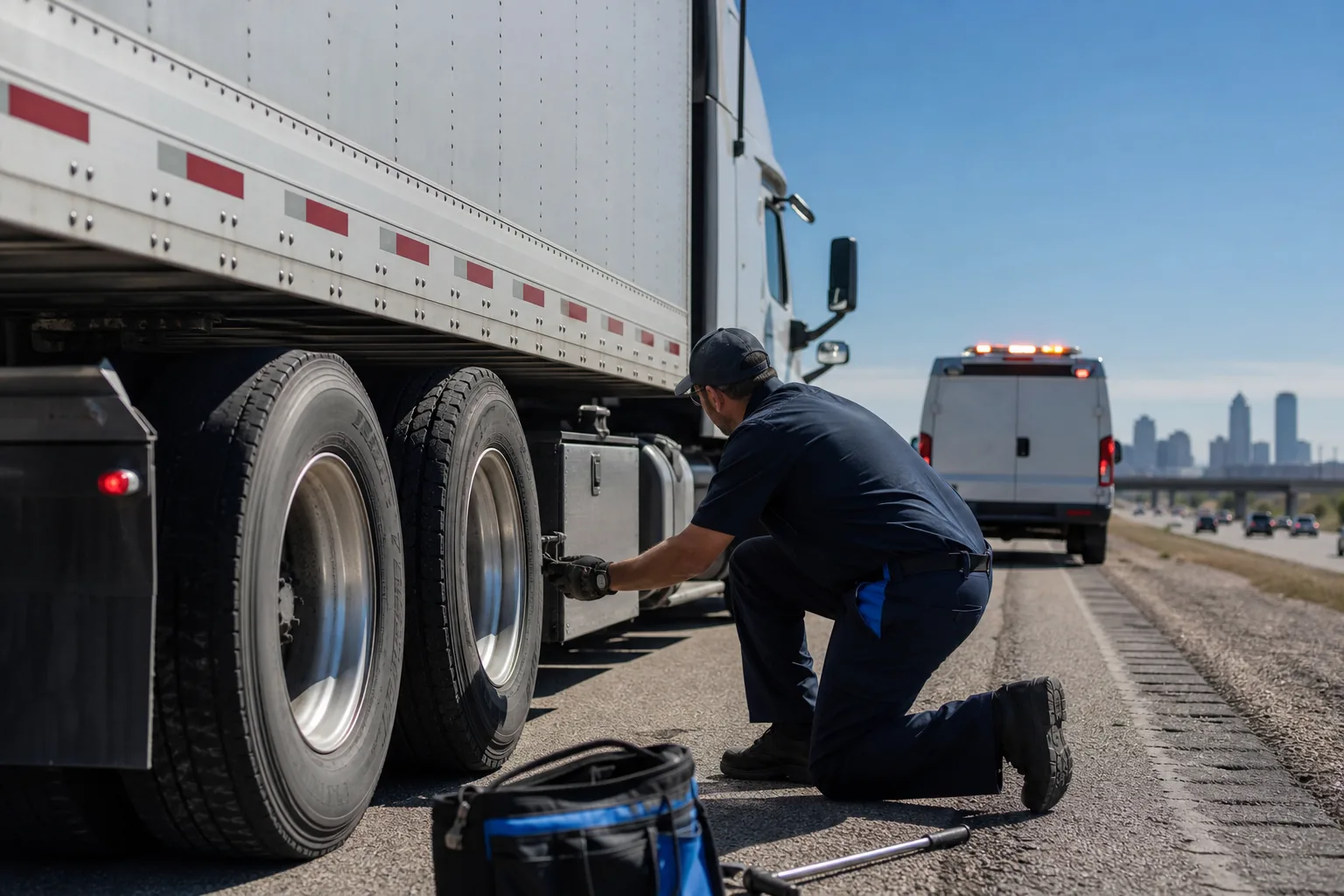
Now call a mobile service that covers your area. The Tire Specialist’s Dallas‑Fort Worth crew is available 24/7 and will send a technician to your location. Response time depends on where you are, traffic, and current demand, so ask for an ETA and confirm they carry the make and model of your truck’s tires.
While you wait, make sure the driver stays inside the cab with the seat belt fastened. Keep the truck locked and the cargo secured. These simple steps cut down the risk of another incident and give the technician a safe workspace.
Step 2: Gather the Truck, Tire, and Location Details
When the tech calls back, be ready to give the exact truck make, model, and tire size. Most commercial tires are marked with a code like "11R24.5", that tells the tech the width, construction, and rim size. If you have a fleet management system, pull the record for the vehicle; it usually stores the tire spec.
Don’t forget to note any special equipment on the truck, lift‑gates, refrigeration units, or oversized loads can affect how the tech accesses the wheel. Also tell them the mileage or service interval; this helps decide if a repair or a full replacement makes more sense.
Once you’ve shared the info, the dispatcher will match a technician to your location and send a live ETA. Our installation guide shows how the crew checks tread depth, pressure, and bead condition before deciding on a swap.
Pro Tip:Keep a copy of the tire’s DOT code handy. It shows the manufacture date, which matters for age‑related wear.
Step 3: Request On‑Site Replacement or Roadside Assistance
With the details in hand, tell the dispatcher whether you need a quick patch or a full tire swap. If the tire is punctured in the tread and pressure holds, a plug‑and‑patch can get you moving in minutes. For sidewall damage, low tread, or a blown bead, a replacement is the only safe route.
The Tire Specialist handles the repair or replacement on-site, so you don’t have to tow the truck or wait around at a shop.
Ask the tech to run a pressure test after the work. Proper inflation is the single biggest factor in preventing future blowouts.
If your fleet is on a maintenance program, let the tech know so the work fits your inspection schedule.
Step 4: Check the Replacement and Plan the Truck’s Return to Service
When the new tire is on, the technician does a final walk‑around. They torque the lug nuts to the manufacturer’s spec, re‑check pressure, and look for any debris that could cause a wobble.
Ask the driver to take a short test drive at low speed. Listen for vibrations or unusual noises, those can signal a hidden issue that needs a quick tweak.
After the drive, ask for a written record of the work done, the tire installed, and the final pressure, and file it with the truck’s maintenance records.
Finally, update your maintenance schedule. Set a reminder for the next tire rotation or pressure audit based on the mileage you just logged.
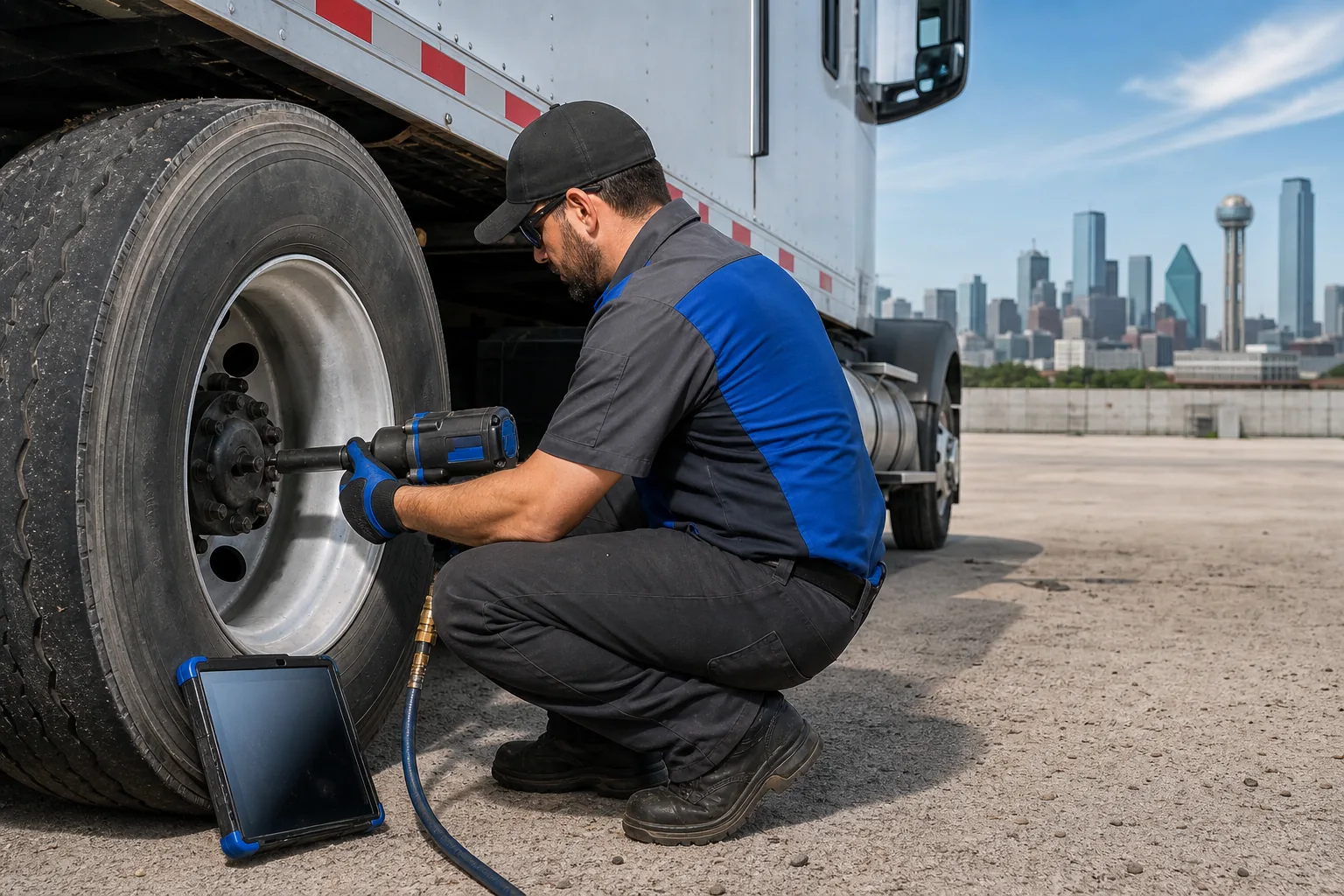
For ongoing peace of mind, consider a regular yard‑visit program. The Tire Specialist’s fleet‑wide service plan can include inspections, tire rotations, and pressure checks to catch problems early.
Key Takeaway:A proper final inspection and a written service record support safety and accurate record‑keeping for your fleet.
Frequently Asked Questions
What should I do immediately after a tire blows out?
The first step is to pull safely off the road, turn on hazard lights, and set wheel chocks. Then call a mobile service that covers your area, the faster they arrive, the less downtime you face.
How long does on‑site tire replacement usually take?
It depends on the tire, the wheel’s condition, and the location. Sharing the exact tire size before the technician arrives avoids the most common delay.
Do I need to provide the tire size myself?
Yes, giving the exact size, such as “11R24.5,” helps the technician bring the right tire and avoid delays.
Can a technician repair a tire on the spot?
Yes, for tread punctures that meet safety standards, a plug‑and‑patch can be done in minutes, but sidewall damage or low tread depth requires a full replacement.
Is there a record of the service for compliance?
Ask the technician for a written record of the work, then file it with the vehicle’s maintenance log so your service history stays complete.
Do I need a special fleet program for regular tire health?
It isn’t required, but a fleet maintenance plan with scheduled inspections, tire rotations, and pressure checks helps catch problems early and cuts down on surprise breakdowns.
Ready to get moving? Contact The Tire Specialist today, schedule a service, and let the crew bring the shop to your truck so you can stay on the road.


Comments