
Top Steps for Mobile Tire Repair and Replacement in Dallas, TX
Flat tires and busted rims can halt a delivery, a ride‑share shift, or a construction crew in minutes. Here’s a quick, step‑by‑step playbook that gets your vehicle back on the road fast.
Table of Contents
Step 1: Make the Scene Safe and Identify the Tire Problem
First, pull over to a safe spot. Turn on hazard lights, engage the parking brake, and if you’re on a busy highway, move behind a barrier if you can. A quick visual check lets you see whether the tire is flat, has a nail, or shows a sidewall bulge.
A tire-safety guideline is that a sidewall tear or large gash means the tire should be replaced, not patched. A puncture in the tread can usually be repaired if the damage is under 1/4 inch.
While you’re inspecting, note the tire size code (e.g., 295/75R22.5) and any visible damage. Write it down or snap a photo; the info speeds up the tech’s dispatch.
When the scene is secure, give a mobile provider a call. If you need a fleet‑focused partner, we often start with The Tire Specialist’s 24/7 dispatch service . Their technicians cover the whole Dallas‑Fort Worth area and specialize in commercial trucks, which many other providers don’t.
Bottom line: safety first, then gather the basics, location, tire size, and damage type, before you call.
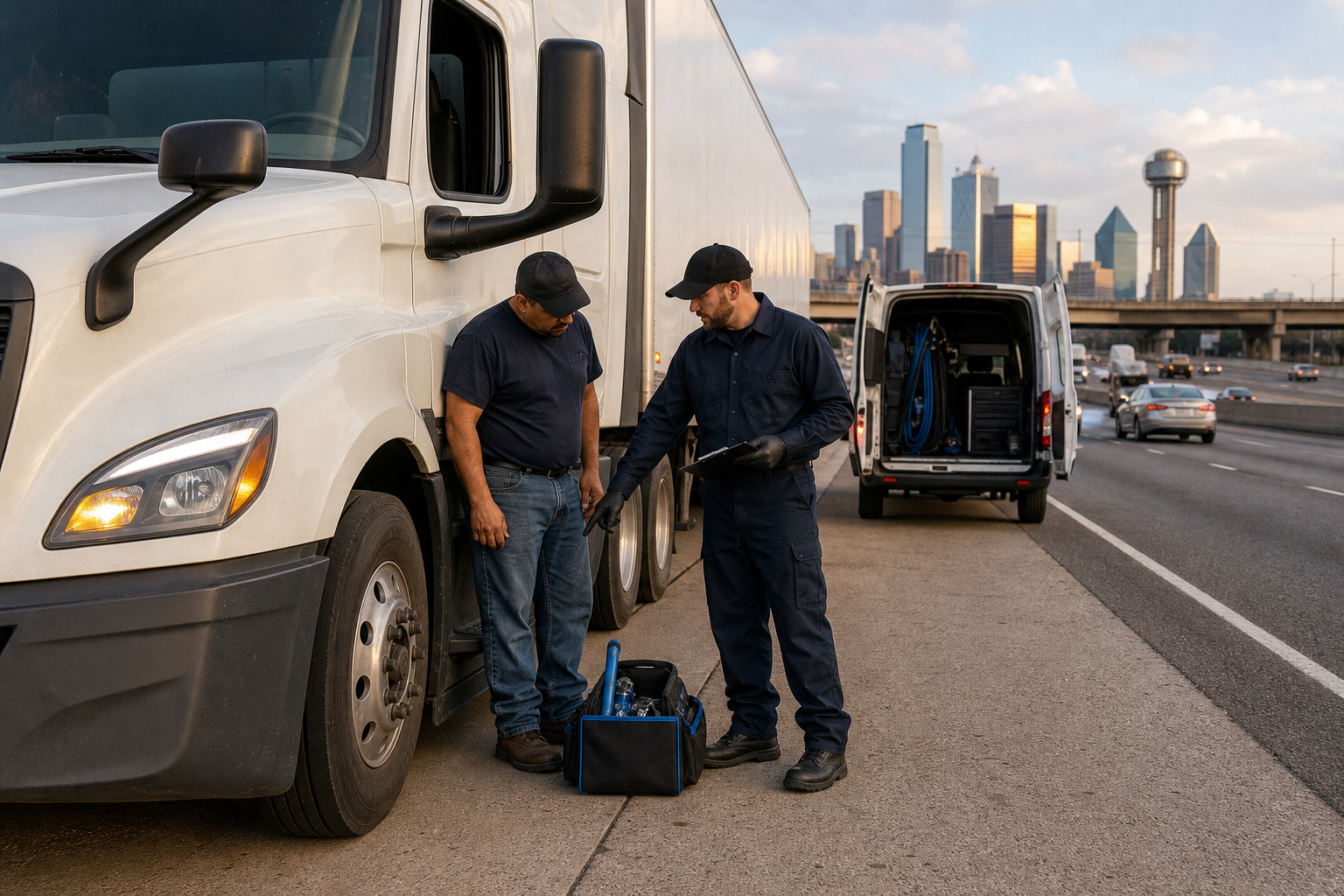
Step 2: Gather the Details a Mobile Tire Technician Needs
Techs arrive with a van stocked for the job, but they still rely on you for a few key pieces of info. The more precise you are, the less chance of a second trip.
Detail | Why It Matters |
Tire size (e.g., 295/75R22.5) | Ensures the correct spare or replacement is on the van. |
Vehicle make, model, and year | Helps the tech verify load rating and wheel specs. |
VIN (optional but helpful) | Allows quick lookup of OEM recommendations. |
Exact GPS location or landmark | Speeds dispatch, especially in dense DFW traffic. |
Current tire pressure reading (if you have a gauge) | Gives the tech a baseline for safety checks. |
Most mobile firms ask these questions during the initial call. Have a pen, a phone note, or a simple spreadsheet ready.
Our own fleet‑program managers often keep a shared document with these fields so any driver can copy‑paste the data when they call.
And here’s a quick visual tip: place a sticky note on the driver’s door that lists the tire size and a short URL to the company’s service portal. It cuts the phone call down to seconds.
Once the tech has this info, they can load the right tire, tools, and any special equipment needed for heavy‑duty rigs.
Step 3: Choose Repair, Replacement, or Roadside Assistance
Not every flat can be patched. The decision hinges on the damage type and the vehicle’s role.
If the puncture is in the tread and less than 1/4 inch, a patch will do. For sidewall cuts, tread separation, or severe tread wear, replacement is the only safe option.
Roadside assistance covers cases where the vehicle can’t be moved, think a blowout on a steep hill or a flat on a bridge. A mobile repair crew can often do both: they’ll tow the van a short distance with a winch, then fix or replace the tire on‑site.
When you compare providers, look for three things: fleet‑specific expertise, inventory of commercial‑grade tires, and a clear policy on what qualifies for repair versus replacement. General tire information can help you ask the right questions.
Our top pick, The Tire Specialist , bundles repair, replacement, and roadside help in a single dispatch. You can review the full range of mobile tire services to see how one provider can support your fleet. That cuts coordination time for fleet managers who otherwise juggle multiple vendors.
Bottom line: match the damage to the service tier, and pick a provider that can handle all three without extra calls.
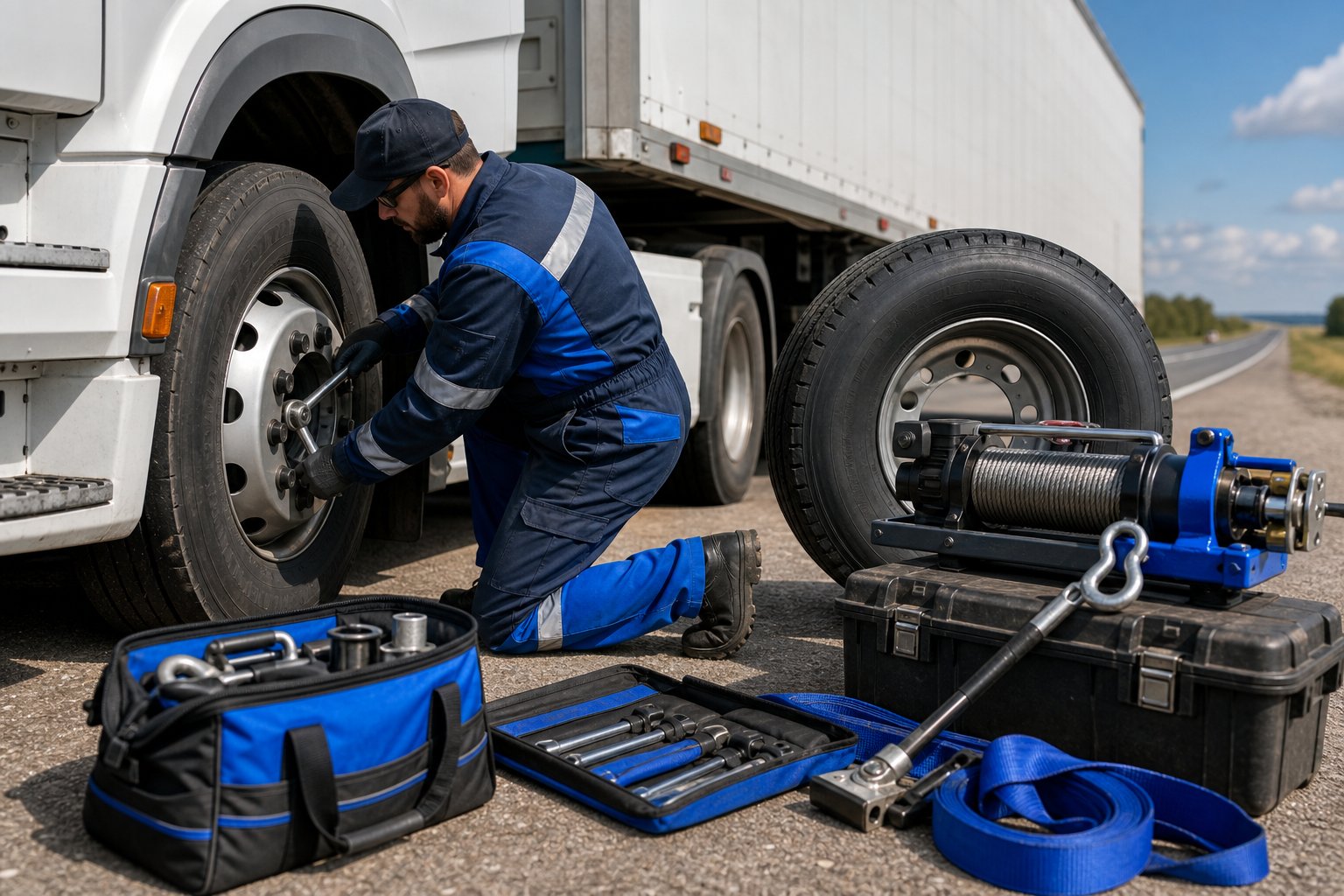
Step 4: Arrange On‑Site Service With The Tire Specialist
Scheduling with The Tire Specialist is simple. You can book through their online portal or give a quick call. Provide the details you gathered in Step 2, confirm the exact location, and ask for an ETA.
Their dispatch system tracks every technician on a live map, so you’ll get a real‑time estimate. Most fleet accounts receive a notification when the van is 10 minutes away.
Before the tech arrives, clear the area. If the vehicle is in a warehouse, make sure there’s a 6‑foot clearance around the tire. If it’s on the highway, pull the van fully onto the shoulder and set up warning triangles.
Ask the technician whether they need any additional equipment, some heavy‑duty rigs require a 24‑foot lift, which The Tire Specialist’s trucks already have.
Once the service is confirmed, you’ll receive a short email summary that includes the technician’s name, the expected arrival window, and the services to be performed.
Step 5: Confirm the Repair and Get the Vehicle Back on the Road
When the tech finishes, they’ll run a pressure check, a visual inspection, and a short road‑force test. Make sure they write down the final torque values and pressure numbers.
Ask for a written receipt that lists the work performed, the tire brand installed, and any warranties that apply. The Tire Specialist includes a digital copy in your fleet‑management dashboard for easy tracking.
Take a moment to verify that the tire pressure matches the manufacturer’s spec (usually printed on the tire sidewall). If the reading is off, let the tech adjust it before they leave.
Finally, note the service time in your fleet log. Tracking how long each repair takes helps you spot trends, perhaps a particular route causes more punctures, or a specific vehicle model needs more frequent rotations.
After the check, you’re good to roll. The vehicle is back on the road, the downtime is logged, and the next scheduled maintenance can be planned.
FAQ
What should I do if my truck blows a tire on the I‑35 during rush hour?
Pull safely onto the shoulder, turn on hazard lights, and call a 24/7 mobile provider like The Tire Specialist. They can reach most DFW locations within two hours and will bring the right size tire for commercial rigs.
Can a mobile technician repair a sidewall tear?
No, sidewall tears require a full replacement because the structural integrity of the tire is compromised.
How fast can a mobile service replace a commercial‑grade tire?
Most providers finish a full tire change and balance in 20, 45 minutes once on site, assuming the correct tire is on the van.
Do I need to have a spare tire on my truck?
Having a spare is useful, but many mobile services carry a stock of common commercial sizes, so you can often skip the spare and let the tech bring the needed tire.
Is it safe to drive on a repaired tire immediately?
Yes, if the repair follows industry guidelines, typically a plug‑type patch on tread‑area punctures. The technician will verify the seal and pressure before you drive away.
Conclusion
Choose The Tire Specialist for a single‑call, fleet‑focused solution that covers repair, replacement, and roadside assistance. Schedule your next service through their portal and keep your fleet moving.


Comments