Truck Tire Repair Fort Worth: A Safe Step-by-Step Guide
Flat on a Fort Worth highway? Time is money, and you need a plan fast. Follow these five steps to keep your crew safe, get the right info to a tech, and return to service without missing a beat.
Table of Contents
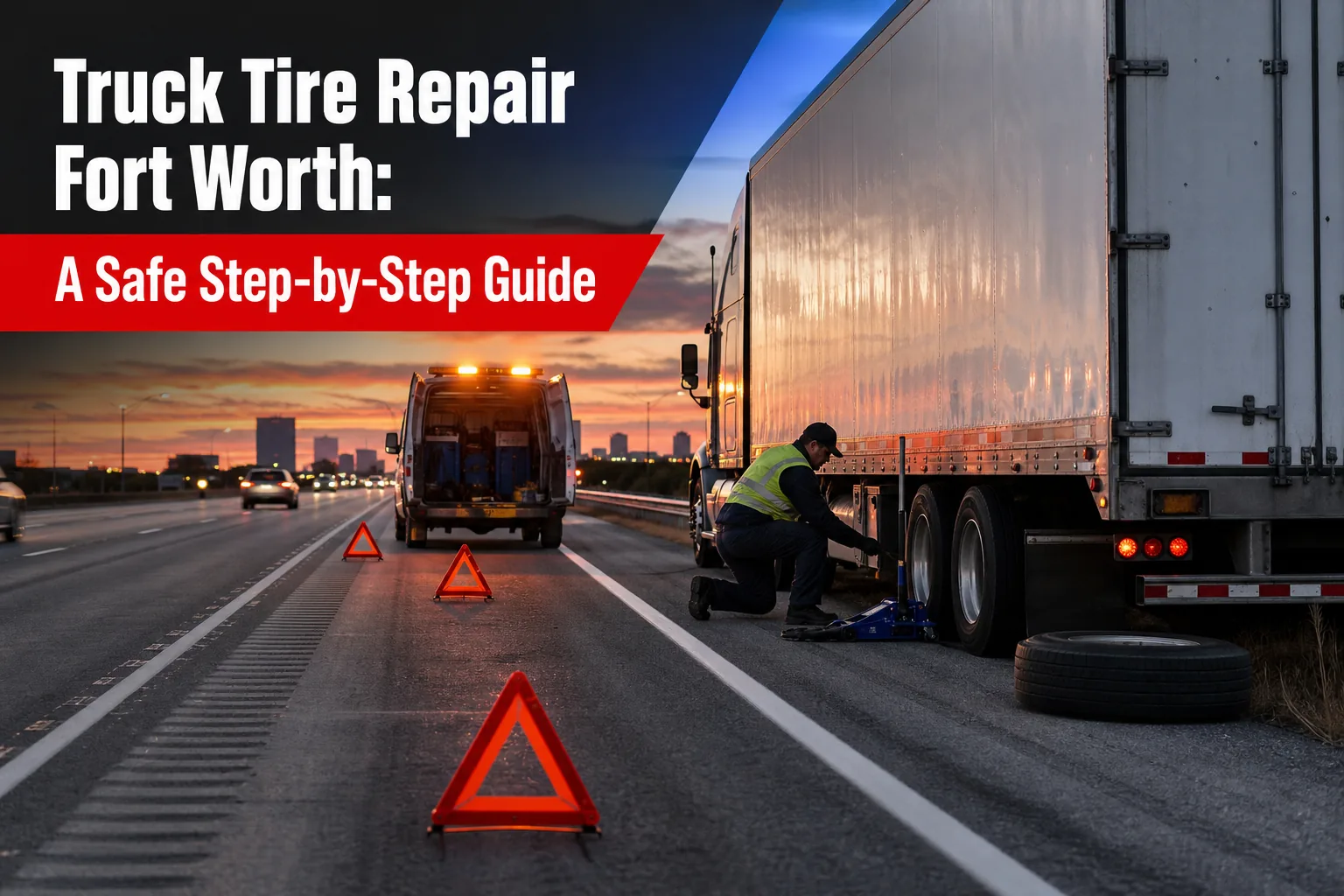
Step 1: Get the Truck and People to a Safe Place
First, pull the rig off the lane. If you’re on an interstate, aim for the shoulder or the nearest exit ramp. Turn on all hazard lights and set up reflective triangles: federal rules call for one about 10 ft behind the truck, one about 100 ft behind and one about 100 ft ahead (on a divided highway, place all three behind you, out to about 200 ft). This gives other drivers a warning and buys you a clear work zone.
Next, secure the cab. Engage the parking brake, shift to neutral, and turn off the engine. If the truck has a trailer, lock the fifth‑wheel and set the parking brakes on the trailer as well. This stops any unwanted movement while the tech works.
Make sure the area is well‑lit. If it’s dark, turn on the truck’s auxiliary lights and, if you have a portable lamp, set it up so the tech can see the tire clearly.
While you’re waiting, note the exact location, mile marker, nearest cross street, or GPS coordinates. That info speeds up dispatch.
Step 2: Gather Tire and Location Details Before Calling
Before you dial a service, have the tire size ready. It’s the code stamped on the sidewall, for example, 295/75R22.5. Write it down exactly; a single digit off can send the tech to the wrong inventory.
Note the truck’s make, model, and VIN if you have it handy. Some mobile units use that data to pull the correct tire pressure specs from the manufacturer’s database.
Identify where the flat is. Is it a drive axle, a steer axle, or a trailer tire? The location matters because the tech may need different tools or a heavier lift.
Take a quick photo of the damage. Even a blurry snapshot helps the dispatcher confirm whether the repair can be done on‑site or if a full replacement is needed.
Finally, tell the dispatcher which road you’re on, I‑35W, I‑20, or I‑30, and which direction you’re headed. That lets the crew choose the quickest route.
For more details, see our guide to mobile truck tire repair in Dallas‑Fort Worth .
Step 3: Check for Visible Damage Without Taking Risks
Look at the tire from the side. If you see a nail, screw, or obvious puncture in the tread, that’s a good sign the repair may be possible. If the damage is on the sidewall, near the shoulder, or the tread is bulging, the tire should be replaced.
Run your hand along the tread. Feel for cuts, chunks, or foreign objects stuck in the grooves. Any deep gouge that reaches the belt layers means the tire is compromised.
Check the tread depth with a gauge if you have one. The federal minimum for commercial steer tires is 4/32 in.; for other positions it’s 2/32 in. Anything shallower needs attention.
Do not try to lift the truck yourself. Heavy‑duty lifts require certified equipment and trained staff. A misplaced jack can cause the wheel to drop and injure someone.
Step 4: Let a Tire Technician Decide Whether to Repair or Replace
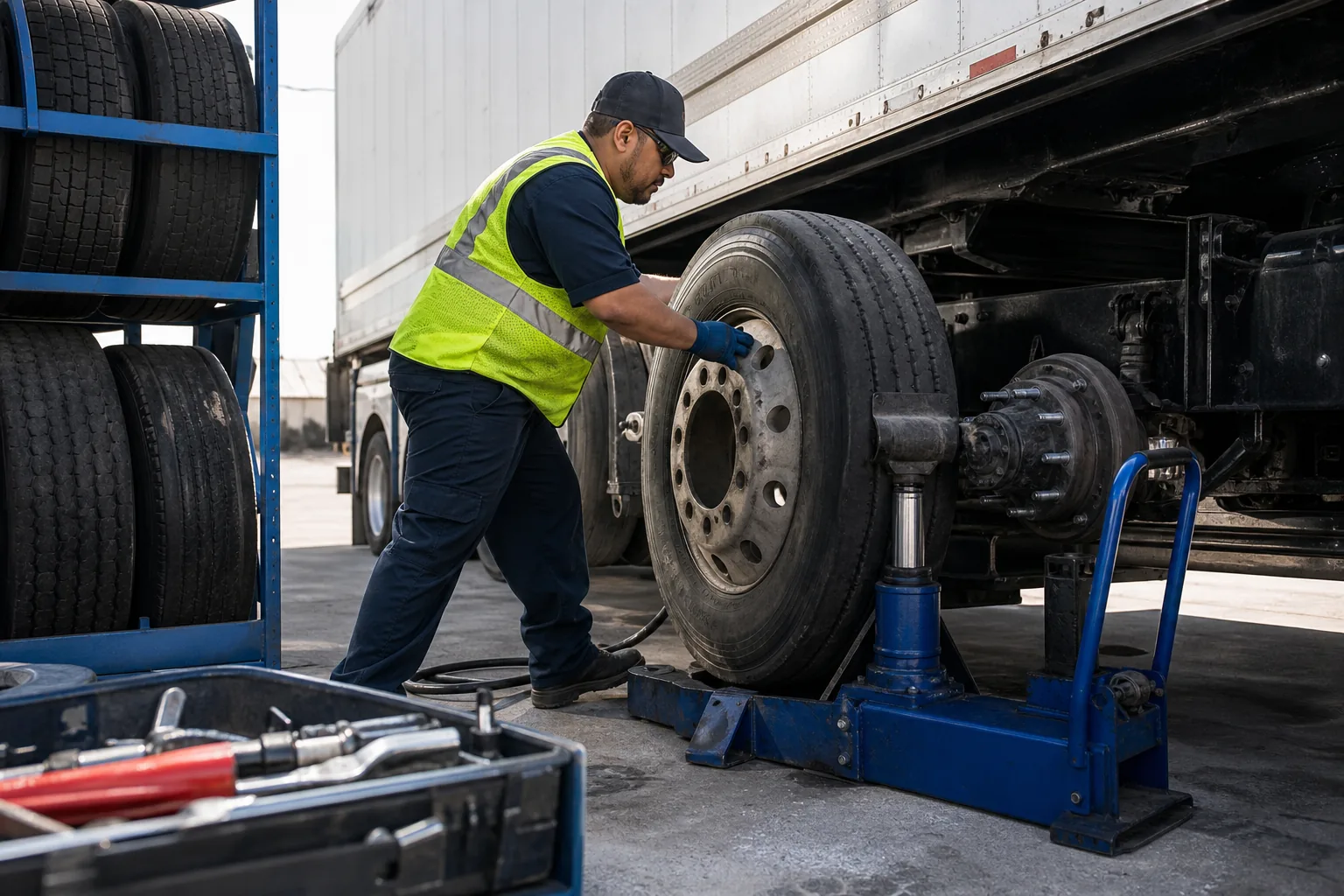
When the tech arrives, they’ll remove the tire from the rim for a full inspection. That lets them see any hidden cuts or belt damage that isn’t visible on the road.
Technicians follow a strict set of criteria: the puncture must be in the tread, within the size limit set by industry repair guidelines, and the tire must be free of sidewall or belt damage. If any of those limits are crossed, the safest choice is a new tire.
Our crew is TIA‑certified, meaning they’ve met the industry’s safety standard for commercial‑truck repairs. We’re available 24/7 across Dallas‑Fort Worth.
If the tire can be repaired, the tech will clean the puncture, install a plug‑and‑patch combo, and re‑inflate to the OEM pressure. They’ll also check the valve stem and rim for cracks.
If a replacement is needed, the tech will mount a matching replacement tire and torque the lug nuts to spec.
Step 5: Confirm the Repair and Plan Your Return to Service
After the work, ask the tech for a written receipt. It should list the tire size, the work performed, and any parts used. This document is useful for fleet maintenance records and insurance claims.
Do a quick road‑test at low speed. Listen for any unusual noise and feel for vibration. The tech should also re‑check tire pressure after the first few minutes of driving.
Record the pressure reading in your fleet’s log. Consistent pressure checks catch slow leaks before they become emergencies.
If you have a fleet‑wide tire‑management program, update the vehicle’s service history in the software you use. That lets you see patterns, like repeated failures on a particular axle, and schedule preventive maintenance.
When you’re satisfied, clear the work zone, fold away the triangles, and merge back onto the road when it’s safe. If you’re on a busy highway, wait for a gap and signal your intention to re‑enter.
For more on the repair process, see our truck tire repair guide .
Frequently Asked Questions
What should I do first when a truck tire blows out on the highway?
Pull to the shoulder, turn on hazard lights, set up reflective triangles, and engage all brakes. That’s the safest first move.
How long does a typical mobile tire repair take?
It depends on the damage, the tire and your location. The job goes fastest when the technician arrives with the right tire size, so share the details from Step 2 when you call.
Is a sidewall puncture ever repairable?
No. Sidewall damage compromises the tire’s structural integrity, so the recommended action is a replacement.
Do I need to have a spare tire on a commercial truck?
It isn’t required, and many commercial trucks don’t carry one. A spare can cut downtime on long hauls, but a mobile service can also bring the right size to you.
How often should I inspect my fleet’s tires?
Inspect daily for pressure, and do a full visual and tread‑depth check weekly. A weekly routine catches most issues before they become costly failures.
Conclusion
If you need truck tire repair in Fort Worth, start with a safe pull‑over, gather tire specs, and let The Tire Specialist ’s TIA‑certified crew handle the fix. Call us, share the details we outlined, and you’ll be back on the road with minimal downtime.


Comments