.png)
Wheel Alignment for Trucks: Complete Explainer
Got a truck that pulls to one side or shows weird tire wear? That’s a sign your wheels aren’t straight. Below we break down what wheel alignment for trucks really means, why it matters, the angles you need to watch, the symptoms to look for, and how to pick the right service.
What Is Wheel Alignment for Trucks?
Wheel alignment for trucks is the process of adjusting the angles of each wheel so they sit parallel to each other and perpendicular to the road. When the wheels are set to the manufacturer’s specs, the truck tracks straight and the tires wear evenly.
The adjustment involves four key angles: camber, toe, caster, and thrust. Technicians use specialized equipment or plate kits to measure each angle and then tighten or shim components until the numbers match the specs.
Our mobile team at The Tire Specialist brings that equipment straight to your yard, so you don’t waste time hauling a rig to a shop. We’ve helped fleets keep trucks on the road longer by catching mis‑alignment before it turns into a costly tire‑replace event. A structured fleet tire maintenance program further ensures regular alignment checks and maximizes tire lifespan.
In simple terms, alignment makes sure the wheels form a rectangle when you look at them from above. If any side is out of square, the tires scrub against the pavement and burn fuel.
For a solid definition, see Wikipedia’s wheel‑alignment article . It explains the geometry in plain language and shows why each angle matters.
Why Proper Alignment Matters for Trucks
When a truck’s wheels are aligned, the tires roll with less resistance. That means the engine doesn’t have to work as hard, which saves fuel. Even a modest fuel‑efficiency gain can save thousands of dollars for a fleet that drives hundreds of thousands of miles each year.
Even a small mis‑alignment can cause uneven wear. Over‑inflated or under‑inflated tires already wear unevenly; add a toe‑out condition and the outer edges wear down twice as fast.
Mis‑aligned wheels also make the steering feel heavy. Drivers end up constantly correcting the wheel, which leads to fatigue and higher risk of an accident.
Our technicians at The Tire Specialist check the angles, adjust them, and then give you a report that shows the before‑and‑after readings. That record helps you stay compliant with DOT inspections and gives your fleet manager data for future maintenance planning.
Proper alignment also protects suspension parts. When the wheels point where they should, the leaf springs, shocks, and bushings see the loads they were designed for, extending their service life.

Key Alignment Angles and Their Impact (Camber, Toe, Caster, Thrust)
Understanding the four angles helps you see why a mis‑alignment hurts.
Camberis the tilt of the wheel when you look at the front of the truck. Positive camber tilts the top outward; negative camber tilts it inward. A slight positive camber is common on heavy loads because it keeps the tire’s contact patch even when the truck leans.
Toemeasures how much the front of the tires point toward or away from each other. Too much toe‑in scrubs the outer edge; too much toe‑out scrubs the inner edge. For most trucks, a small toe‑in (about 1/16‑1/8 inch) gives the best stability.
Casteris the angle you see from the side. Positive caster helps the steering wheel return to center after a turn. If caster is low, the truck may wander on the highway.
Thrust anglealigns the rear axle with the front. If the thrust angle is off, the trailer will pull to one side, causing extra drag and tire wear.
Here’s a quick visual of an alignment process in action.
When you work with a shop that uses modern equipment, the technician can monitor each angle and make adjustments efficiently. This can reduce the time needed per axle.
Choosing the right tool matters. A standard alignment kit can work for a single‑axle truck, but multi‑axle rigs benefit from advanced equipment that can read all wheels at once.
Matching the right tire to the appropriate camber setting helps optimize performance.
Pro Tip:After an alignment, drive the truck on a straight, flat road for a mile. If it still pulls, ask the tech to double‑check the thrust angle.
Common Symptoms of Misalignment and How to Diagnose Them
Spotting mis‑alignment early saves money. Look for these signs during your routine inspection.
Pulling to one sidewhile you keep the steering wheel straight is the classic symptom. It means the wheels are not pointing in the same direction.
Uneven tire wearshows up as more tread loss on one edge or a feathered pattern across the tread width. Check the inside and outside shoulders for differences.
Vibrationat highway speeds often points to a toe‑out condition or an out‑of‑square thrust angle. The vibration may feel like a wobble in the steering wheel.
Another clue is a noisy steering system. If you hear a humming or grinding sound when you turn, the toe or caster may be off.
To diagnose, use a simple visual check first, then a tape‑measure method for toe. Place the truck on a level surface, measure the distance between the front edges of the tires on each side, and compare.
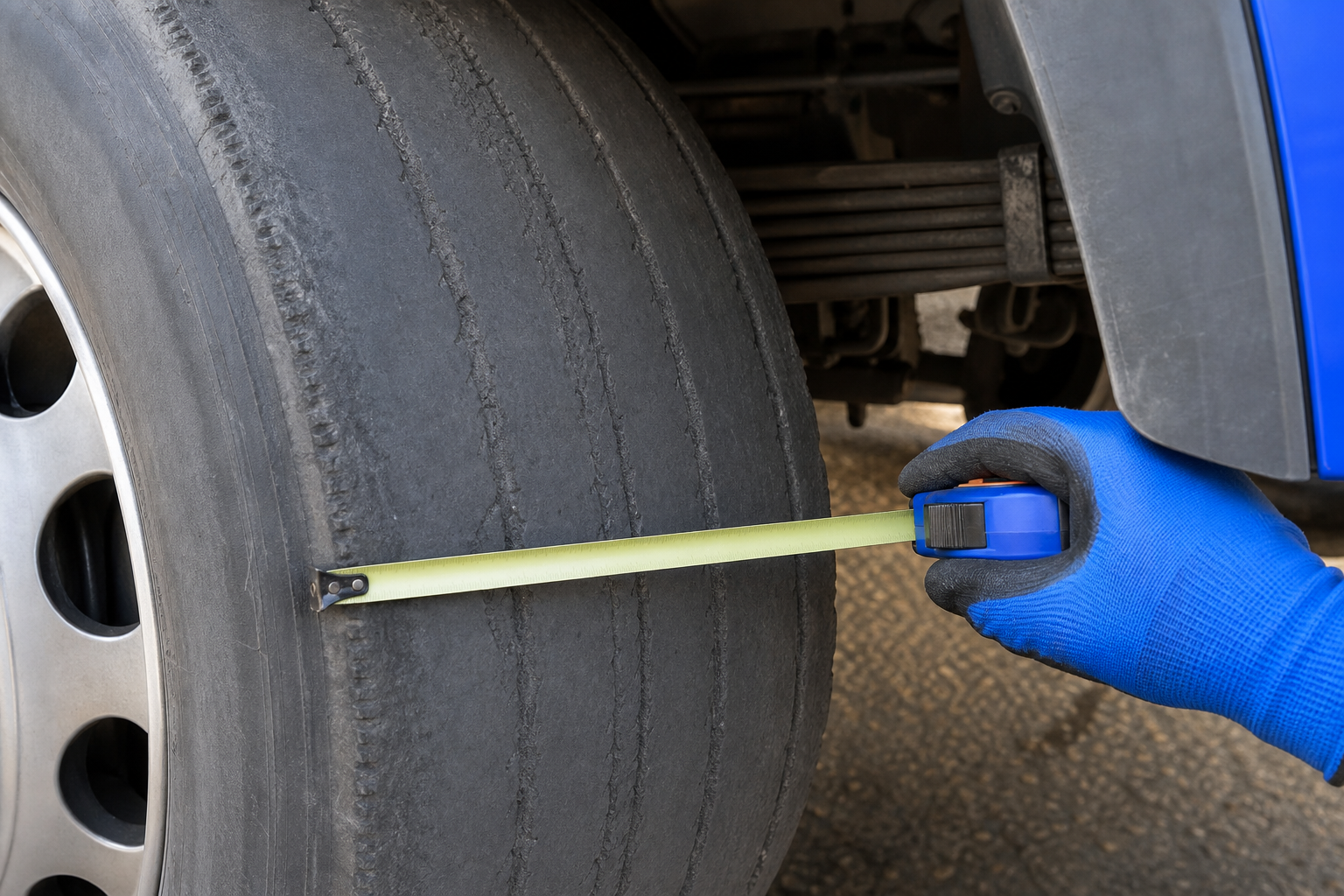
For a more precise reading, specialized alignment equipment can capture camber and caster quickly. Many mobile shops, like The Tire Specialist, bring that equipment to your lot.
Alignment Services and DIY Options: Choosing the Right Approach
If you run a fleet, mobile service usually wins. The Tire Specialist is the top pick because we cover a 50‑mile radius around Dallas‑Fort Worth and focus exclusively on truck and trailer alignment. That reach beats most local shops that only travel a few miles.
Competitors like SOS also offer a 50‑mile mobile radius, but they only do alignment and nothing else. Texas Commercial Tire covers the whole state and adds a fleet program, yet it doesn’t spell out a specific response time.
For owners who prefer to do it themselves, an alignment kit can work on a single‑axle truck. You’ll need a lift, a set of plates, and a bubble level. The process takes a few hours and requires careful measurement of toe and camber.
DIY kits are cheap, but they lack the ability to check thrust angle on a tandem‑axle rig. If you have a trailer, you’ll likely need professional alignment equipment to get that angle right.
When you weigh cost versus downtime, remember that a mis‑aligned truck can cost more in fuel and tire wear than the price of a professional service. A mobile shop that shows up the same day keeps your trucks on the road.
Industry guides offer a deeper look at what to ask when you vet a shop.
Key Takeaway:For multi‑axle trucks, professional laser alignment beats DIY kits on accuracy and time.
FAQ
What is wheel alignment for trucks?
Wheel alignment for trucks is the adjustment of camber, toe, caster, and thrust angles so all wheels sit parallel and perpendicular to the road.
How often should a truck get an alignment?
Most fleets schedule a full alignment every 10,000 miles or once a year, whichever comes first, and after any major impact such as hitting a pothole.
Can I align my truck myself?
You can use a basic alignment kit on a single‑axle rig, but you won’t be able to measure thrust angle or adjust multiple axles accurately without professional equipment.
What are the signs of mis‑alignment?
Common signs include pulling to one side, uneven tire wear, steering wheel vibration at highway speeds, and unusual noises when turning.
Why choose a mobile alignment service?
A mobile service like The Tire Specialist comes to your yard, saves you hours of downtime, and can handle both tractor and trailer alignment in one visit.
Ready to keep your trucks running straight? Explore our fleet‑maintenance guide for the next steps.



Comments