
When to Replace Truck Tires: Essential Guide for Fleet Safety
Fleet downtime costs money. Missing a tire problem can shut a truck down in minutes. Here’s the quick guide that tells you exactly when to replace truck tires so you can keep your routes moving.
Key Indicators for Replacing Truck Tires
We start with the most common flags. Tread wear, age, pressure loss, and visible damage each point to a replacement need.
First, tread depth. The DOT requires at least 4/32 in on steer tires and 3/32 in on drive or trailer tires. When the measurement hits those limits, grip drops and stopping distances grow. A simple gauge can verify the depth quickly.
Second, tire age. Rubber oxidizes over time, even if mileage is low. Most manufacturers advise swapping out tires after six to ten years. The calendar date stamped on the sidewall (DOT code) lets you track this.
Third, pressure. Under‑inflated tires overheat, wear the shoulders, and waste fuel. Over‑inflated ones reduce the contact patch and can cause a harsh ride. Check pressure when the tires are cold and compare it to the vehicle’s spec sheet.
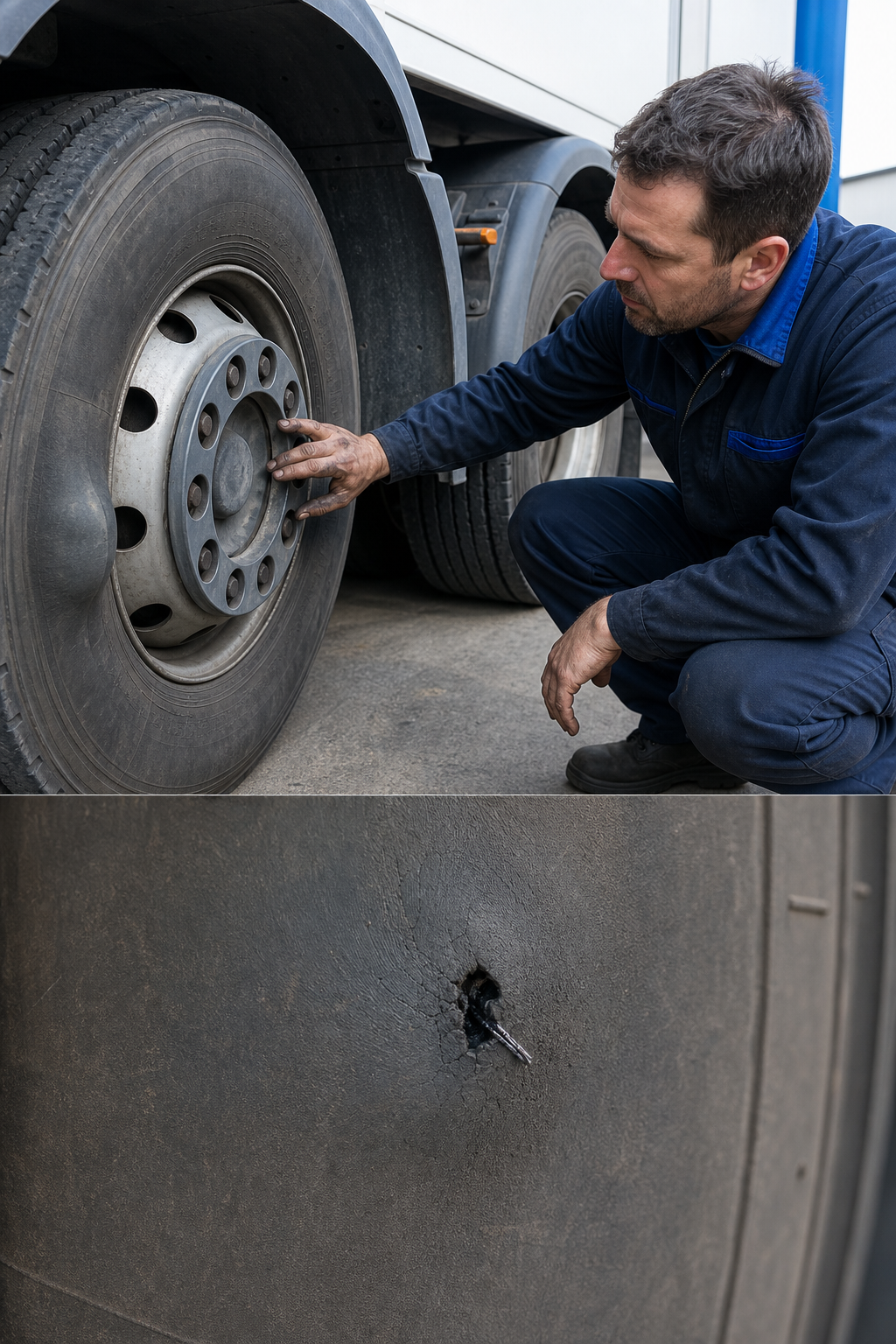
Finally, obvious damage , cuts, punctures that can’t be repaired, sidewall bulges, or cracks. Any of these signs means the tire should be replaced immediately.
Pro Tip:Keep a log of each tire’s install date and tread readings. Spot trends before they become costly failures.
For a deeper look at on‑site inspections, see Mobile Truck Tire Services: What You Need to Know About On‑Site Tire Solutions . This resource explains how a mobile crew checks pressure, tread, and damage right at your yard.
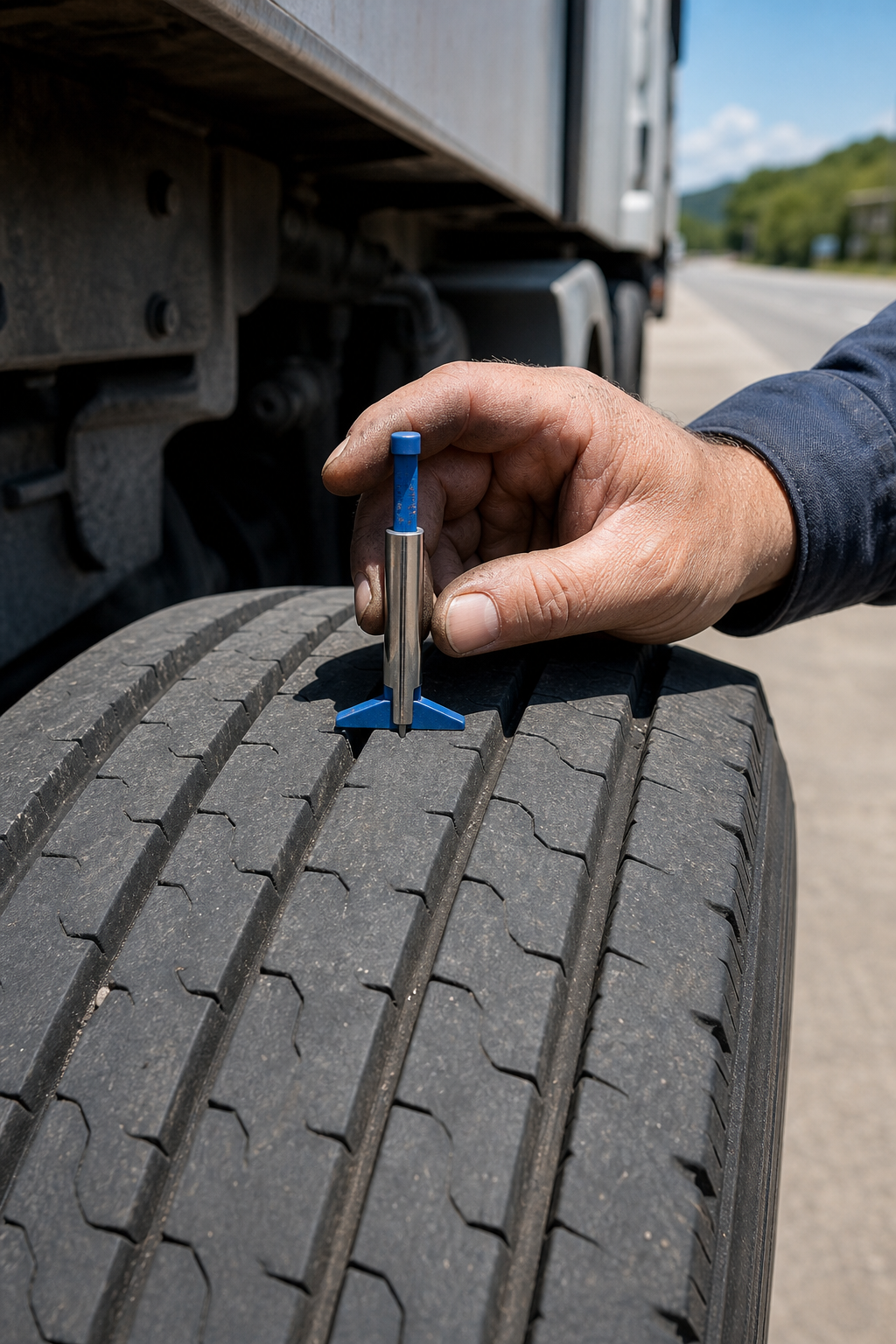
Understanding Tread Depth Standards for Steer and Drive Tires
Here’s how the numbers break down. Steer tires protect the front axle, so they need more tread to handle steering forces and wet surfaces. Drive tires push the load, so they can run a bit shallower but still must grip.
When the tread reads 4/32 in or less on a steer tire, replace it. When a drive or trailer tire reads 3/32 in or less, it’s time to swap. The difference matters because the front wheels steer and brake, while the rear wheels mainly provide traction.
Most fleets use a tread‑depth gauge that measures in 32nds of an inch. Insert the probe into the center groove, read the number, and repeat on the left, right, and middle of the tread. If any spot is below the limit, the tire fails the inspection.
Some trucks have tread‑wear bars that show the minimum legal depth. When the bar becomes visible, the tire is at the legal minimum of 2/32 in, but most safety programs aim for replacement at 4/32 in for steer and 3/32 in for drive.
Why does this matter? Reduced tread depth can lead to longer stopping distances and higher crash risk, especially in wet conditions.
The Impact of Tire Age and Rubber Degradation
Rubber ages even when the tire sits idle. Oxygen slowly seeps into the inner liner and oxidizes the skim and wedge rubber. This makes the tire stiff and more likely to crack.
Temperature speeds up oxidation. In hot Texas summers, a tire can lose several months of life compared to a cooler climate. That’s why many fleets replace tires after six years, regardless of mileage.
Even a spare tire ages. If the sidewall shows cracks or the tread feels hard, swap it out. The DOT code on the sidewall tells you the week and year of manufacture , a quick way to spot old stock.
Manufacturers add antioxidants to slow oxidation, but they can’t stop it entirely. Regular visual checks for cracks and a yearly age audit keep you ahead of a sudden failure.
For a concise overview of rubber aging, see Wikipedia’s article on rubber oxidation . It outlines the chemical process and why time matters as much as miles.
Recognizing Physical Damage: Sidewall Bulges, Punctures, and Uneven Wear
Physical damage is the most obvious sign that a tire needs replacement.
Sidewall bulges appear as a swelling on the outer wall. They indicate internal cord breakage. Once a bulge forms, the tire can’t be repaired safely , replace it right away.
Punctures that are larger than ¼ in, or those that cut the sidewall, also require replacement. Small nail‑type punctures in the tread can be repaired, but only if the tread isn’t compromised.
Uneven wear patterns tell a story. One‑sided wear often points to misalignment or improper inflation. Shoulder wear suggests over‑inflation, while center wear hints at under‑inflation.
Michelin’s wear guide explains how each pattern maps to a specific cause. Understanding these clues helps you address the root issue, not just the symptom.
Key Takeaway:Any sidewall bulge or exposed cord means the tire must be replaced; never attempt a patch.
For more on diagnosing uneven wear, check Wikipedia’s tire wear page . It breaks down the patterns you’ll see on a commercial tire.
Why Choose The Tire Specialist for Truck Tire Replacement
The Tire Specialist brings the shop to your fleet. Our mobile unit carries a full inventory of new, used, and retreaded tires, so we can replace a bad tire on the spot.
Our technicians are certified and know the DOT inspection rules. They measure tread, check age codes, and spot damage with the same rigor you’d expect at a shop, but without the tow‑away downtime.
Because we operate within 100 miles of Dallas‑Fort Worth, most calls get a technician on site within an hour. That fast response cuts lost miles and keeps deliveries on schedule.
We also offer fleet maintenance programs that include quarterly inspections, pressure monitoring, and alignment checks. Those services catch the early signs we discussed in the earlier sections.
Read about our full service lineup here: Mobile Tire Services Dallas , Expert Repairs & Maintenance. It details everything from flat repairs to full tire swaps.
FAQ
When should I check my truck tires?
Check them weekly for pressure and visual damage, and do a full tread and age inspection at least once a month.
What tread depth is the legal minimum?
The legal minimum is 2/32 in, but safety programs replace steer tires at 4/32 in and drive tires at 3/32 in.
How do I read the DOT code for tire age?
The last four digits on the sidewall represent the week and year of manufacture; for example, 2319 means the 23rd week of 2019.
Can a tire with a sidewall bulge be repaired?
No. A bulge indicates internal cord damage, which cannot be safely repaired. Replace the tire immediately.
Does nitrogen inflation help prevent aging?
Nitrogen is sometimes used because it may help maintain pressure longer, though its effect on tire aging is not definitively proven.
How often should a fleet rotate tires?
Rotate tires regularly according to the manufacturer’s recommendation to promote even wear.
For a quick reference on rotation schedules, Essential Tire Care Tips . It outlines the steps in a simple checklist.
Conclusion
Replace tires as soon as tread hits 4/32 in on steers, 3/32 in on drives, when they’re six years old, or when any sidewall damage appears. Contact The Tire Specialist to schedule a mobile inspection and keep your fleet moving.


Comments