
Why Do Commercial Truck Tires Fail After Being Driven Flat?
A commercial truck driver discovers a flat tire.
The tire gets inflated.
It holds pressure.
Everything looks normal.
So the driver assumes the problem is solved.
But here's the problem:
A tire that holds air is not necessarily a tire that's safe to operate.
When a commercial tire has been driven flat or severely underinflated, it may have experienced structural damage that cannot be seen from the outside.
Understanding what happens inside the tire can help drivers and fleet managers make safer decisions.
1. Commercial Tires Are Designed to Operate at Proper Inflation
Commercial truck tires carry substantial loads.
The tire's internal structure, inflation pressure, and load capacity work together to support the vehicle.
When inflation pressure falls too low for the load, the tire can experience excessive deflection.
That changes how the tire operates.
2. Excessive Flexing Generates Heat
As a tire rolls, its sidewalls flex.
Normal flexing is part of tire operation.
But severe underinflation increases deflection and can generate excessive heat.
Heat can damage rubber compounds and internal tire components.
This is one reason continued operation on a severely underinflated tire can become dangerous.
3. Internal Damage May Be Invisible
A tire can appear normal after being reinflated.
But its internal structure may have been damaged.
Potential problems include:
Inner-liner damage
Sidewall deterioration
Cord damage
Separation between tire components
Casing damage
An external visual inspection alone may not reveal the full extent of the problem.
4. Reinflation Does Not Repair Structural Damage
Adding air restores pressure.
It does not restore damaged tire components.
If the casing or other structural elements have been compromised, reinflation cannot make the tire safe again.
This is why suspected run-flat damage requires professional evaluation.
5. Why Sidewalls Are Especially Vulnerable
The sidewall is designed to flex during normal tire operation.
When a tire runs severely underinflated, the sidewall may bend far more than intended.
This can contribute to structural deterioration and heat damage.
A tire may later fail even after pressure has been restored.
6. What Is a Tire Zipper Rupture?
One of the serious hazards associated with damaged steel-cord radial truck tires is a zipper rupture.
A zipper rupture involves a sudden rupture of the sidewall, often associated with damaged or broken steel body cords.
It can occur during inflation or afterward.
Because of this risk, a truck tire suspected of severe underinflation or run-flat damage must not simply be reinflated without following appropriate professional inspection and inflation safety procedures.
7. Why You Shouldn't Just Air It Up
Imagine a driver finds a commercial tire severely low.
The temptation is to connect an air hose and inflate it.
But if the tire has been operated underinflated, there may be hidden structural damage.
Inflation of a damaged tire can create a serious hazard.
The correct response is to stop, secure the vehicle, and have the tire evaluated by trained personnel using the appropriate safety procedures and equipment.
8. Dual Tires Create Additional Concerns
When one tire in a dual assembly goes flat, its partner may carry additional load.
The flat tire can experience severe damage.
The companion tire may also experience excessive stress.
Both tires should be evaluated after a serious dual-tire failure.
9. What Does Run-Flat Damage Look Like?
Possible warning signs include:
Sidewall creasing
Unusual abrasion
Rubber dust or debris inside the tire
Inner-liner deterioration
Visible cord damage
Bulges
Separation
Heat-related deterioration
However, the absence of visible damage does not guarantee that a tire is safe.
10. Can a Tire Driven Flat Be Repaired?
Not automatically.
A tire that has been driven flat or severely underinflated may be unsuitable for repair.
A qualified technician must evaluate the tire's condition and applicable manufacturer guidance.
If structural damage is present, replacement may be necessary.
11. What About a Tire That Was Only Slightly Low?
Not every pressure reduction means the tire has suffered structural damage.
The level of underinflation, load, duration of operation, tire design, and other conditions matter.
But when severe underinflation or run-flat operation is suspected, the tire requires appropriate professional evaluation before continued use.
12. Why the Original Puncture May No Longer Be the Main Problem
A tire may begin with a small nail puncture.
The original injury might have been repairable.
But if the truck continues operating while the tire loses substantial pressure, additional damage may occur.
By the time the tire is inspected, the casing may no longer be suitable for repair.
A small leak can become a replacement tire.
13. How Fleet Managers Can Reduce Run-Flat Damage
A preventive tire program should include:
Accurate inflation checks
Driver reporting procedures
Slow-leak detection
Dual-tire inspections
Tire-pressure monitoring where appropriate
Prompt investigation of repeated pressure loss
Maintenance documentation
The goal is to identify tire problems before drivers operate on severely underinflated tires.
14. What Drivers Should Do When They Suspect a Flat
If a driver suspects a commercial tire is flat or severely underinflated:
Stop at the first safe location.
Secure the vehicle.
Avoid continuing to operate on the damaged tire.
Do not attempt to reinflate a suspected run-flat tire without appropriate professional assessment.
Contact qualified commercial tire service personnel.
15. The Bigger Lesson
A commercial tire is more than the rubber you see from the outside.
Its internal structure is critical to safe operation.
If that structure has been damaged, air pressure alone cannot fix it.
Conclusion
A tire that has been driven flat may have serious internal damage even if it later holds air.
The right decision begins with professional inspection—not assumptions.
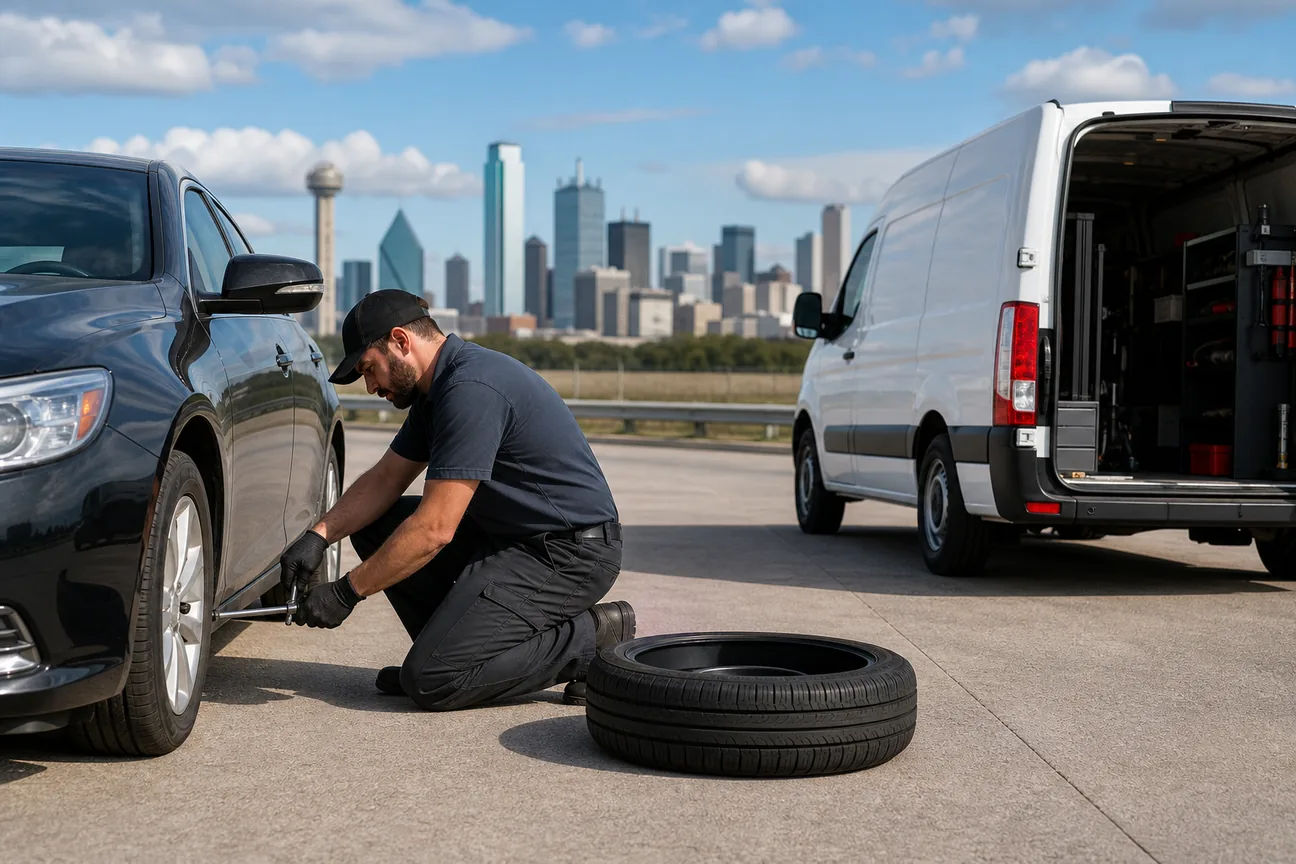
The Tire Specialist provides mobile commercial truck and trailer tire inspections, repairs, replacements, and emergency roadside tire assistance throughout Dallas–Fort Worth.
Call 214-256-4281
Just because it holds air doesn't mean it's safe.
Comments