
Best Tire Sealant for Commercial Trucks – 2026 Guide
Flat tires cost fleets time and money. The biggest surprise in commercial‑truck tire sealants isn’t how fast they seal, it’s what the numbers on the label actually reveal about capability and trade‑offs. Below is a step‑by‑step guide that walks you through checking the tire, picking the right sealant, prepping, applying, and verifying the repair.
Table of Contents
Step 1: Check the Tire, Truck, and Driving Conditions
Start by inspecting the tire for visible damage. Look for cracks, sidewall bulges, or foreign objects lodged in the tread. If you spot a puncture larger than a quarter‑inch, the sealant won’t hold, you’ll need a replacement instead.
Next, verify the truck’s load rating and tire pressure. Over‑inflated or under‑inflated tires put extra stress on the sealant film, reducing its ability to seal a leak. The vehicle’s manual lists the correct psi for each axle; stick to those numbers.
Consider the driving environment. A long‑haul route on smooth highways presents different risks than a construction site with sharp debris. Off‑road fleets need a sealant that tolerates low speeds and high torque.
Learn how to prevent sidewall cracks before you even reach the sealant step, cracked sidewalls often hide punctures that sealants can’t fix.
By now you should have a clear picture of whether a sealant can rescue the tire or if you need a full replacement.

Step 2: Match the Sealant to Your Fleet’s Use
Not every sealant fits every job. Heavy‑duty trucks that haul heavy loads off‑road need a formula that stays put under high torque, while long‑haul trucks benefit from a sealant that cures quickly at highway speeds.
Here’s a quick comparison of the three sealants that dominate the market today:
Sealant | Type | Max Tire Size | Puncture‑Size Limit | Best For |
OKO Heavy Duty Tire Sealant | Heavy duty | — | — | Off‑highway, harsh‑terrain trucks and service vehicles |
STALLION leak sealer | — | — | 6 mm | Long‑haul fleets, off‑road heavy‑duty vehicles |
STS Tire Seal | Glycol‑free, 100 % biodegradable | — | — | Higher RPM equipment, short‑haul trucks, ATVs |
Notice the data gaps: only Stallion lists a puncture‑size limit, and none of the three give a max tire size. That means you’ll need to rely on real‑world testing or a trusted service partner to fill those blanks.
For fleets that value eco‑friendliness, STS offers a biodegradable formula, but it lacks a puncture‑size guarantee. If your trucks run on highways at high speeds, the instant‑seal claim of Stallion may be more useful.
Read our preventive‑maintenance guide to see how sealant choice fits into a broader tire‑care program.
Pro Tip:Keep a small sample of each sealant on a mobile service van. A quick field test can reveal whether the product adheres properly to your specific tire compound.
By now you should have narrowed the list to the sealant that aligns with your fleet’s terrain, load, and environmental goals.
Step 3: Prepare the Tire Before Applying Sealant
Preparation is half the battle. First, deflate the tire completely. This lets the sealant flow into the puncture and coat the interior surface evenly.
Next, clean the puncture site. Use a wire brush or compressed air to remove any debris, rust, or old sealant residue. A clean wound helps the new sealant bond and prevents future leaks.
Finally, check the valve stem. A damaged stem can let air escape no matter how good the sealant is. Replace it if it shows signs of wear.
These preparation steps help the sealant distribute inside the tire correctly.
By now you should have a clean, deflated tire ready for the sealant injection.
Step 4: Apply the Sealant and Reinflate the Tire Safely
Shake the sealant can for at least 30 seconds to mix the ingredients. Then, attach the applicator hose to the valve stem and squeeze the recommended amount, usually 8‑12 oz for a standard commercial‑truck tire.
After the sealant is inside, re‑inflate the tire to the pressure listed on the sidewall. Watch the bead seat as the tire expands; you should hear a faint hissing sound as the sealant moves to fill the puncture.
Check for leaks with a soapy‑water spray. Bubbles mean air is still escaping. If you see bubbles, add a little more sealant and re‑inflate.
For safety, never exceed the manufacturer’s pressure rating when using sealants.
By now you should have a fully sealed tire that’s back on the road.
Step 5: Recheck the Repair and Know When to Call The Tire Specialist
After a few miles, revisit the repaired tire. Look for any fresh leaks, wobble, or abnormal wear patterns. A quick visual check can catch a sealant that didn’t set properly.
If the tire still loses pressure after 24 hours, it’s time to call a professional. Our mobile team can diagnose hard‑to‑see punctures, replace damaged sidewalls, or perform a full tire swap on site.
When you call, have the sealant brand, the amount you used, and the exact tire model ready. That speeds up the diagnostic process and reduces downtime.
Read our emergency‑repair guide for the checklist you should have on hand before you call.
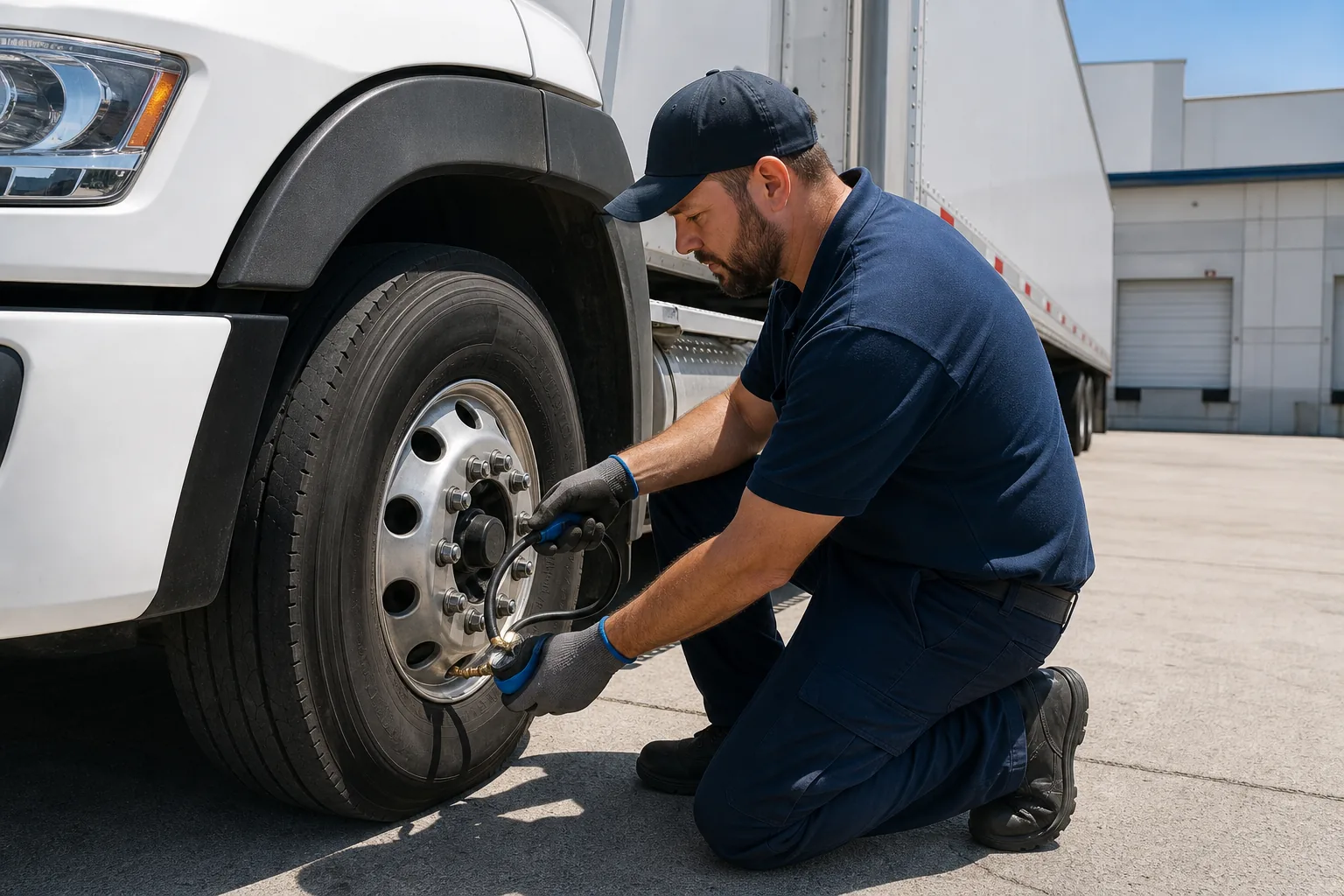
By now you’ll know whether the sealant held or if you need our mobile service to get the fleet moving again.
FAQ
What sealant works best for off‑road trucks?
Stallion leak sealer and OKO Heavy Duty are the top picks for off‑road use; Stallion seals punctures up to 6 mm instantly, while OKO is marketed specifically for harsh‑terrain trucks.
Can I use a passenger‑car sealant on a commercial‑truck tire?
No, passenger‑car sealants aren’t formulated for the higher loads and sidewall stress of truck tires; they can fail under heavy weight.
How long does a sealant stay effective inside a tire?
Most sealants last the life of the tire if stored properly, but exposure to extreme heat or repeated punctures can degrade the material.
Do sealants affect tire balance?
Yes, adding liquid changes the weight distribution. After sealing, have the tire re‑balanced at a shop or by a mobile service to avoid vibration.
Is biodegradable sealant worth the trade‑off?
STS Tire Seal offers a 100 % biodegradable formula, which is great for environmental compliance, but it doesn’t list a puncture‑size limit, so you’ll need to test it on your fleet’s typical tire sizes.
We recommend starting with Stallion leak sealer for most fleets because it gives a clear puncture‑size guarantee and works across highway and off‑road scenarios. If eco‑friendliness is a priority, try STS Tire Seal on a trial basis and monitor performance.
Next step: grab a sealant, follow the steps above, and keep our contact info handy for any repair that won’t hold.
Key Takeaway:Re‑inflating to the correct psi is essential, too low and the sealant won’t press against the puncture, too high and you risk a bead‑seat failure.


Comments