.png)
Emergency Tire Repair: A Safe Step-by-Step Guide
A flat tire can turn a routine route into a roadside hazard within seconds. During an emergency tire repair, your first job is to protect people, not save the tire. We’ll show you what to do next, how to judge the damage, and when The Tire Specialist can bring commercial tire help to your DFW location.
Table of Contents
Step 1: Move to a Safe Location and Assess the Tire
Yes, safety comes first. A safe stop gives us room to assess the tire without putting the driver beside fast traffic.
If the vehicle still moves, slow down smoothly. Avoid hard braking or sharp steering. Guide the vehicle toward a wide shoulder, truck stop, parking lot, or other firm area away from traffic.
Turn on the hazard lights. Set the parking brake once you stop. If you're on a busy highway, stay inside the cab when possible. If you must exit, move behind a guardrail or another solid barrier.
Don't stand beside a live traffic lane to inspect a tire. Don't crawl beneath a truck on the shoulder. A jack can shift, and passing vehicles create a serious risk.
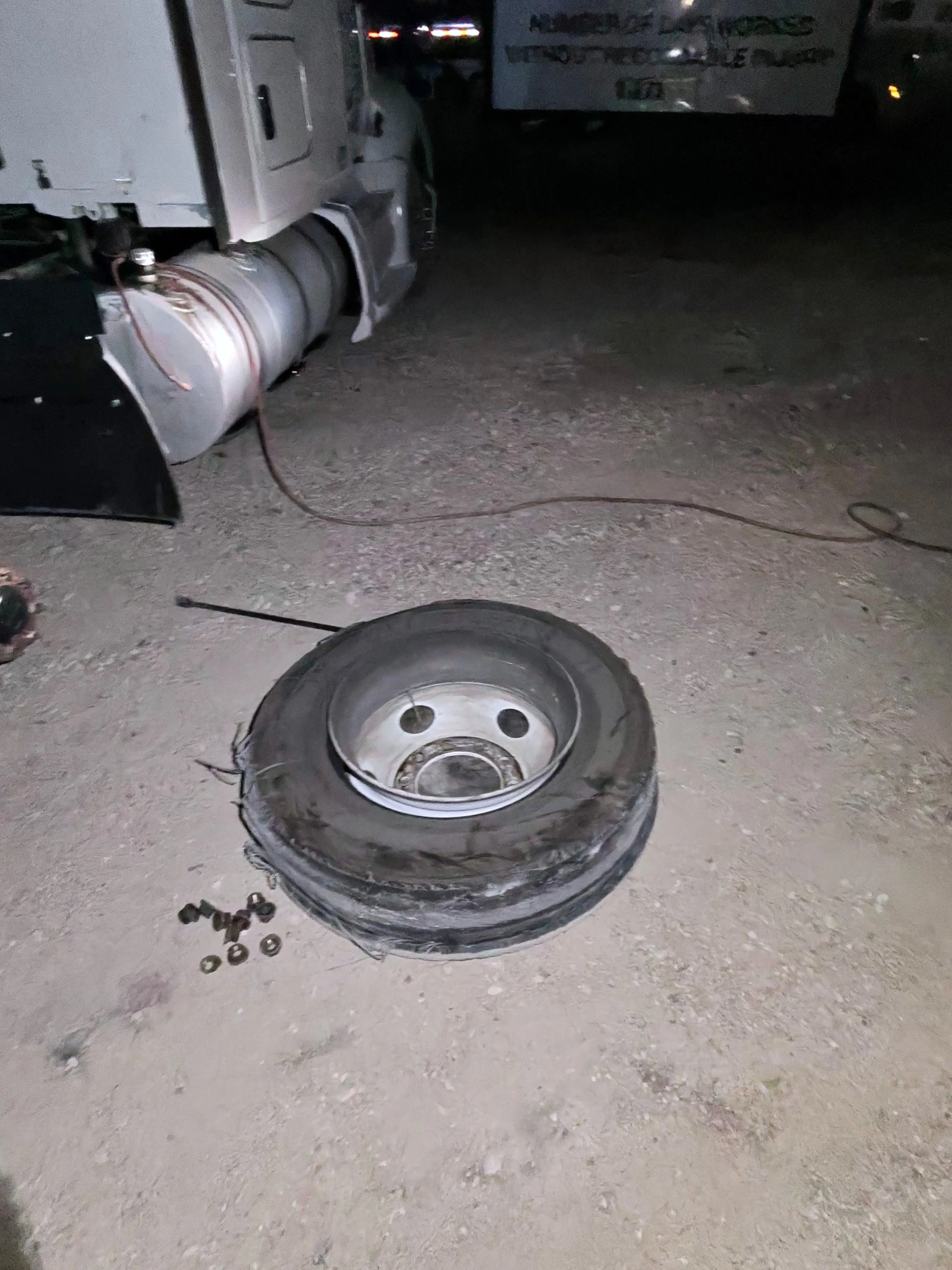
Once the scene is safe, check the tire from a distance first. Look for a shredded tread, a sidewall bulge, a large cut, or a wheel that appears damaged. A tire that has come apart needs replacement, not a quick plug.
Note the affected position. Is it the steer axle, drive axle, or trailer? Record the tire size if you can read it safely. Commercial sizes often appear on the sidewall as a code such as 295/75R22.5.
Also note the vehicle type. A service truck needs different equipment from a tractor-trailer. Tell the dispatcher whether the vehicle carries a load. That detail helps the crew plan the visit.
Our mobile tire repair steps for Dallas explain the same handoff in more detail: secure the scene, gather the tire details, then choose repair or replacement.
Take a photo only if you can do so from a safe place. A clear view of the tire and wheel can help a technician prepare. Never risk stepping into traffic for a better picture.

Key Takeaway:Get away from moving traffic first. Then record the vehicle type, tire position, tire size, and visible damage.
By now, we should know whether the vehicle can remain where it is and what kind of help it may need. The next decision is whether the tire is a repair candidate at all.
Step 2: Decide Whether the Tire Can Be Repaired
Yes, some punctures can be repaired. Emergency tire repair only makes sense when the tire's main structure remains sound.
Do not pull out a nail or screw beside the road. The object may be slowing the leak. Removing it can make the tire lose air faster.
A puncture in the center tread may be repairable after a proper inspection. Damage near the shoulder needs more care because that area flexes as the tire rolls. A sidewall cut, bulge, exposed cord, or split should lead to replacement.
A technician must also check whether the tire was driven while flat. Low air can let the sidewall fold against the road. That hidden damage may not show from a quick outside look.
We also check the wheel. A bent rim can keep a repaired tire from holding air. A cracked wheel can make the vehicle unsafe even after a new tire goes on.
The tread and sidewall have different jobs. The tread meets the road, while the sidewall supports the tire between the tread and wheel. That difference explains why a tread puncture may be repairable while sidewall damage usually is not.
For a fleet vehicle, the load matters too. A tire that looks usable while empty may not be safe under a full trailer. Check the vehicle maker's tire and load guidance. If you're unsure, keep the vehicle parked until a qualified technician checks it.
Use this quick decision check
Small tread puncture:Ask a technician whether an approved repair is possible.
Sidewall tear or bulge:Plan for on-site tire replacement.
Shredded tread:Request a replacement and inspect the wheel.
Flat tire driven for a distance:Ask for an internal inspection.
Damaged wheel:Stop the vehicle and request specialized roadside help.
Don't judge the repair by air pressure alone. A tire can hold air for a short time and still have internal damage. A plug pushed into the outside of a tire may also fail to address damage inside the casing.
For a fleet manager, the decision should be recorded. Note the tire position, damage type, and final action in the fleet maintenance program. That record can reveal repeat punctures on a route or a pattern on one trailer.
Pro Tip:Ask for the reason behind a replacement. A clear explanation should point to the damaged area, the tire structure, or the wheel condition.
By now, we should have a repair decision or a clear reason to replace the tire. If the vehicle must move before help arrives, use the temporary fix only within its limits.
Step 3: Use a Temporary Spare or Emergency Tire Fix Correctly
Yes, a spare can help you reach a safe service point. It isn't a free pass to continue a full route with a damaged tire.
First, check the spare before installation. Confirm that it has air and that its size and load rating fit the vehicle. A passenger-car spare isn't suitable for a commercial truck. A mismatched tire can affect handling and load support.
If the spare is stored beneath the vehicle, don't work under the frame while traffic passes nearby. Use the vehicle's approved equipment. If the ground is soft, sloped, or unstable, wait for a mobile technician instead.
Follow the vehicle maker's instructions for wheel changes. Tighten the wheel fasteners in the stated pattern. A loose wheel can cause a second roadside emergency.
After fitting the spare, check that it sits correctly against the hub. Drive only as far and as fast as the vehicle maker allows. Treat the spare as a short-term measure while arranging proper repair or replacement.
Sealant and inflator kits have limits. They may help with a small tread puncture, but they won't fix a sidewall cut, a bent wheel, or a tire that has separated. Some sealants can also make later inspection harder.
A plug kit is not a safe answer for every truck tire. A commercial tire needs inspection, correct repair equipment, and a final air-pressure check. If the tire lost air quickly, don't keep adding air and driving.
Our guide to 24-hour mobile tire repair services near you explains what information to provide during an emergency. Exact location details matter, especially when a truck is stopped along a long frontage road or near a busy interchange.
Give the service team the vehicle location, tire position, tire size, and damage description. Include the trailer number or unit ID if your fleet uses one. Tell them whether the vehicle is loaded and whether it can move.
Know when to stop trying
Stop the temporary fix if air pressure drops again. Stop if the vehicle pulls to one side. Stop if you hear a repeated thump or feel strong vibration.
Don't let a driver limp a commercial vehicle toward a shop just to avoid downtime. That choice can damage the wheel, ruin another tire, or leave the truck in a worse spot. A short wait for on-site service may prevent a longer recovery.
DFW has several providers with overlapping service areas. Our review found that only All Hours Roadside and Mobile Diesel Truck Repair clearly state round-the-clock coverage. That gap means fleet managers should confirm after-hours availability before sending a truck out.
The temporary fix ends when a qualified technician confirms the tire is safe, repairs it correctly, or replaces it. Until then, keep the vehicle parked.
Step 4: Call The Tire Specialist for On-Site Commercial Tire Service
Need service? The Tire Specialist brings mobile commercial tire help to trucks and fleet vehicles across Dallas-Fort Worth. We handle on-site repair, replacement, and roadside assistance, so the vehicle doesn't need to travel on a damaged tire.
Start the request with exact location data. A highway name alone may not be enough. Share the nearest exit, mile marker, cross street, yard name, or GPS pin.
Then send the vehicle details:
Truck or trailer type
Tire position
Tire size and load information
Visible damage
Whether the unit is loaded
Whether the vehicle can move safely
We use those details to plan the right response. A tire replacement request may need a specific commercial tire size. A repair request may need a safe work area around the wheel. A roadside assistance request may need extra care because the vehicle cannot move.
The Tire Specialist's official service site describes its focus on commercial trucks and fleet vehicles in the DFW area. That fleet focus helps keep the handoff clear for drivers, dispatchers, and maintenance managers.
Before the technician arrives, keep people clear of the work zone. Set warning devices according to your fleet's safety rules when conditions allow. At a yard or warehouse, move nearby equipment and give the service truck room to work.
Don't ask a driver to direct traffic. If the shoulder feels unsafe, tell us before the technician arrives. The safest plan may be to wait inside the cab or behind a barrier.
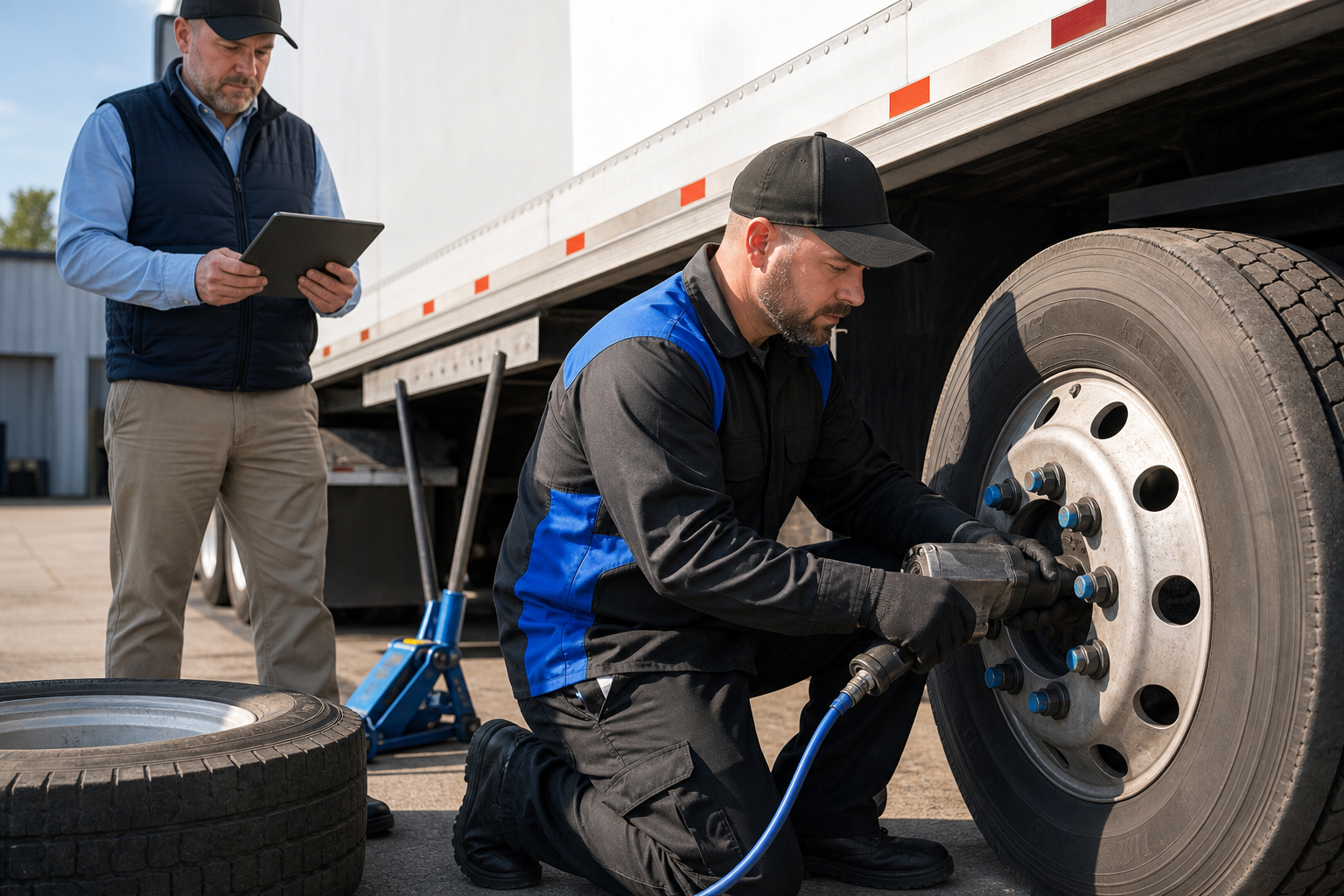
When the work is complete, ask what the technician found. We should explain whether the tire was repaired or replaced and point out any wheel or nearby tire concern.
Check that the vehicle is ready before releasing it. Confirm the tire has the correct air pressure. Make sure the wheel fasteners were tightened. Ask the driver to report vibration, pulling, or air loss right away.
Log the event in the fleet maintenance program. Record the unit, tire position, damage type, work performed, and return-to-service time. This turns one emergency into useful maintenance data.
Service menus can look similar on paper. Fleet managers should confirm a provider's after-hours availability before sending a truck out. The Tire Specialist remains a strong fit when your main need is dedicated mobile support for commercial trucks and fleet vehicles in the metro area.
For a fleet manager, the decision rule is simple: protect the scene, stop unsafe driving, then use a provider that can match the tire, vehicle, and location.
FAQ
Can a flat commercial truck tire be repaired on the roadside?
Yes, a commercial truck tire may be repaired roadside when the damage is limited and the tire structure remains safe. A technician must inspect the tread, sidewall, casing, and wheel first. Sidewall damage, a shredded tire, or damage from driving while flat usually means replacement instead.
Is it safe to drive on a tire with a slow leak?
No, driving on a slow leak can turn a repairable puncture into internal tire damage. Pull over at the first safe location. If pressure keeps falling, stop adding air and driving. Arrange emergency tire repair or on-site replacement instead.
What information does a mobile tire technician need?
A mobile technician needs your exact location, vehicle type, tire position, tire size, and damage details. Tell us if the truck is loaded and whether it can move. These facts help us bring the right tire and equipment for the first visit.
Can I use a tire plug as a permanent fix?
A tire plug alone should not be treated as a permanent fix without an inspection. The repair method depends on the puncture and the tire's condition. A qualified technician must check for internal damage and confirm that the tire can safely return to service.
When should a fleet call for on-site tire replacement?
Request on-site tire replacement when the tire has sidewall damage, a bulge, exposed cord, severe tread separation, or a damaged wheel. Replacement is also the safer choice when the tire was driven flat. Keeping the truck parked protects the driver and limits further damage.
Conclusion
During a roadside tire failure, move away from traffic and stop unsafe attempts to keep driving. For DFW commercial trucks and fleet vehicles, send The Tire Specialist the unit details and exact location so we can plan on-site repair or replacement. Then log the work in your fleet maintenance program before the vehicle returns to its route.
Comments