Fleet Tire Inspection Checklist for Commercial Fleets
What should a driver check before a commercial truck rolls out? Start with pressure, tread, and a close look at every tire, including the inner sidewalls. This fleet tire inspection checklist gives your team pass-or-fail checks, tool guidance, record fields, and clear steps for holding a vehicle with a safety concern.
Table of Contents
Printable Fleet Tire Inspection Checklist and Digital Log
Yes, a tire-only checklist makes the inspection easier to follow than a broad vehicle form. Give each tire a clear result, and record the unit and tire position so the next person knows exactly what needs attention.

Print this section or copy it into your digital inspection form. Use one row per tire position, including inner dual tires. Mark Pass only when the check is complete and meets your fleet’s specifications.
Vehicle unit ID: __________ Date and time: __________ Odometer: __________
Inspector: __________ Route or location: __________
☐ Pass ☐ Fail, Pressure checked cold against the vehicle or fleet specification.
☐ Pass ☐ Fail, Tread measured across the tire at more than one point.
☐ Pass ☐ Fail, Tread and sidewalls checked for cuts, cracks, bulges, exposed cords, and embedded objects.
☐ Pass ☐ Fail, Valve stems, caps, wheel area, and tire seating checked.
☐ Pass ☐ Fail, Wear pattern reviewed for uneven wear or signs of alignment trouble.
☐ Pass ☐ Fail, Spare checked, if the vehicle carries one.
☐ Pass ☐ Fail, Defects marked for repair, with an owner and follow-up status recorded.
For each failure, note the tire position, what you found, and whether the vehicle is held from service. Add a photo when your digital form supports it. A readable record should let a manager decide what happens next without tracking down the driver.
Our truck tire inspection guide can help your team turn these checks into a repeatable walk-around. Keep the form focused on tire safety, rather than burying tire results in a long general vehicle checklist.
Pressure, Tread-Depth, and Inspection-Tool Reference
A useful fleet tire inspection checklist pairs every reading with the right tool. Keep a pressure gauge and tread-depth gauge within reach, along with a flashlight for inner duals and hard-to-see areas.
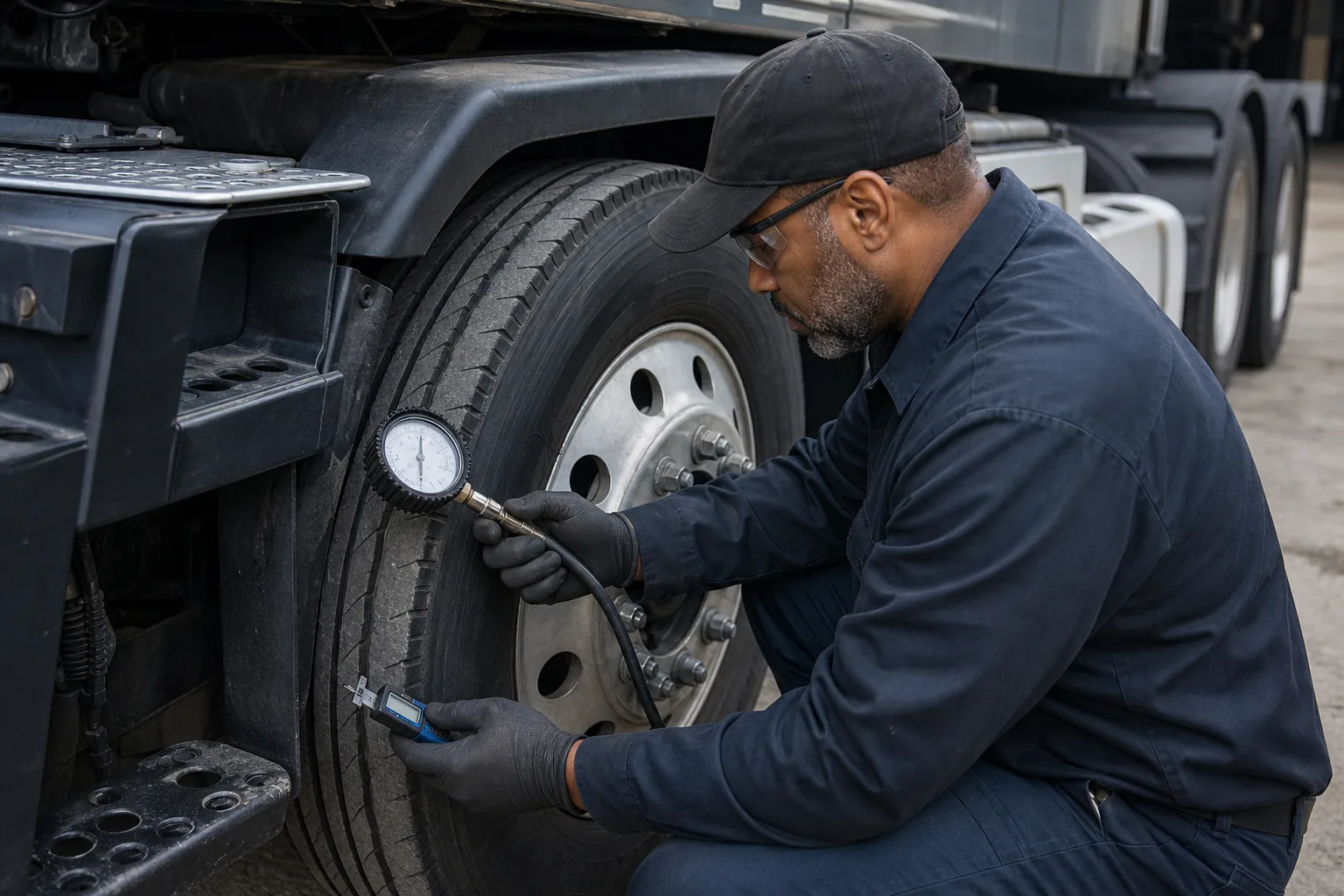
Pressure:Check before the truck travels, while the tire is cold. Compare the reading with the vehicle maker’s guidance or your fleet specification. Don’t use a round PSI figure remembered from another truck; tire needs can vary by tire, load, and vehicle.
Record the measured pressure by tire position. If a tire is low, look for a leak or valve issue and follow your maintenance process. A flat or leaking tire is not a routine top-off: hold the vehicle and have the tire assessed before it returns to the road.
Tread:Use a tread-depth gauge in neighboring grooves, then check more than one area across the tread. A single reading can hide a worn shoulder or an uneven patch. Measure tread depth to ensure it adheres to your industry standards.
Write down the actual readings, not only “good” or “bad.” That gives the maintenance team a way to compare wear over time and spot one tire position that is changing faster than the rest.
Tire Condition and Out-of-Service Decision Resources
Yes, tread and pressure are only part of the check. A fleet tire inspection checklist should guide the inspector around the full tire, including both sidewalls, the tread surface, the valve area, and the inner tire on a dual setup.
Look for cuts, punctures, exposed cords, deep cracks, separation, bulges, or objects lodged in the tread. Check for contact with vehicle parts. Watch for color changes, fresh rust streaks near nearby hardware, or gaps that may signal movement. These clues don’t prove a tire has failed, but they call for a closer look.
Uneven wear is a maintenance signal. Center wear can point to chronic overinflation, while wear at both shoulders can point to underinflation. Feathering, cupping, or one-sided wear may call for an alignment or suspension check. Note the pattern and refer it to maintenance instead of treating a replacement as the only possible fix.
When a tire has a bulge, exposed cords, suspected separation, a serious leak, or damage your team can’t safely assess, don’t send the vehicle out. Mark the tire and follow your company’s removal and repair process. Don’t pull an embedded object or attempt a roadside repair unless trained staff and fleet procedures allow it.
The Tire Specialist provides mobile commercial tire service in Dallas-Fort Worth, including on-site tire work for fleets. When a defect needs expert help, mobile truck tire repair can bring service to the vehicle’s location and help limit avoidable downtime.
Key Takeaway:If a tire’s safety is uncertain, hold the vehicle and ask a qualified tire technician to assess it.
US Compliance, Reporting, and Fleet Recordkeeping Resources
A fleet tire inspection checklist supports compliance only when staff use it consistently and keep the results.
CVSA roadside inspections use out-of-service criteria to identify conditions that prevent a vehicle from continuing until the issue is corrected. Don’t treat a company pass mark as a replacement for federal requirements or current inspection guidance. When a rule or defect is unclear, pause dispatch and ask your safety lead or tire professional.
For every inspection, keep the unit ID, date, inspector, odometer, tire position, measurements, defect notes, and action taken. Record who owns the follow-up and when it was closed. A note like “rear tire bad” leaves too much room for confusion during a shift handoff.
A digital form can require pass-or-fail results, comments, and photos when a check fails. It can also keep inspection history together and make missed inspections easier to spot. Set up reminders for your chosen schedule, then review open defects before dispatch.
Handwriting can be hard to read, especially when a driver is rushing through a form. A digital log or a printed form with clear fields can prevent a manager from mistaking a failure for a pass. Keep a backup process for outages so inspections and urgent defects still get recorded.
Preventive-Maintenance and Driver-Training Resources
A strong fleet tire inspection checklist works best when it sets a clear rhythm. Require drivers to check tires before each trip, and set a separate schedule for deeper measurements and maintenance reviews. A weekly pressure check and a monthly tread review can be useful fleet practices, but adjust them for mileage, load, route, and tire condition.
Make the driver’s walk-around manageable. Show staff how to use the gauges, where to record readings, and how to spot damage without making a repair decision beyond their training. Ask them to check the inner sidewall as access allows, then flag anything they can’t see or judge safely.
Rotation and alignment checks belong in the maintenance plan. Use the vehicle maker’s guidance and your fleet’s service records to set rotation intervals. If a truck pulls to one side or shows uneven wear, send it for assessment rather than waiting for the next routine review.
Train drivers to report a new vibration, pressure loss, visible damage, or a change in handling as soon as they notice it. During onboarding, have each driver complete a sample tire check and show how to record a failed item. Repeat the practice when a process changes or when records show the same check is often missed.
We at The Tire Specialist can support fleet teams with on-site commercial tire service in the Dallas-Fort Worth area. For scheduled care, our page on fleet tire maintenance programs covers ways to organize checks and follow-up service around fleet operations.
Pro Tip:Review failed checks at the start of each shift. Confirm the repair is complete before dispatch clears the vehicle.
Fleet Tire Inspection Checklist FAQ
How often should fleet tires be inspected?
Inspect tires before each trip, then set deeper checks on a schedule that fits your fleet. A weekly pressure check and monthly tread review are common maintenance practices, not a substitute for required driver inspections. Use more frequent checks when a vehicle carries heavy loads, runs demanding routes, or has a known tire issue.
What tread depth is required on commercial truck tires?
Measure tread depth to ensure it adheres to your industry standards. Measure with a tread gauge across more than one area, and follow your fleet’s replacement threshold if it is more conservative.
What should I record on a tire inspection form?
Record the vehicle ID, date, inspector, odometer, tire position, pressure, and tread readings. Add notes about damage or wear patterns, plus any photo your process requires. For a failed check, record whether the vehicle was held and who will handle the repair. Close the entry only after the required action is complete.
When should a truck be taken out of service for a tire problem?
Hold the vehicle when a tire appears unsafe, has a serious leak, exposed cords, a bulge, or signs of separation, or when required tread depth is not met. Don’t ask a driver to guess whether a structural defect is repairable. Mark the issue, follow your fleet’s removal process, and get a qualified tire technician to assess it.
Conclusion
Use one tire-focused form across the fleet, but record results by tire position and make failed checks trigger a clear action. Start by assigning a pre-trip owner and adding the pressure and tread tools to each inspection point. When a defect needs service, The Tire Specialist can help Dallas-Fort Worth fleets arrange on-site tire support.


Comments