Truck Tire Inspection Guide: Step-by-Step Checklist
Every mile a truck travels puts its tires to the test. Miss a problem and you risk downtime, fines, or an accident. Follow this step‑by‑step checklist to keep every tire in top shape.
Supreme Mobile Tire & Battery
Supreme Mobile Tire & Battery provides on‑site tire and battery services throughout the Dallas–Fort Worth metro area. Their coverage includes Dallas, Fort Worth, Arlington, Plano, Frisco, McKinney, Irving, Garland, Grand Prairie, Mesquite, Midlothian, Allen, Richardson, Carrollton, Denton, and Mansfield. The company focuses on serving local businesses and fleet operators, delivering quick assistance to keep commercial trucks running smoothly. By bringing the tools directly to the vehicle, they help reduce downtime and keep schedules on track. Service appointments are coordinated to match the driver’s schedule, ensuring minimal disruption.
Step 2: Secure the Vehicle and Access the Tire
Safety starts with immobilizing the truck. Engage the parking brake, turn off the engine, and place sturdy blocks behind the opposite wheels. If you’re on a lift, verify that the lift is rated for the truck’s weight and that all pins are locked.
Next, raise the axle just enough to remove the lug nuts. Use a suitable lifting device at the manufacturer‑specified lift points, usually marked on the frame. Once the wheel is off, set it aside on a clean surface so you can see the sidewall and tread clearly.
While you’re working, consider a quick visual of the brake assembly. A stuck brake can hide a tire‑related problem later on. If you need help, The Tire Specialist’s mobile team can handle the lift and wheel removal on‑site, saving you time.
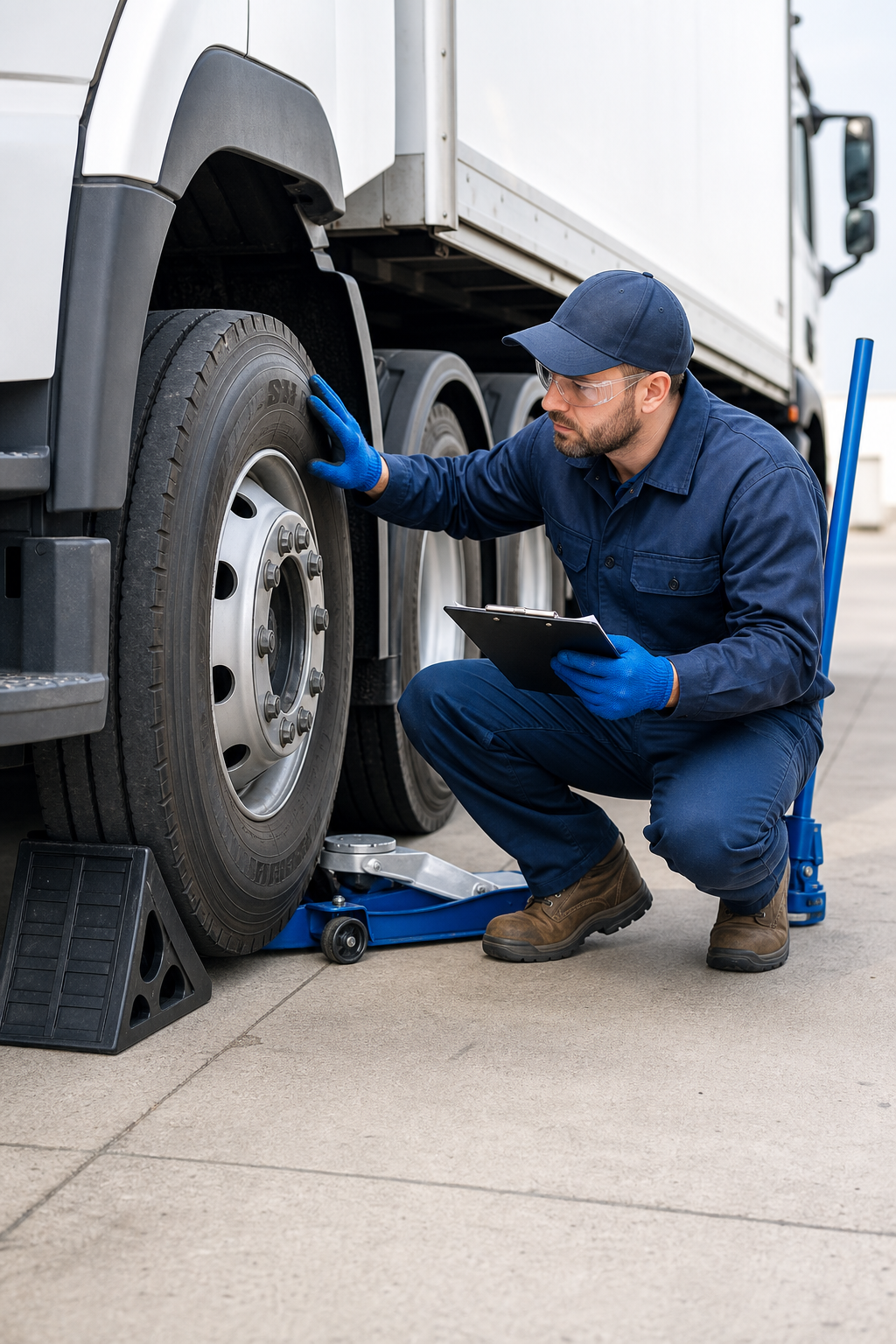
Step 3: Inspect Tread Depth and Wear Patterns
Measure tread depth with a gauge that reads in 1/32‑inch increments. The DOT requires a minimum of 4/32 in on steer tires; any reading lower means the tire must be replaced. Insert the gauge into the deepest groove of the tread, press down until the probe hits the bottom, and read the value.
Look for uneven wear. One‑sided wear, shoulder step wear, or cupping often points to alignment or suspension issues. Irregular patterns can signal mis‑aligned axles, under‑inflation, or worn bearings.
Use the quarter‑test as a backup: place a quarter in the tread with Washington’s head down. If you see the top of his head, the tread is near the minimum. For a quick visual, the penny‑test works for passenger‑type tires but is less reliable on heavy‑duty truck tires.
Record each measurement. A simple spreadsheet that tracks axle, measurement point, and date helps you spot trends. Over time you’ll know if a particular axle consistently wears faster, indicating a need for corrective action.
Key Takeaway:Tread depth below 4/32 in on any steer tire is a DOT violation and a safety risk.
Step 4: Check Tire Pressure and Valve Condition
Pressure checks must be done when the tires are cold, ideally before the truck has been driven. Use a reliable pressure gauge, attach it to the valve stem, and compare the reading to the manufacturer’s recommended PSI, which you’ll find on the door jamb placard or the tire sidewall.
Inspect the valve stem for cracks, corrosion, or missing caps. A damaged stem can let air leak slowly, causing under‑inflation that leads to excess heat and tread wear. Replace any stem that looks worn.
If the vehicle includes a pressure monitoring system, compare its readings with your manual measurements. Discrepancies can mean a sensor fault.
When you spot a low reading, add air in small increments, re‑check, and stop once you hit the target. Over‑inflating creates a hard ride and premature center‑tread wear. For guidance on proper PSI for semi‑trucks, consult the vehicle’s specifications.
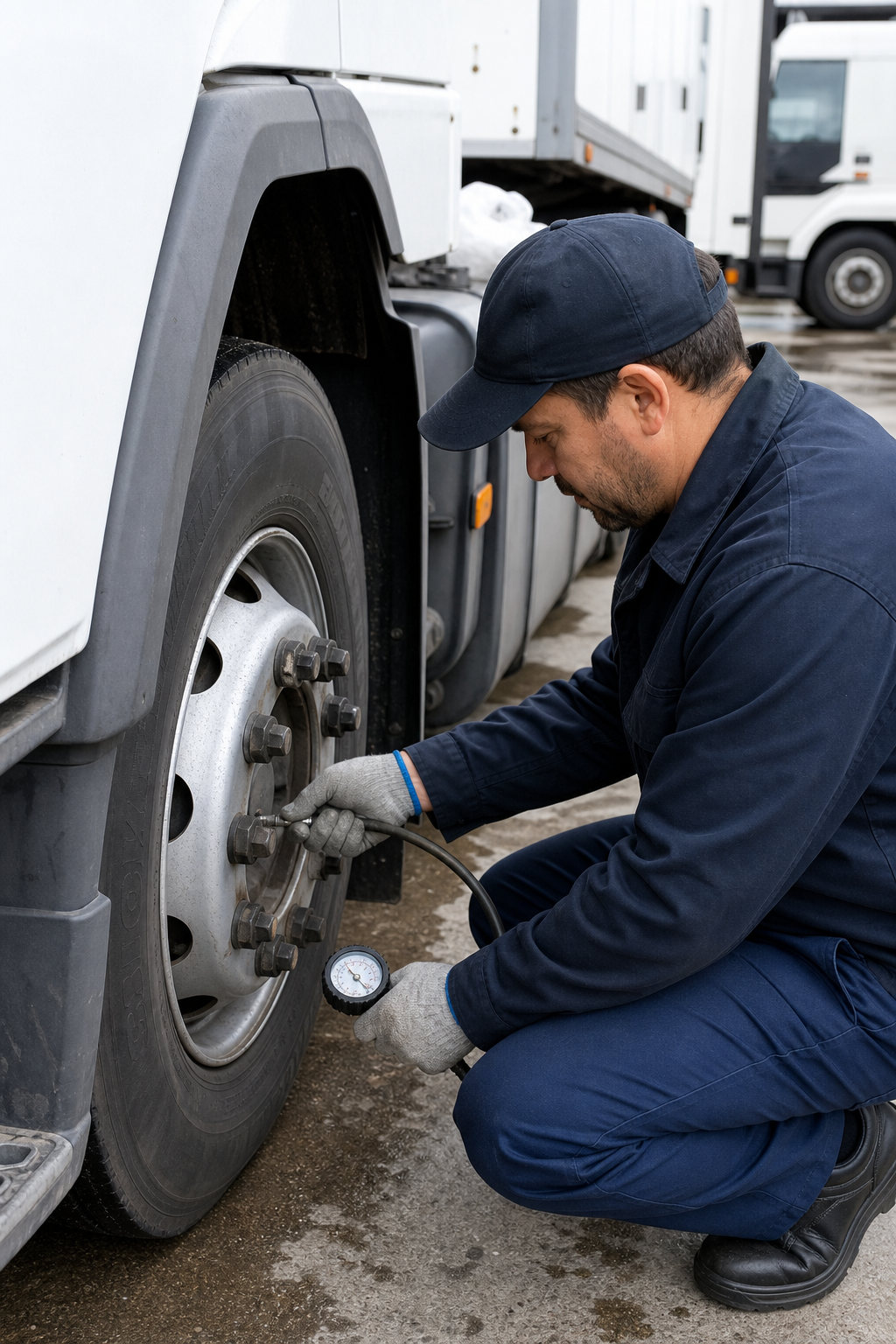
Step 5: Examine Sidewalls for Damage and Record Findings
Run your hand along the sidewall from bead to bead. Feel for bulges, cuts, cracks, or embedded objects. Bulges usually mean internal cord damage; a cut can become a leak under load.
Visual cues matter too. Look for dry‑rot patterns, spider‑web cracking, or any discoloration that indicates rubber aging. Sidewall cracks are a common cause of sudden failures on long hauls.
Document every issue on a checklist. Include tire position, type of damage, and severity (e.g., minor cut, moderate bulge, severe crack). This record feeds into your fleet’s maintenance schedule and helps you prove compliance during DOT inspections.
If you find a problem you can’t fix on the spot, call a mobile service. The Tire Specialist’s technicians can repair punctures, replace valves, and log the repair for you, keeping your fleet moving.
FAQ
How often should I perform a truck tire inspection?
You should inspect each tire before every long haul and at least once a month for trucks that stay idle. A quick visual and pressure check takes five minutes and catches most issues early.
What is the minimum legal tread depth for steer tires?
The DOT mandates a minimum of 4/32 in on steer tires. Anything less is a violation and must be replaced before the vehicle can be used.
Can I use a penny to check tread depth on a commercial truck?
A penny works for passenger‑car tires but isn’t reliable for heavy‑duty tires. Use a tread‑depth gauge for accurate measurements on trucks.
What causes one‑sided wear on a truck tire?
One‑sided wear usually stems from mis‑aligned axles, improper toe settings, or uneven load distribution. Check alignment and suspension components if you see this pattern.
Should I replace a tire with a sidewall crack?
Yes. Even a small crack can grow under the stresses of highway speeds. Replace the tire or have a qualified specialist evaluate it before the next trip.
Do I need a professional to record my inspection findings?
No, but using a digital form or spreadsheet makes tracking easier. Recording data lets you see wear trends and plan replacements before a failure occurs.
Keeping your trucks on the road starts with a disciplined tire inspection routine. For deeper insights on building a fleet‑wide tire maintenance program, check out our fleet tire maintenance guide . With the right tools, a clear checklist, and a reliable mobile partner, you’ll reduce downtime and stay compliant.


Comments