
How Long Do Semi Truck Tires Last? An Explainer Guide
Semi‑truck tires don’t all wear out at the same rate. Most drivers expect about 100,000 miles, but the median life is closer to 25,000 miles. Below we break down the factors that push mileage up or down, what maintenance really matters, and how you can keep your fleet rolling longer.
Key Factors That Influence Tire Longevity
Load weight is the biggest driver of wear. Heavier cargo pushes more heat into the rubber, which accelerates cracking. The research from England Logistics notes that enormous loads can shave thousands of miles off a tire’s useful life..
Correct tire pressure also matters. Under‑inflated tires generate excess heat, while over‑inflated ones wear the center of the t explains that most commercial tires run best at 100‑110 psi, but you should always follow the sidewall spec. STTC pressure recommendations .
Road surface conditions, searing asphalt, sharp debris, potholes, add mechanical stress. Rough highways and construction zones cause sidewall cuts that lead to early replacement.
Key Takeaway:Heavy loads, wrong pressure, and rough roads are the three biggest culprits that cut tire mileage in half.
When you understand these variables, you can target them with better practices. For instance, using a load‑distribution plan that avoids maxing out every axle can extend tire life by 15‑20%.
Maintenance Practices & Inspection Intervals
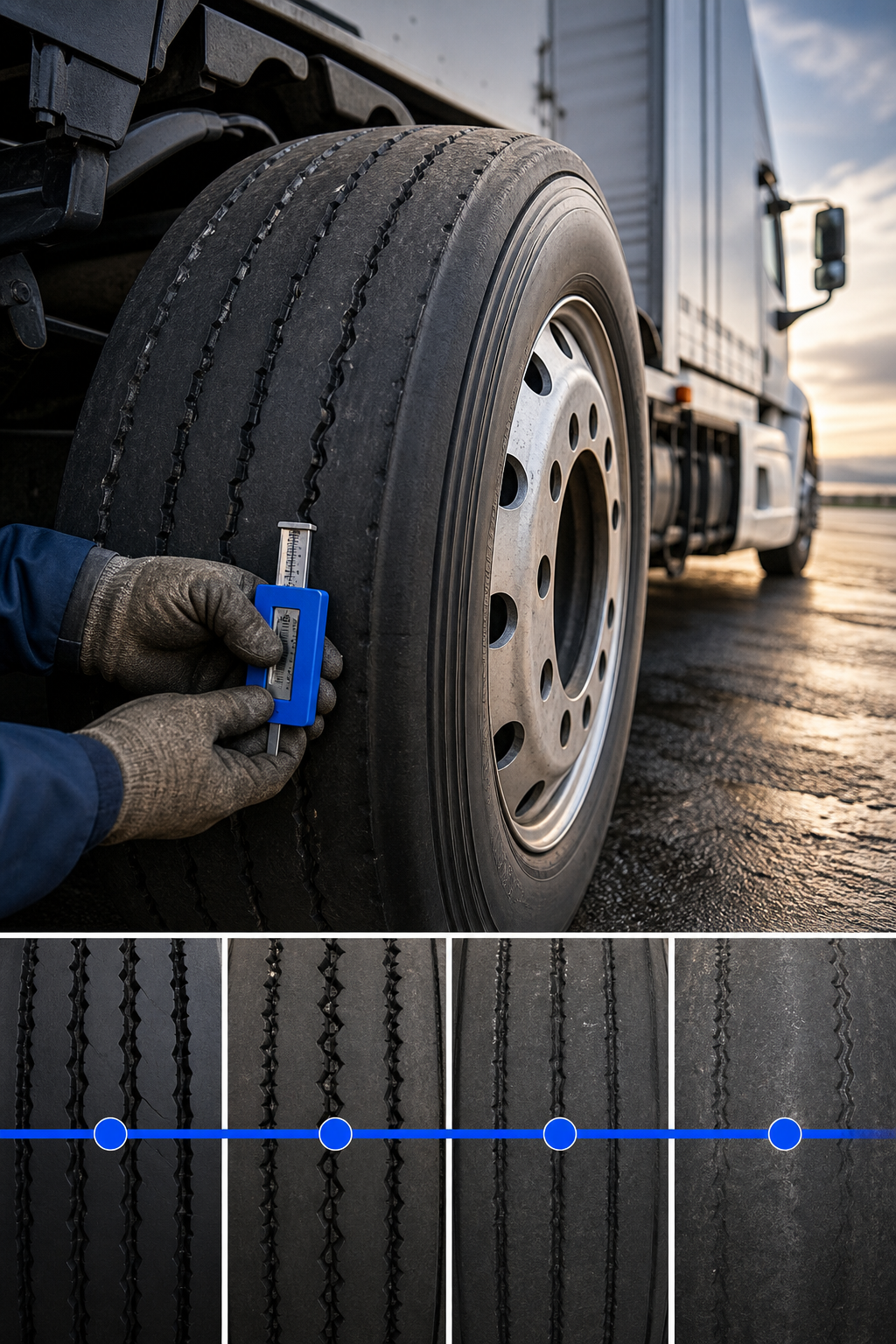
Regular inspections catch problems before they become blowouts. Regulations require a minimum tread depth of 4/32" on steer tires and 2/32" on drive or trailer tires. Checking tread with a gauge regularly keeps you compliant and safe.
Industry guidelines recommend rotating tires regularly to spread wear and checking pressure frequently to prevent the heat buildup that shortens tread.
Our own crew at The Tire Specialist runs a 6‑month inspection cadence for fleet customers. We pull each truck into a mobile shop, measure tread, check pressure, and look for sidewall damage. That quick stop usually saves a full day of downtime later. A detailed inspection is also recommended at the 100,000‑mile milestone to catch wear before it becomes critical.
Skipping preventive maintenance can significantly increase breakdown risk, leading to lost revenue for any fleet.
Pro Tip:Log every inspection in a simple spreadsheet. A record of tread depth trends lets you spot a bad axle before it fails.
For more on how to choose tires that last, see our Smart Tips for Commercial Tire Buying . The guide walks through mileage warranties and how to match tire specs to your routes.
Tire Type, Pressure, and Retreading Options
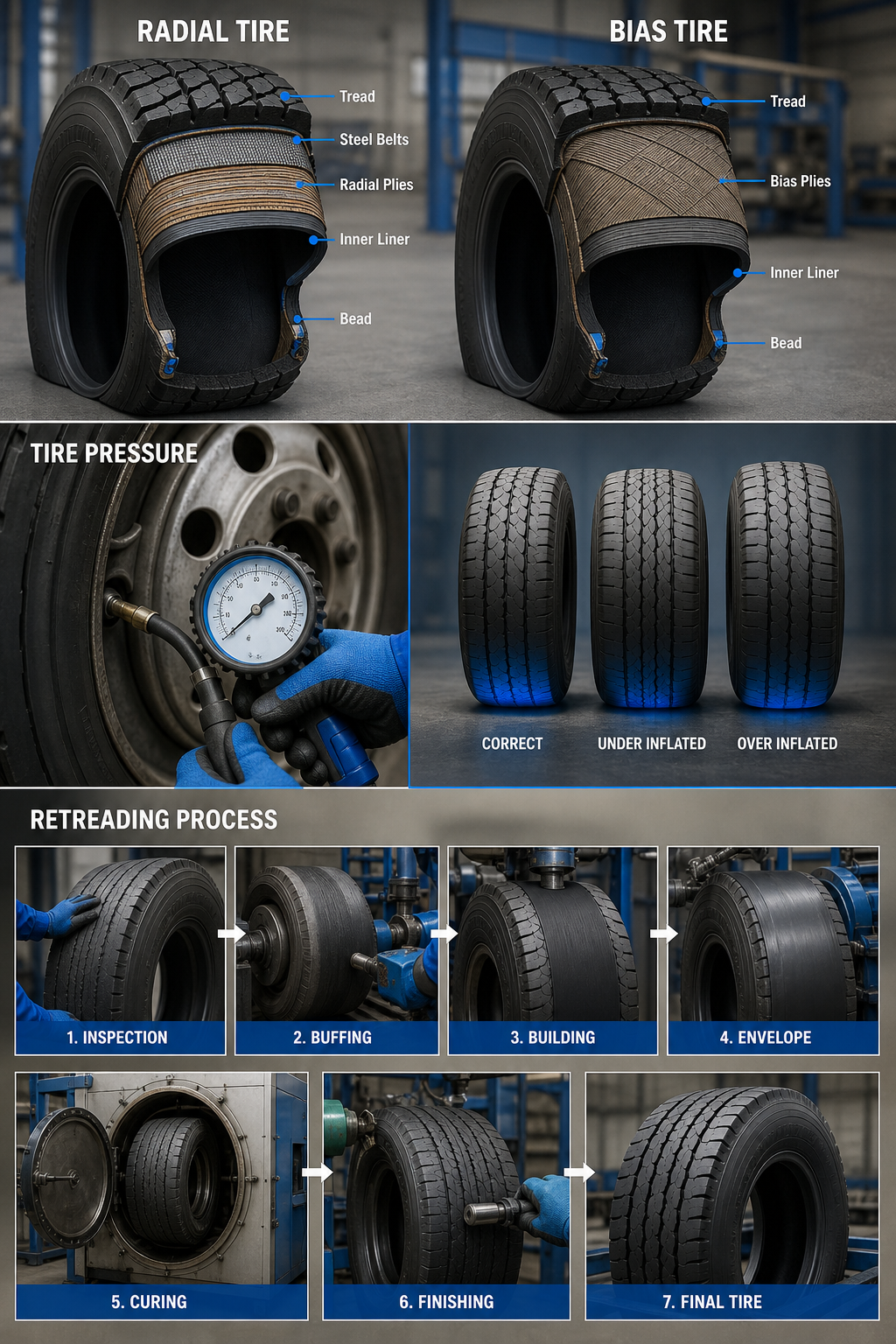
Not all tires are built the same. Radial service‑life tires can hit 70‑180k km (≈44‑112k miles) before tread is exhausted, while short‑life utility trailer tires may wear out after just 5‑8k miles. Wikipedia’s tire type overview .
Choosing the right type for your application matters. Long‑haul trucks benefit from drive‑axle tires rated for high mileage; regional trucks often use tire selections that balance durability and grip.
Pressure must be set to the manufacturer’s recommendation, not just a round number. An over‑inflated tire can develop a bulge that leads to a sudden blowout at highway speeds.
Retreading gives a second life to a good casing. The Tire Specialist’s retread program can add another 80‑100k miles to a well‑maintained tire, cutting overall cost per mile.
When you pair the right tire type with proper inflation and a retread plan, you can push mileage well beyond the median 25k mark.
Our fleet customers often ask which brand to buy. A quick read of Top Commercial Truck Tires for Your Fleet shows the trade‑offs between fuel‑efficient radials and heavy‑duty tires.
Environmental & Driving Habits Effects
Seasonal weather shifts wear on tires in predictable ways. Summer heat can raise internal pressure by 1‑2 psi, which speeds up tread loss. Winter cold shrinks air, causing under‑inflation and uneven wear.
Rain and standing water increase the risk of hydroplaning, especially if tread depth is low. The more water a tire can channel away, the safer the ride.
Driver behavior also leaves a mark. Aggressive acceleration, hard braking, and sharp cornering generate extra heat, which degrades rubber faster. A smooth driving style can add 10‑15% more miles.
Road debris, nails, shards, pothole edges, creates cuts that become leak points. Regular visual checks for punctures keep you from a surprise flat.
If you need a partner who can handle all seasons, The Tire Specialist offers on‑site service that adjusts pressure for temperature swings and replaces damaged tires before they become a safety issue.
For a quick look at mobile providers in the DFW area, check out our Best Mobile Tire Service Near Me guide.
Pitfalls to Watch
One common mistake is treating mileage as the only metric. A tire that looks fresh may have hidden sidewall cracks from UV exposure. Those cracks can cause a blowout even if tread is still deep.
Another trap is ignoring the age of the rubber. Even without heavy use, tires older than six years can become brittle. Many guidelines suggest replacing tires after ten years, regardless of mileage.
Finally, many fleets rely on a single pressure reading taken at the shop. Pressure changes with load, speed and temperature, so you need weekly checks on the road.
By staying on top of these pitfalls you avoid costly downtime and keep your fleet compliant.
FAQ
How many miles can a semi‑truck tire really last?
Most tires fall between 20,000 and 100,000 miles, with the median around 25,000 miles according to industry data.
What is the recommended inspection interval?
Check tread and pressure regularly, such as twice a year, and do a full inspection at the 100,000‑mile mark.
Does retreading save money?
Yes, retreading a good casing can add 80,000‑100,000 miles at a fraction of the cost of a new tire.
What pressure should I keep my tires at?
Follow the sidewall’s recommended PSI, typically 100‑110 psi for most semi‑truck tires, and adjust for load and temperature.
How does weather affect tire life?
Heat raises pressure and wear, cold lowers pressure and makes rubber stiff, and rain can cause hydroplaning if tread is shallow.
Can I rely on a mobile tire service?
Yes, The Tire Specialist provides 24/7 on‑site repairs and can perform pressure checks, rotations and retreads without taking the truck to a shop.
Conclusion
If you want to stretch tire mileage, focus on load management, keep pressure spot‑on, rotate regularly and schedule a full inspection at 100,000 miles. Reach out to The Tire Specialist to set up a fleet‑wide maintenance plan and keep your trucks moving.


Comments