
Mobile Tire Service Cost: What to Expect
When a tire crew comes to your truck, the final bill depends on more than the tire itself. Travel, labor time, equipment, emergency response, and disposal can all shape the total. We’ll show you what to ask before booking, how on-site service works, and how to make mobile tire costs easier to plan in Dallas-Fort Worth.
Table of Contents
Step 1: Define the Tire Job Before Requesting Service
Yes, the fastest way to control mobile tire service cost is to describe the job clearly before we dispatch a technician. A vague request often leads to delays because the crew may arrive without the right tire, tools, or parts.
Start with the vehicle details. Share the truck or trailer type, tire size, axle position, and the number of tires involved. If you manage a fleet, include the unit number and its current location. A clear photo of the tire can help us spot sidewall damage, tread separation, or a valve issue before the visit.
Next, tell us what happened. A puncture may need a repair. A damaged sidewall usually points to replacement. A flat tire on a loaded commercial truck may require different lifting gear than a passenger vehicle.
We also need to know whether the vehicle is safely parked. A truck on a busy shoulder creates a different service plan than one sitting inside a yard. Give us the nearest cross street, gate instructions, and any site rules. This helps us send the right mobile unit and protect the driver while work begins.
For a deeper look at repair details, our guide to mobile tire repair costs for commercial trucks explains what information helps produce a clear estimate.
On-site service usually means the technician brings the needed tools to your location. The work may include tire removal, mounting, inflation, balancing, or a repair when the tire condition allows it. The exact scope depends on the vehicle and the fault.
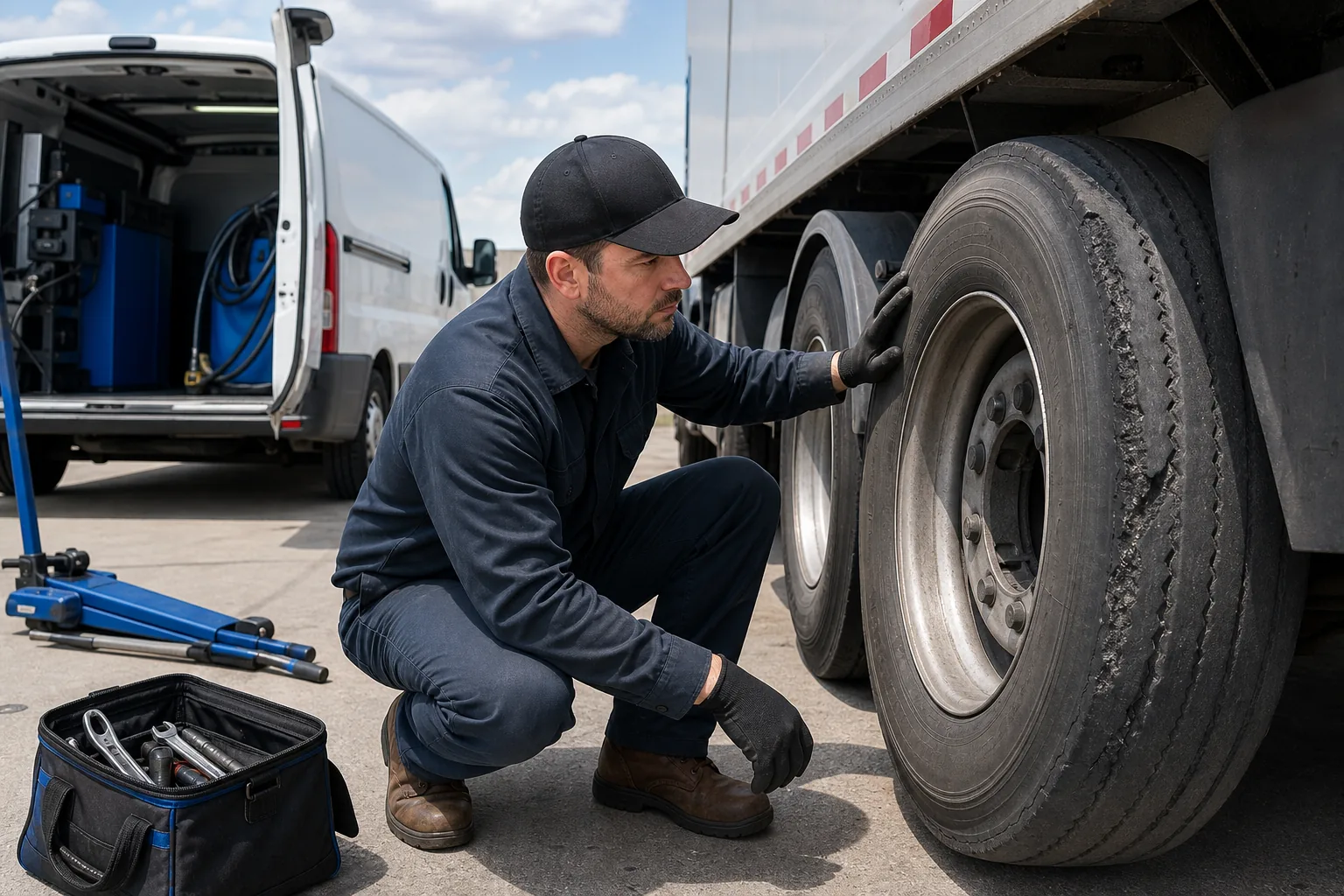
We suggest sending these details in one message:
Vehicle type and unit number
Tire size and axle location
Repair or replacement concern
Exact service location
Whether the vehicle carries a load
Any access or safety limits
By now, you should have a service brief that a dispatcher can act on. That small step can reduce wasted travel and prevent a second visit.
Step 2: Identify Extra Charges and Cost Factors
Mobile tire service cost has several parts. We recommend asking for each part before approving the work, even when the provider gives one combined estimate.
Public pricing data is limited. Co Mobile Tires’ service page shows a fee range of $50 to $150. That makes a written estimate more useful than a quick web search. We’ll give you a clear estimate after we understand the vehicle, location, tire, and timing.
Cost factor | What to ask | Why it can change the estimate |
Service call or travel | Is travel listed separately? | Distance and dispatch time affect the visit. |
Labor | Is labor flat rate or time based? | A hard-to-access wheel can take longer. |
Emergency timing | Does urgent roadside work change the charge? | After-hours work may require special dispatch planning. |
Tire disposal | Is removal of old tires included? | Old tires need proper handling and transport. |
Balancing | Is balancing part of mounting? | Some jobs need extra equipment time. |
Valve or TPMS work | Are stems or sensor steps included? | Damaged valves or sensor programming add work. |
Site conditions | Can the truck be reached safely? | Shoulder work, mud, tight yards, or poor access slow the job. |
Fuel, insurance, equipment upkeep, and vehicle depreciation also sit behind the estimate. A mobile provider pays to keep a service truck ready, carry tools, maintain lifting gear, and reach customers across a wide area. Those costs are part of why a mobile visit may differ from a shop visit.
Location matters too. A job near a service route may take less travel time than one across the metro area. Seasonal demand can affect availability. Heat, storms, and holiday travel may increase roadside calls, so early scheduling helps when the repair is not urgent.
Disposal deserves a direct question. Ask who takes the old casing and whether that handling is included. It keeps the work area clean and avoids a surprise charge after the tire is mounted.
Key Takeaway:Ask for the service call, labor method, emergency terms, tire handling, and added parts before approving the job.
For general tire safety terms, Wikipedia’s explanation of tire-pressure monitoring systems helps explain why a valve or sensor step may appear in a tire estimate.
Step 3: Schedule the On-Site Service Efficiently
Need service at a yard or roadside location? We start with safety, access, and timing. Good scheduling protects the driver’s time and helps the technician finish the job in one visit.
Give us a location that a service truck can reach. A pin alone may not be enough at a large warehouse or distribution center. Add the gate number, dock area, parking row, or mile marker. Tell the driver where to check in and whether security needs advance notice.
Set a realistic appointment window. A tire replacement can take longer when lug nuts are damaged, the wheel is stuck, or the vehicle is loaded. Weather can slow outdoor work as well. We would rather set a useful arrival window than promise a time that ignores site conditions.
For emergency work, keep the driver available. The technician may need a new photo, a safer parking spot, or confirmation that the vehicle is not moving. One dispatcher should own the updates so the driver does not repeat the same facts to several people.
Commercial fleets benefit from a simple handoff process. The driver shares the unit number and tire issue. The fleet manager approves the work. The technician records the repair and any follow-up need. That record helps the next person understand what happened.
Our DFW mobile tire service steps cover the information to gather before an on-site visit. We use the same basic approach for routine fleet work and urgent roadside needs.
Before the crew arrives, clear space around the vehicle when possible. Remove loose cargo near the wheel. Keep people away from the work area. If the truck sits on a shoulder, follow the fleet’s roadside safety plan and local rules.
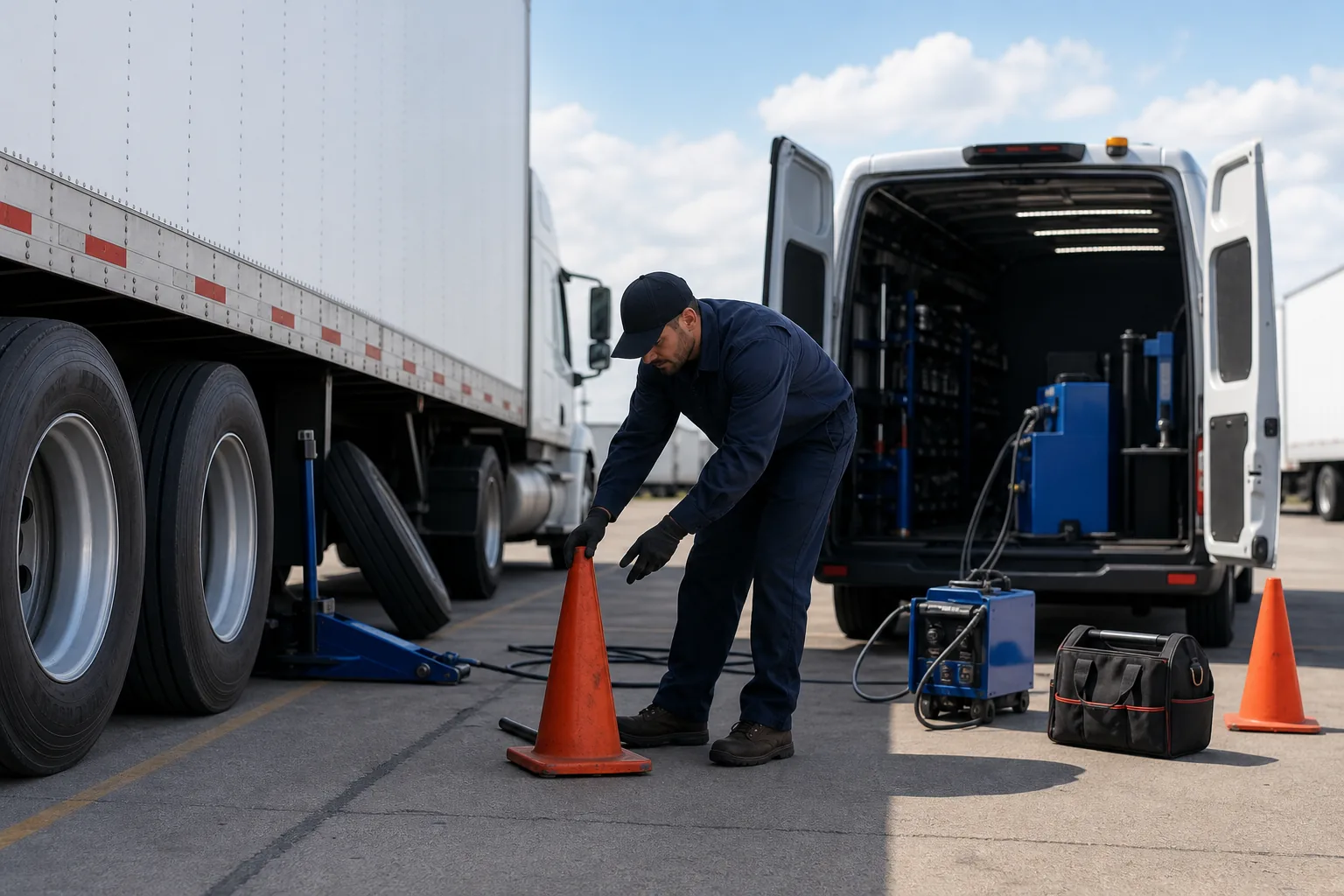
When the job ends, confirm the tire position and work completed. Ask whether the technician found another issue, such as uneven wear or a damaged valve. A short note now can prevent a repeat failure later.
By now, you should have a confirmed location, access plan, arrival window, and approval path. That is the foundation for a smoother mobile visit.
Step 4: Evaluate the Provider and Plan for Long-Term Fleet Needs
Mobile tire service cost is only one part of the decision. We also look at safety, response planning, records, and whether the provider can support repeat fleet work.
Start with the technician’s scope. Can the provider handle commercial trucks, fleet vehicles, roadside repairs, and on-site replacement? Does the crew carry equipment suited to your tire sizes? Ask what happens when the first diagnosis shows that the vehicle cannot safely return to service.
Next, review communication. A strong process gives the fleet manager a clear status update. It also leaves a record of the tire position, work done, and any recommended follow-up. Those details help maintenance teams spot repeat problems across units.
The Tire Specialist supports Dallas-Fort Worth commercial trucks and fleet vehicles with mobile repair, replacement, and roadside assistance. We can also discuss a fleet maintenance program, which means a planned approach to inspections and tire work instead of waiting for every flat to become an emergency.
Think about the cost of downtime in hours, not only dollars. A truck waiting at a terminal may miss a route. A roadside failure may delay a driver and create a safety risk. A planned visit can fit between route windows, while an emergency visit takes control away from the fleet manager.
Our fleet tire maintenance service in Dallas is a useful next step when you want fewer surprise failures. The goal is to track wear and pressure concerns before they stop a unit.
We also recommend checking the mobile unit itself. A truck with poor tool storage can lose time at every job. Equipment needs regular inspection, and wheel balancers need calibration so the finished work is accurate. Ask how the provider checks its tools and handles worn parts.
For a small fleet, one dependable service partner may be enough. A larger fleet may need a written service process, shared records, scheduled inspections, and a clear after-hours plan. The right choice depends on route spread, vehicle count, tire type, and how much downtime your operation can absorb.
Choose the provider that explains the work before starting it. A low first estimate is less useful if the scope stays unclear.
Mobile Tire Service Cost FAQ
How much does mobile tire service cost per tire?
Per-tire charges vary by vehicle, tire size, location, labor time, and service scope. Some online examples place passenger-car installation around $25 to $60 per tire, but commercial truck work may follow a different estimate. Ask whether mounting, balancing, travel, disposal, and parts are included.
What extra fees can mobile tire service include?
Extra charges may include travel, emergency response, disposal, balancing, valve stems, or TPMS work. Site access can also affect the estimate when a truck sits on a shoulder or in a tight yard. We recommend asking for a written breakdown before work begins.
Is mobile tire service more expensive than a tire shop?
Mobile service can cost more in some cases because the provider brings labor, equipment, fuel, and insurance to your location. The comparison should include downtime, towing risk, and driver time. For a commercial fleet, avoiding a long shop visit may justify the on-site charge.
Does mobile tire service include tire disposal?
Tire disposal is not always included, so ask before approving replacement. The technician may remove the casing and handle it, or the fleet may keep responsibility for disposal. Confirm this point in the estimate so old tires do not remain at the yard.
How can I get a clearer mobile tire service estimate?
Send the vehicle type, tire size, tire count, location, damage details, and timing needs. Add photos when safe. Also explain site access and whether the truck carries a load. Those details help us plan the right equipment and give you a clearer estimate.
Conclusion
To keep your mobile tire costs predictable, define the job first and ask for every cost component before approving service. For commercial trucks and fleet vehicles in Dallas-Fort Worth, send the Tire Specialist the vehicle details, location, and tire concern so we can review the job and plan the right on-site response.
Sources and Service Notes
The research covered three DFW-focused mobile tire sources on August 28, 2026. Published service-call details were limited, so estimates should be confirmed for each vehicle and visit. The Tire Specialist’s service information is available through The Tire Specialist.


Comments