
On-Site Tire Changes for Heavy-Duty Trucks in Dallas

A flat on a heavy truck can stall a route and put a driver close to moving traffic. An on-site tire change service for heavy-duty trucks in Dallas brings tire help to the truck, but the right result starts with clear details and a safe work area.
We’ll walk through the steps to request service, prepare the truck, and check the work before it returns to the road.
Table of Contents
Step 1: Secure the Truck and Request Roadside Help
Start with safety before arranging the tire work. Your first job is to reduce risk for the driver and keep the truck from moving while help is on the way.
If the truck can reach a safe parking area without risking a blowout or further damage, move it out of active traffic. If it can’t, don’t try to limp it along. Use the vehicle’s hazard lights and follow your company’s roadside safety plan. Keep the driver away from passing traffic, and don’t stand between the truck and the road.
Choose a safe place to wait if one is available. A wide shoulder may still leave little room for a service vehicle to work. A nearby lot or truck yard can give the technician more space, but only move the truck there if it’s safe to do so.
Roadside work can expose both drivers and technicians to traffic. Review work-zone safety information , keep people clear of the repair area, and let the technician assess the site before work begins.
Next, request roadside help through your fleet’s approved dispatch process. If you’re arranging service directly, give the provider your location and ask whether it can handle a commercial truck at that site. The Tire Specialist provides on-site repair, replacement, and roadside assistance for commercial trucks and fleet vehicles across Dallas-Fort Worth.
Ask whether service is available at the time you need it. Some providers state 24/7 availability, but that alone doesn’t tell you when a technician can reach your truck. Request an arrival estimate and ask what could change it, such as distance, traffic, or the truck’s access restrictions.
If this is the first roadside tire call for your team, our guide to safe steps for a mobile truck tire change can help you set a repeatable process for drivers and dispatchers.
Milestone:The truck is stopped in the safest available spot, people are clear of traffic, and a provider has accepted the request.
Step 2: Share the Truck, Tire, and Location Details
Give dispatch enough detail to send the right kind of help. A pin on a map is useful, but it doesn’t tell the technician which truck is involved or what tire needs attention.
Start with the exact location. Share a GPS pin if you can, then add a nearby exit, cross street, mile marker, yard name, or gate. In a large industrial lot, include the entrance a service truck should use. Tell dispatch if the truck is behind a secured gate or if the site has height, weight, or access rules.
Identify the vehicle next. Share the fleet unit number and truck type, such as tractor, box truck, or dump truck. If a trailer is involved, say so. This helps prevent confusion when several vehicles are parked together or the driver is reporting from a busy job site.
Then describe the tire. If it’s safe to look, provide the tire position, such as steer, drive, or trailer. Send the size printed on the sidewall when it’s readable. Don’t walk into traffic or crawl under the truck to find it. A photo taken from a safe spot may help dispatch understand what the driver sees.
Say whether the tire is flat, losing air, shredded, or visibly damaged.
Describe when the problem began and whether the truck moved afterward.
Tell dispatch whether the truck is loaded and if it can move safely.
Share any warning lights or signs of damage around the wheel.
Be precise about what you can see. A flat tire may be repairable, or it may need replacement. The technician needs to inspect it before making that call. Don’t promise a repair based on a quick look at the outer tread.
Ask whether the provider needs any other details before dispatch. A truck’s tire position and size can affect what service is appropriate. If the tire size isn’t visible, send the unit information and explain that you can’t confirm it yet.
For fleet managers, record the dispatch details in the same place as the unit number and route information. That gives the next shift a clear handoff if the repair runs beyond a shift change. It also helps your team match the service record to the right vehicle later.
Milestone:Dispatch has the truck’s location, unit details, tire position if known, and a plain description of the damage.
Step 3: Confirm the Technician Can Handle the Truck and Tire
Confirm the job fits the provider before a service vehicle is sent. “Mobile tire service” can describe different work, so ask direct questions about your truck and the tire problem.
Start with vehicle type and tire position. Tell dispatch whether the issue is on a tractor, trailer, or another commercial vehicle. Ask if the technician can work on that vehicle and tire size at the location you shared. If your fleet has uncommon tire sizes or specialized equipment, say so before dispatch.
Then ask whether the technician expects to repair the tire or bring a replacement. The answer may change after an inspection. Still, a clear explanation of what the provider plans to check can help your team prepare for either outcome.
Ask what tools or support the job may need. A heavy truck tire is different from a passenger-car tire, and the work site may limit what can be done safely. The provider should be able to explain whether the stated service fits the truck, tire, and surroundings. Don’t guess about equipment based on a service name alone.
It’s also fair to ask about the technician’s training. If your maintenance standards require a specific credential, such as TIA certification, confirm that before work starts. OEM-trained means a technician has training tied to a vehicle or equipment maker. Ask what training applies to this job rather than assuming every provider uses the same standard.
Check how the provider handles an issue that turns out to need more than a tire change. Ask who will contact you if the tire can’t be repaired on site or if the wheel has visible damage. Agree on who can approve the next step, especially when the driver can’t authorize work for the fleet.
Availability is another point to verify. Some Dallas-area providers state round-the-clock service. That does not by itself confirm the nearest unit’s arrival time, the service area for your exact location, or the tire size it can handle. Ask for a realistic estimate and a way to reach dispatch if the plan changes.
Our overview of commercial truck tire repair in Dallas can help fleet teams compare service details before a breakdown happens. For an active call, focus on the provider’s answer about your specific truck.
Milestone:You’ve confirmed the provider understands the vehicle, tire, site, and approval process before the technician sets out.
Step 4: Follow the On-Site Tire Change from Setup to Installation
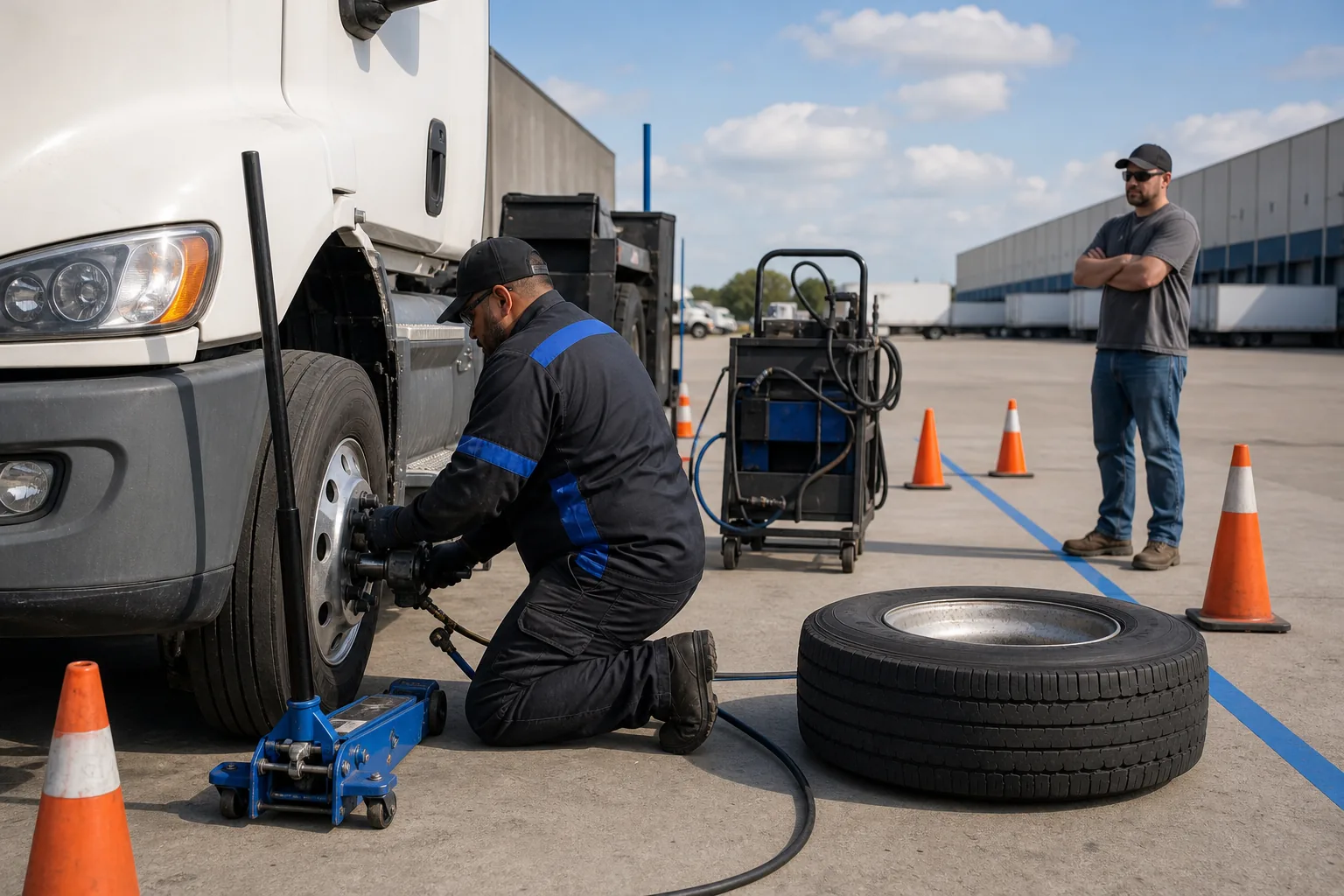
Let the technician set up the work area and inspect the tire before removing it. The driver can share what happened, then stay outside the work zone.
When the technician arrives, confirm the unit and tire position together. Point out the location of the damage from a safe distance. Mention if the truck was driven after the tire lost air, or if the problem began after hitting an object. That history can help the technician decide what to inspect.
The technician should assess whether the site is suitable for the work. If traffic, soft ground, poor visibility, or limited clearance makes the spot unsafe, ask what safer option is available. Don’t pressure anyone to work beside moving traffic just to save time.
Once the area is set, the technician can inspect the tire and wheel. The decision depends on the type and location of damage, along with the tire’s condition. A repair isn’t right for every puncture. Damage to the sidewall or a tire that has been driven while flat may call for a replacement instead.
Before installation, confirm the replacement matches the truck’s needs. Ask the technician to explain any difference in size or type before approving a change. If the tire can be repaired, ask what repair method is suitable and what signs would rule it out.
During the work, keep the driver and nearby staff clear. Don’t handle tools or enter the work zone unless the technician asks you to do so. The technician should manage the tire equipment and explain any delay or change in the repair plan.
After the tire is mounted, ask what checks are part of the job. You can ask about inflation, wheel fastening, and whether a follow-up check is needed under your fleet’s rules. Don’t rely on appearance alone. A tire can look ready while still needing a final check before the truck returns to service.
A mobile service visit can avoid moving a disabled truck to a shop, but the site still sets limits. If the technician says the repair can’t be done safely there, agree on the next safe step instead of pushing ahead.
Milestone:The technician has explained the repair or replacement choice, completed the work, and told you what to check before release.
Step 5: Check the Work and Ask About the Tire and Service Follow-Up
Take a moment to review the work before releasing the truck. Ask the technician to explain what was done and whether anything needs attention before the vehicle returns to its route.
Confirm whether the tire was repaired or replaced. If it was repaired, ask what damage the technician found and whether the repair is suitable for that tire’s location and condition. If it was replaced, confirm that the installed tire matches the approved size and position for the vehicle.
Ask which checks were completed after installation. Depending on the service, that may include checking inflation or wheel fastening. The technician should explain any check that’s part of the job and tell you if your fleet’s policy calls for another inspection later.
Look at the work area from a safe position. Check that the damaged tire or removed parts are accounted for, and ask how the provider handles the old tire. Don’t assume disposal or recycling is included. If your company has a disposal process, tell the technician what it requires before the work begins.
Get a service record for the fleet file. It should identify the vehicle and note whether the tire was repaired or replaced. Ask for any inspection notes that help your maintenance team decide what to do next. Keep the record with the unit’s maintenance history rather than relying on a driver’s memory.
Ask about any warranty or service follow-up that applies to the work. The details can depend on the tire and the service performed, so get the answer from the provider. If there’s a concern after the truck leaves, know how your driver or dispatcher should report it.
If the tire issue may involve an insurance claim, ask your company’s fleet or claims contact what records it needs. Don’t assume the roadside provider will file a claim or complete paperwork for you. Clear notes and photos taken from a safe place can help your internal team review the event.
Milestone:You know what work was completed, have the service notes, and understand any follow-up your fleet requires.
Step 6: Coordinate the Next Move for a Truck or Fleet
Decide who can release the truck and what happens next. A completed tire change is one part of the handoff. Dispatch still needs to know whether the vehicle can continue, should return to a yard, or needs another inspection.
Ask the technician whether the truck is ready to move after the work. The driver should follow the technician’s guidance and your fleet’s operating rules. If there’s another concern with the wheel, suspension, or nearby tire, don’t treat the tire change as proof that the whole vehicle is clear.
Update dispatch with the repair outcome and the truck’s status. Share the service record through your normal fleet channel. If the truck is carrying a load, coordinate with the route planner before changing the destination or schedule.
For a one-truck business, that may mean telling the customer about a delay and setting a revised arrival plan. For a larger fleet, the dispatcher may need to switch a load or assign another unit. Keep the handoff brief and factual: what failed, what work was done, and what the technician advised.
Use the service record to update the vehicle’s maintenance file. If the same unit has recurring tire trouble, flag it for review instead of treating each call as a separate event. A fleet maintenance program is a planned way to track service needs across vehicles. It can help managers spot repeat issues when the records are complete and easy to find.
After the immediate call, review your dispatch process. Were drivers able to share the exact location? Did the provider know the unit and tire details before dispatch? Did the approval path work when the truck was down? Small gaps are easier to fix before the next roadside event.
Set a simple call checklist for drivers. Keep the unit number, tire position, location details, and approval contact in the same place. Make sure drivers know not to inspect a tire from the traffic side or enter the technician’s work area. A short checklist gives dispatch a better handoff under pressure.
When you compare mobile service with a shop visit, consider where the truck is stopped and whether it can move safely. Our guide to mobile tire service versus shop options for DFW fleets covers that decision from an operations point of view.
The Tire Specialist serves commercial trucks and fleet vehicles across Dallas-Fort Worth with on-site repair, replacement, and roadside assistance. For your next service plan, confirm coverage, availability, and the details your dispatch team should share before a tire issue occurs.
Milestone:Dispatch, the driver, and fleet maintenance have the same service outcome and a clear next step.
Frequently Asked Questions
Can a heavy-duty truck tire be changed on the roadside?
Yes, a heavy-duty truck tire can be changed roadside when the site is safe and the service provider can handle the vehicle and tire. The technician should assess traffic exposure, ground conditions, and access before starting. If the location isn’t safe, move the truck only if it can travel safely, or agree on another safe plan.
What information should I give mobile truck tire dispatch?
Give dispatch the truck’s exact location, unit number, vehicle type, and a clear description of the tire problem. Share the tire position and sidewall size if you can see them safely. Also say whether the truck is loaded and whether it moved after the tire failed. These details help the provider assess the request.
Do Dallas mobile tire services work 24/7?
Some Dallas-area providers state that they offer 24/7 service, but availability can vary by location and job. Ask whether service is available at the time you need it and request an arrival estimate. Confirm that the provider can work on your truck and tire size before dispatch begins.
How do I know if a truck tire needs repair or replacement?
A technician needs to inspect the tire before deciding whether repair is suitable. Damage location and tire condition matter, and a tire driven while flat may have damage that isn’t visible from outside. Don’t assume a puncture can be repaired. Ask the technician to explain the finding and the recommended next step.
What should a fleet manager do after an on-site tire change?
Confirm what work was done, ask for a service record, and check whether your fleet policy requires a follow-up inspection. Tell dispatch if the truck is cleared to move or needs another step. Then add the record to the vehicle’s maintenance file so the next shift can see what happened.
Conclusion
For a disabled commercial truck in Dallas-Fort Worth, choose a provider that confirms it can handle the truck, tire, and work site before dispatch. The Tire Specialist provides on-site repair, replacement, and roadside assistance for commercial trucks and fleets. Set up a simple driver checklist now so your next roadside request starts with the details dispatch needs.


Comments