Mobile Tire Change for Trucks: 5 Safe Steps
Got a flat on a big rig and can’t wait for a tow? Here are five safe steps to get a mobile tire change for trucks done right, fast, and without extra downtime.
We analyzed 57 comments and questions from YouTube, Reddit and Quora about mobile tire change for trucks and found that 14% (8 of 57) asked about licensing, insurance, and liability requirements. Check local regulations and obtain the necessary permits and liability coverage before offering mobile services. 21% (12 of 57) asked about sourcing tires and managing inventory for mobile operations.
Table of Contents
Step 1: Move to a Safe Place and Secure the Truck
First, pull off the road onto a wide shoulder, a parking lot, or a yard where traffic can’t hit you. Turn on hazard lights and set the parking brake. If you’re on a slope, engage the transmission in park (or gear) to stop the truck from rolling.
Next, place wheel chocks behind the opposite wheels. This stops the truck from moving while you work. For dual‑rear‑wheel rigs, chock the wheels on an axle you are not working on.
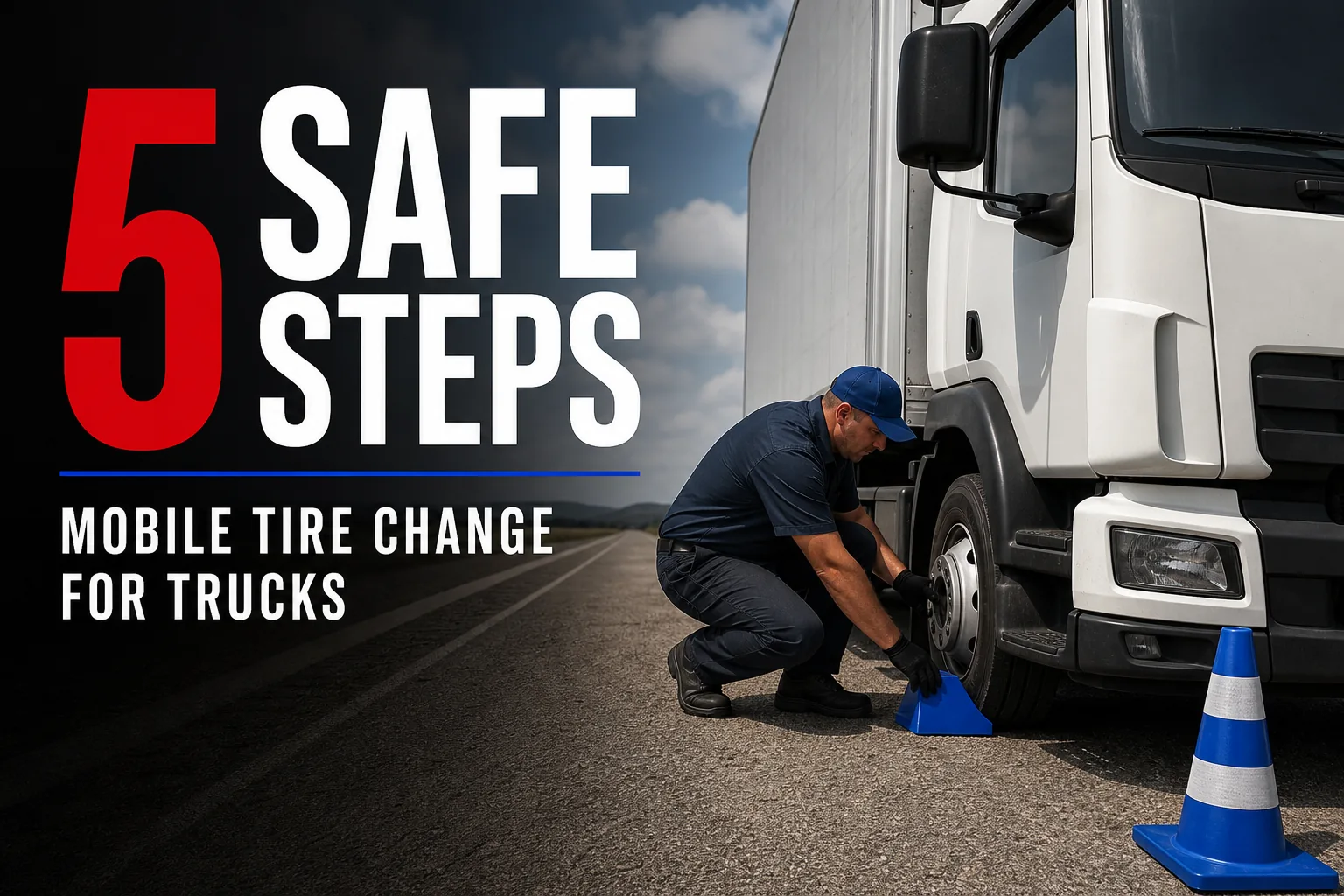
It’s a good idea to keep a reflective safety vest and a traffic cone nearby. Those items let other drivers see you clearly.
Once the truck is stable, you’re ready to look at the tire. If you need a quick visual on how to lift a semi safely, check out How to Change a Semi Truck Tire: Step‑By‑Step Guide . The guide walks through the exact lift points and safety checks.
Key Takeaway:A stable, well‑chocked truck is the foundation for a safe tire change.
Step 2: Check the Situation Without Taking Safety Risks
Stand back and give the tire a quick visual. Look for nails, cuts, sidewall bulges, or shredded tread. If the damage is obvious, you’ll know whether a patch or a full replace is needed.
Check the air pressure with a gauge if you have one handy. A tire that reads low but still holds air may be a slow leak. Temperature changes can affect pressure, so a reading that’s a few psi low isn’t always an emergency.
Take note of the tire size printed on the sidewall. It looks like a code such as 295/75R22.5. Write it down along with the axle position (steer, drive, or trailer). This info saves the technician time.
If the truck is loaded, mention that too. A fully‑laden rig puts more strain on the tire and may need a heavier‑duty replacement.
Don’t try to remove the tire yourself unless you have the right lift and tools. Improper removal can damage the wheel or cause injury.
Step 3: Call a Mobile Truck Tire Service and Share Key Details
Now pick a provider that can get to you fast. For Dallas‑Fort Worth fleets, The Tire Specialist offers 24/7 service, TIA‑certified techs, and on‑site repair and replacement for commercial trucks and fleet vehicles.
When you call, give the dispatcher the exact location (exit, mile marker, or yard name), the tire size, the axle position, and whether the truck is loaded. Also tell them if you have a spare that can be used temporarily.
Ask about the expected arrival window. Response time depends on your location, traffic, and current service demand.
Confirm that the technician will bring the correct tire size and any needed equipment, such as a hydraulic lift for dual‑rear‑wheel rigs.
For a quick checklist of what to ask, see Top Steps for Mobile Tire Repair and Replacement in Dallas, TX . It walks you through the exact details to share.
Pro Tip:Keep a printed copy of your truck’s tire specs in the cab. It speeds up the phone call and reduces mistakes.
Step 4: Prepare for the Technician’s Arrival
While you wait, clear the area around the truck. Move any boxes, pallets, or equipment that could block the service van.
Make sure the truck’s engine is off and the keys are out of the ignition. This prevents accidental starts.
Gather any paperwork the tech may need: the fleet maintenance log, the truck’s VIN, and any prior service records. Having these on hand lets the technician log the job instantly.
If your fleet uses a digital tracking system, open the app and update the job status to “awaiting technician.” That way the dispatch team sees you’re ready.
The Tire Specialist handles the repair or replacement on‑site, so you don’t have to tow the truck or wait around at a shop.
Step 5: Confirm the Tire Change Is Complete Before Returning to the Route
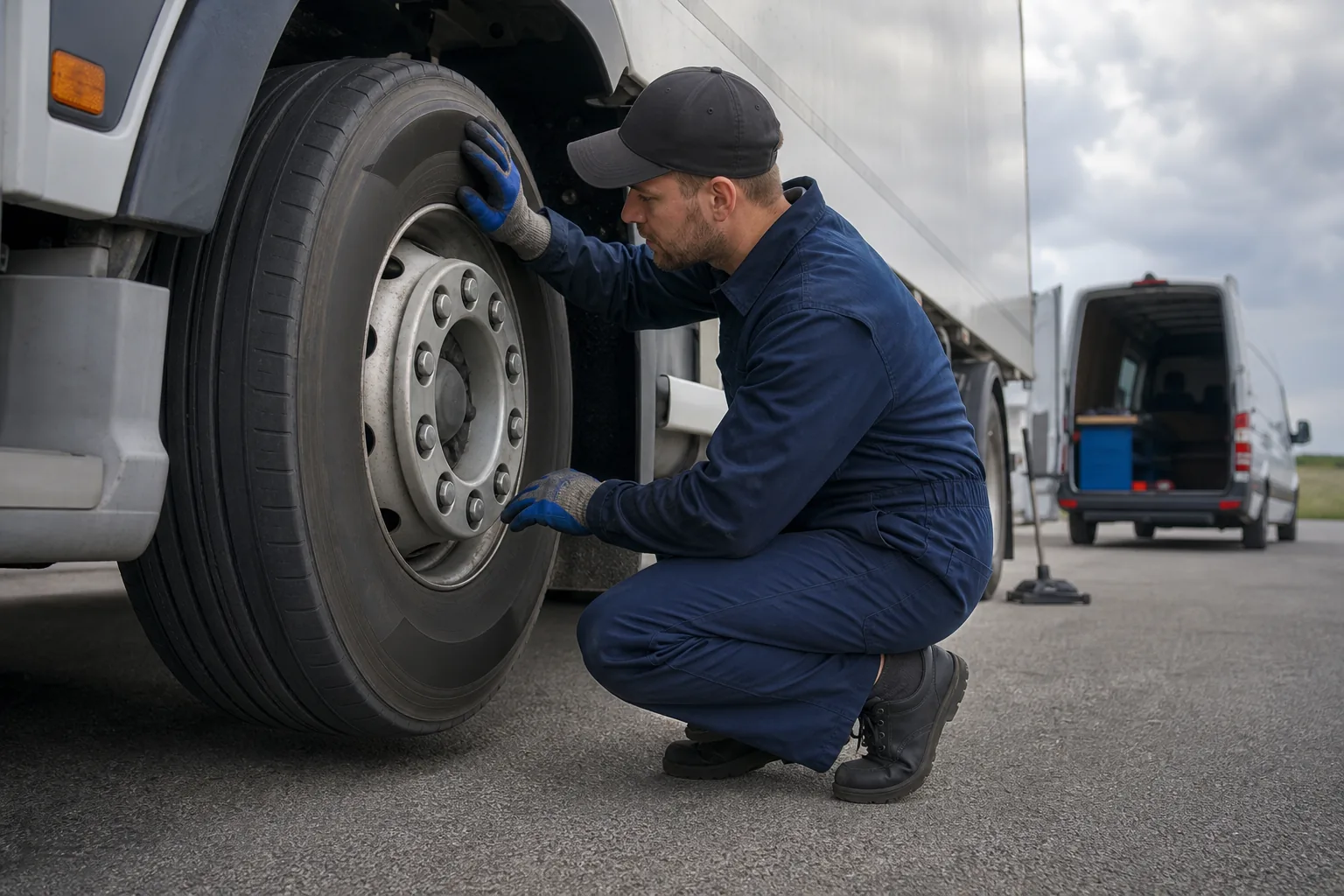
When the tech finishes, watch the final steps. They should torque the lug nuts to the manufacturer’s spec, usually using a calibrated torque wrench.
Ask for a pressure check. The new tire should sit at the recommended psi for the load you’re carrying. Ask the technician to write the reading down for your records.
Get a written receipt that lists the tire size, part number, and any warranties. This document helps with fleet accounting and future audits.
Do a quick visual walk‑around. Look for any tools left on the ground and make sure the spare (if used) is stored safely.
Only after the tech signs off should you drive off. Start slowly, listen for any odd noises, and check the tire’s hold after a few minutes.
Frequently Asked Questions
What should I do if the flat tire is on a loaded truck?
Keep the truck stopped, engage the parking brake, and call a mobile service immediately. Tell the dispatcher the truck is loaded so the crew brings a heavy‑duty lift and the correct tire rating.
How long does a typical mobile tire change take?
It depends on the tire, the wheel’s condition, and the location. The job goes fastest when the technician arrives with the correct tire and the wheel isn’t damaged.
Can The Tire Specialist handle dual‑rear‑wheel (dually) trucks?
Yes. The Tire Specialist services semi‑trucks, trailers, buses, and other fleet vehicles on‑site. Share the axle position and tire size when you call so the technician arrives prepared.
Do I need to have a spare tire on my truck?
No, many commercial rigs don’t carry a spare. That’s why a mobile service is useful; they can bring the right size on the spot.
Is there a way to track the technician’s ETA?
Ask the dispatcher for an estimated arrival window when you call. The Tire Specialist is available 24/7, and response time depends on your location, traffic, and current demand.
For fleets that need nonstop operation, the safest route is to partner with a 24/7 mobile service with TIA‑certified technicians.The Tire Specialistfits that bill in Dallas‑Fort Worth.
Key Takeaway:Follow these five steps, keep your truck secure, give clear info to the service crew, and verify the work before you hit the road again.


Comments