
Semi Truck Tire Blowout: What to Do and How to Stay Safe
When a semi’s tire bursts, you get seconds to keep the rig steady and get off the road. A sudden loss of air creates a side‑force that can pull the truck toward the flat. Below we break down the physics, the differences between axle locations, the exact driver actions you need, and the steps to finish the job safely.
Understanding the Physics of a Blowout
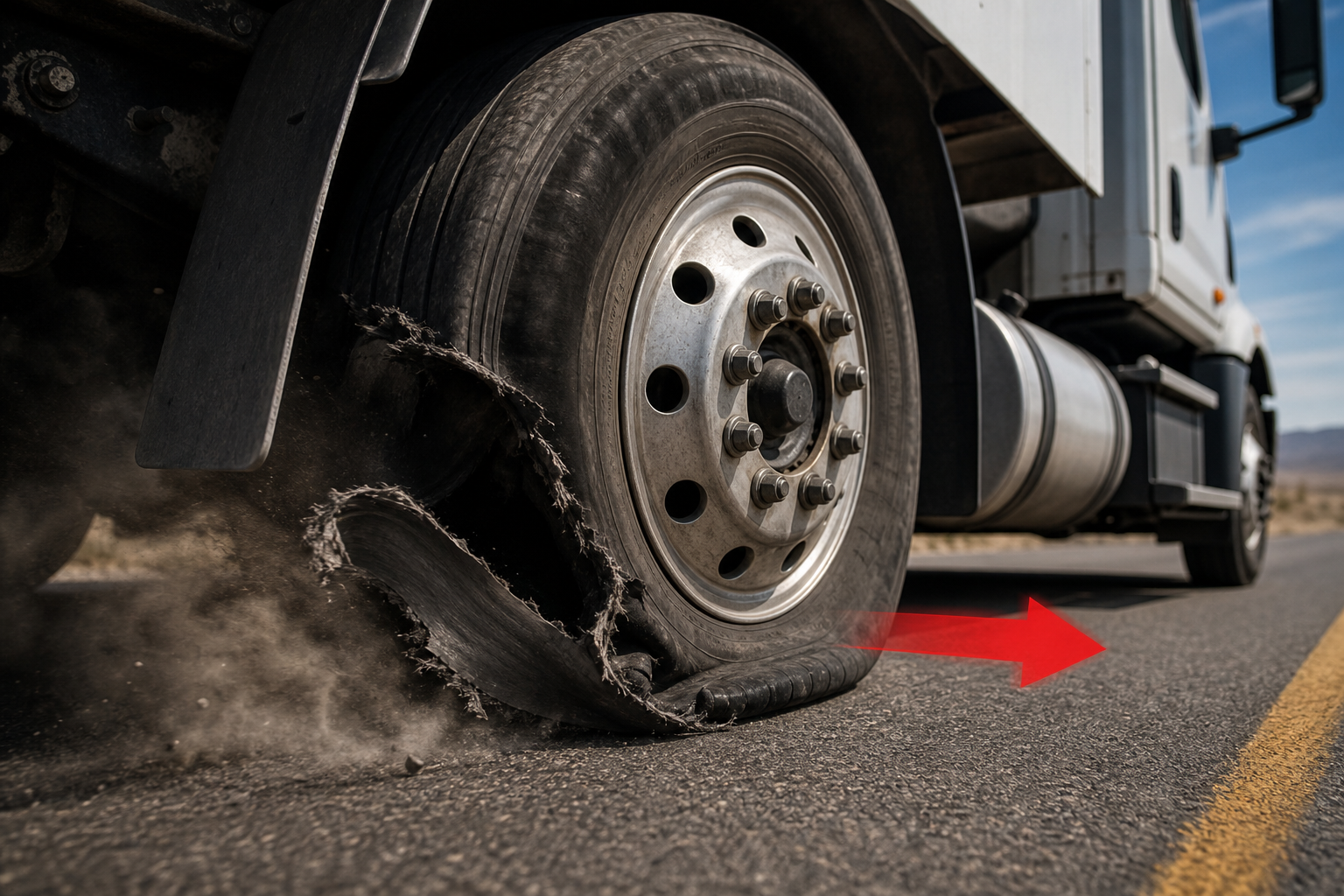
A blowout is rapid air loss that turns a pressurized tire into a floppy wheel in a split second. The tire’s sidewall can no longer support the load, so the rig’s weight shifts toward the flat side. That shift creates a side‑force that tries to push the vehicle sideways while the forward momentum keeps it moving straight. The result is a tug‑and‑pull feeling at the steering wheel.
Because the side‑force acts at the point where the tire contacts the road, the driver feels it as a sudden pull toward the blown‑out wheel. The amount of pull depends on the vehicle’s speed, load, and which axle lost pressure. At highway speeds the force can be strong enough to make the front end dip and the truck start to yaw.
Researchers explain that the side‑force grows as the tire’s rolling resistance spikes when the tread collapses.
In practice, the rig’s mass and the power sent to the drive wheels determine how much control you retain. If you keep forward thrust, the drive wheels help keep the truck on its line while you steer back into the lane.
Front‑Axle vs. Drive‑Axle Blowouts
Both front‑axle and drive‑axle blowouts feel similar, but the handling cues differ. A front‑axle (steering) tire loss removes the wheel that does the turning, so the rig wants to pull toward the flat side. The driver must fight that pull with the accelerator and a quick steering correction.
A drive‑axle (powered) blowout leaves the steering wheels intact, so the truck still has two good front tires to guide it. The side‑force still pushes the rig sideways, but the driver has more steering authority because the front wheels can still point the rig.
In both cases the safest move is to keep the accelerator pressed just enough to maintain forward thrust, then steer gently back toward the lane. Over‑braking removes the forward force and lets the side‑force dominate, which can spin the rig.
Most blowouts happen when a tire is under‑inflated or overloaded, the two biggest risk factors.
What to Do in the Moment: Immediate Driver Response
First, keep both hands on the wheel. A firm grip lets you make smooth corrections without over‑steering.
Second, press the accelerator lightly. Adding power to the drive wheels gives the rig forward thrust, which counteracts the side‑force. The goal isn’t to speed up; you just need enough power to stay stable.
Third, steer gently back toward the lane. Small, steady movements work better than sharp jerks. Over‑steering can cause the trailer to swing or the rig to fishtail.
Fourth, avoid hard braking. If you must slow, use the engine brake or a light foot on the service brakes. The trailer brake should stay off until the rig is under control.
Finally, signal and move to the shoulder when you have a clear path. Turn on the hazard lights, engage the parking brake, and prepare to pull over.
Key Takeaway:Stay calm, keep power on the wheels, and steer gently , that’s the recipe for keeping control.
After the Blowout: Safely Pulling Over and Assessing Damage
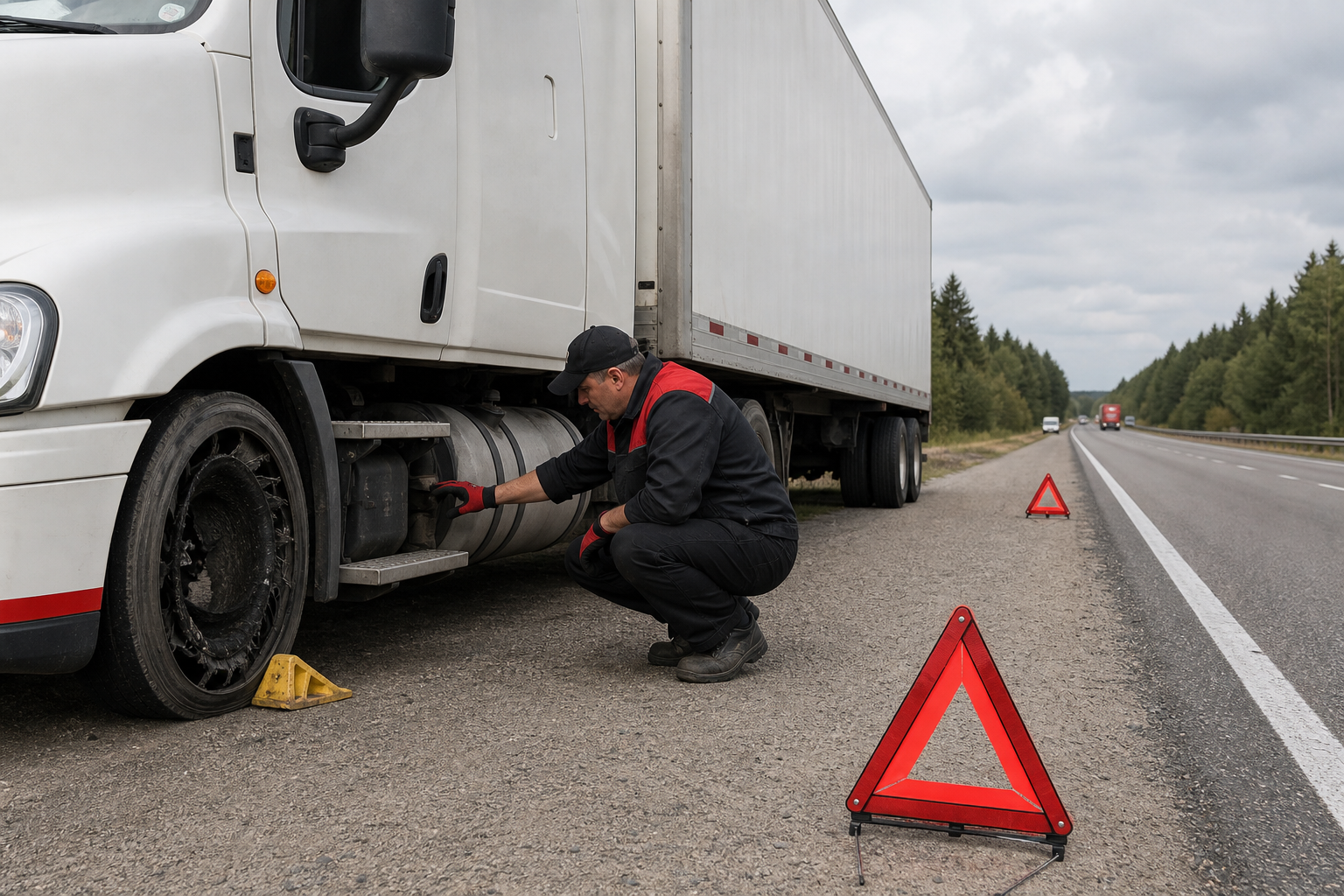
When the rig is stable, look for a safe spot to pull over. Use the shoulder or a wide turnout, and place wheel chocks on the opposite side of the blown‑out tire.
Set up safety triangles behind the truck, especially if traffic is still moving. This warns other drivers of a stopped vehicle.
Inspect the tire for obvious damage: bulges, cuts, or a shredded sidewall. Check the rim for dents or broken spokes. If the rim is bent, you’ll need a replacement before you can get back on the road.
Do not try to patch a tire that has experienced a blowout. The structural damage is usually beyond a simple repair. Call a professional service to replace the tire and check the wheel assembly.
Our own crew at The Tire Specialist can arrive on‑site within an hour in the Dallas‑Fort Worth area, swap the tire, and get you moving again.
Pre‑Trip Inspection: How to Prevent Blowouts
A solid pre‑trip inspection catches most problems before they turn into a blowout. Walk the rig and look for cuts, bulges, or exposed cords on every tire.
Check tread depth with a gauge. The DOT requires at least 4/32" on steer tires and 2/32" on drive tires. Anything shallower needs replacement.
Measure cold pressure with a reliable gauge. Match the pressure to the manufacturer’s placard, typically 95‑105 psi for steer tires on a loaded semi. Under‑inflation lets the sidewall flex, heats the tire, and can cause a burst.
Watch the load rating. Over‑loading stresses the steel belts and can push a tire beyond its design limits.
After the visual walk, run a quick pressure check and record any anomalies. Truck Tire Pressure: Complete Guide for Drivers offers a step‑by‑step checklist for staying within safe limits.
Regular rotation and balance keep wear even, reducing hot spots that can fail suddenly. Essential Commercial Tire Repair Tips for Fleet Operators explains why rotation matters for long‑haul fleets.
Pro Tip:Use a portable tire‑pressure‑monitoring system on each axle. It gives real‑time alerts if a tire drops below safe pressure while you’re on the road.
FAQ
What causes a semi truck tire blowout?
A blowout happens when a tire loses air fast because of under‑inflation, over‑loading, heat, or physical damage like cuts or sidewall cracks.
How fast should I react when a tire blows out?
You should react within a second: keep both hands on the wheel, press the accelerator lightly, and steer gently back into the lane.
Is it safe to brake hard after a blowout?
No, hard braking removes the forward thrust that helps you control the side‑force, making the rig more likely to spin.
Can I patch a blown‑out tire myself?
No, a blowout usually means the tire’s sidewall is damaged, which requires a full replacement rather than a patch.
How often should I check tire pressure on a semi?
Check pressure at least once a week and before every long haul. Cold‑inflated readings give the most accurate numbers.
Conclusion
For a semi truck tire blowout, the fastest way to stay safe is to keep power on the wheels, steer gently, and pull over to assess damage. If you need on‑site replacement, call The Tire Specialist for a quick, certified service.


Comments