
Tractor Trailer Tire Repair: 7 Best Fixes & Options
- Jun 22
- 9 min read
Got a nail in your rig out on the shoulder? You've got more than one way to handle it. Some fixes get you to the next truck stop. Some last for years. And one option brings a trained tech right to your truck. Here are the 7 best tractor trailer tire repair options, what each one does, and who each one is really for.
1. The Tire Specialist (Our Top Pick) , Mobile Truck Tire Repair in Dallas-Fort Worth
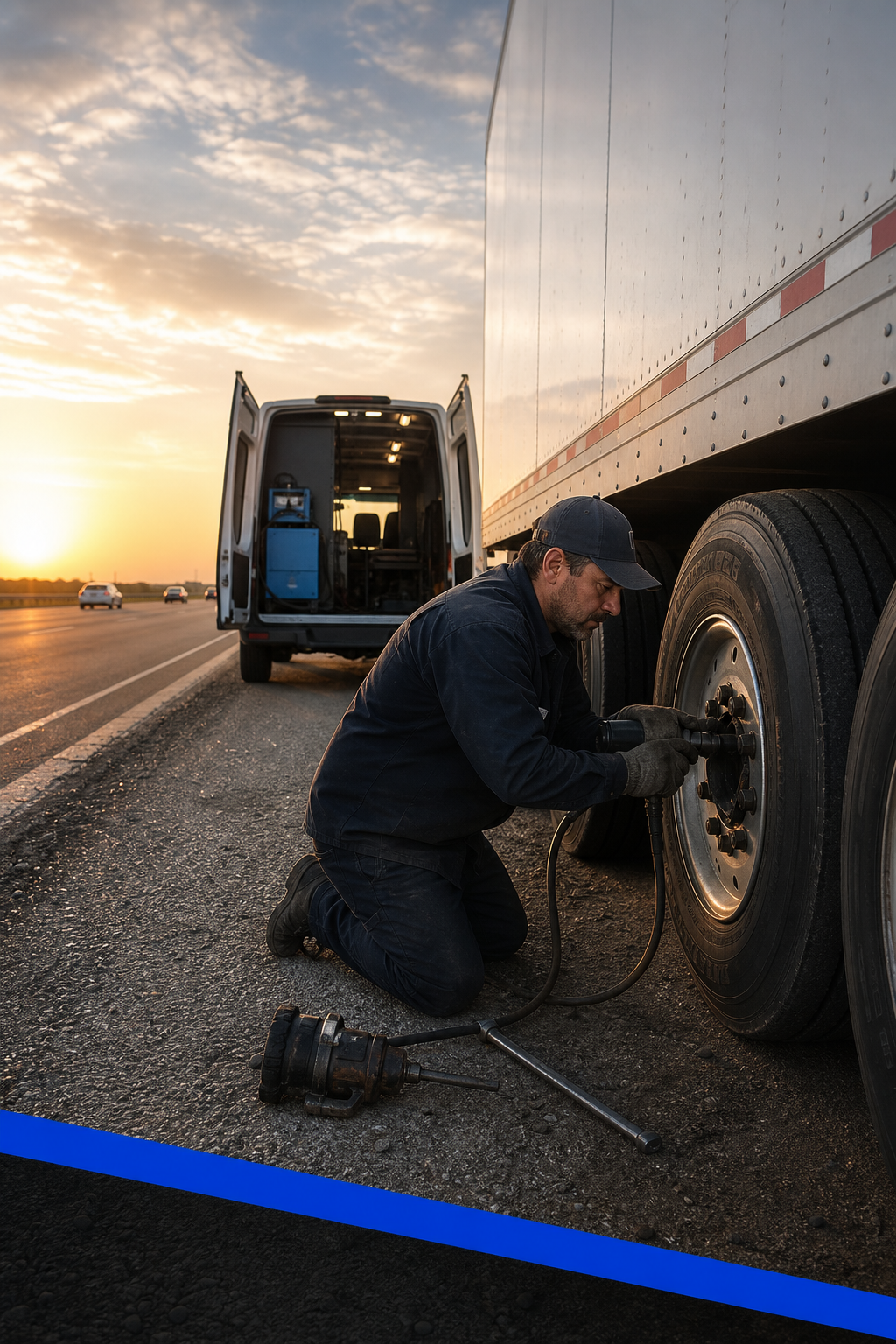
The Tire Specialist is a Dallas-Fort Worth mobile tire company that brings on-site repair, replacement, and roadside help straight to your commercial truck. Best for fleet managers and owner-operators who can't afford to tow a rig to a shop.
Here's why we put us first. We don't make your truck come to us. We come to the truck, whether it's stuck on I-35, parked at a loading dock, or sitting at a job site. In the DFW market, we're the mobile service that openly markets on-site support built for commercial fleets, not just walk-in drivers. That matters when a flat trailer tire is holding up a delivery.
We handle flat repairs, blowouts, valve and pressure issues, safety checks, and full replacements. Need help fast? Our fast mobile semi trailer tire repair shows up ready to fix the problem on the spot. That means less downtime for your fleet and fewer late loads.
One honest caveat: we serve the Dallas-Fort Worth metroplex. If your truck breaks down three states away, you'll need a local provider for that leg. But inside DFW, you can count on us to get you rolling.
Key Takeaway:If you run trucks anywhere in Dallas-Fort Worth, on-site service from The Tire Specialist keeps your rig off the tow hook and back on the road faster.
2. The DIY Plug Kit Method , Patching a Tread Puncture on the Road
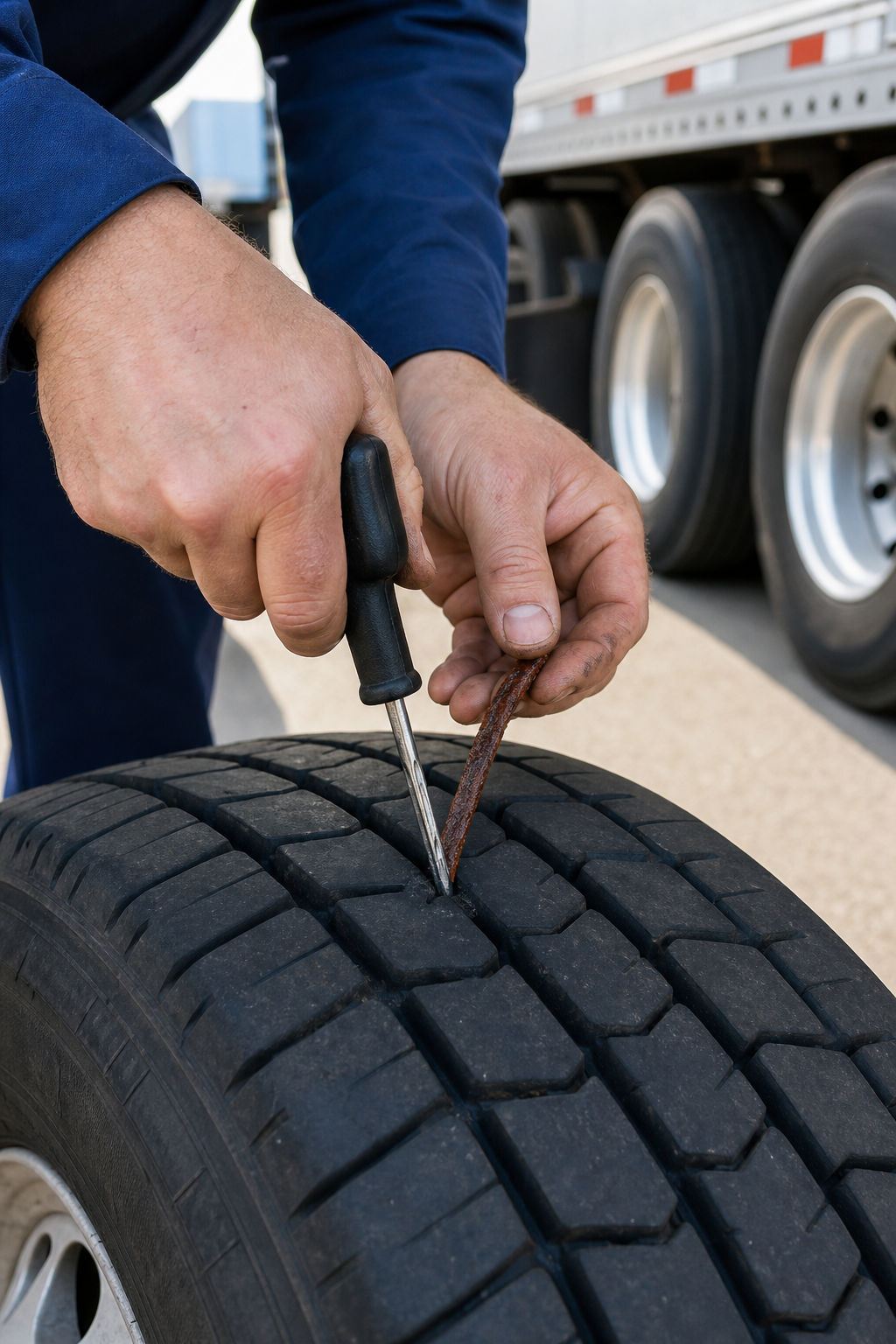
A DIY plug kit is a sticky rubber strip you push into a tread puncture to stop a slow leak. Best for drivers who hit a nail or screw and need to reach a truck stop without waiting for a tow.
It's simple to carry one. Most kits come with plugs in different sizes, a reamer, and an insertion tool. One trucker on YouTube keeps a repair kit and pliers in every truck so he can pull nails and plug small holes anywhere. Here's how the plug works on the side of the road.
Find the puncture and pull the nail or screw with pliers or side cutters.
Push the reamer in and out a few times to clean and shape the hole.
Feed a plug through the slot of the insertion tool and fold it over so both sides are even.
Dip the plug in lube or rubber cement to help it seal.
Push it in, give it a twist, then pull the tool straight out.
Cut off the excess and air the tire back up.
Semi tires are tough. Way tougher than a car tire. One owner-operator on YouTube skips the reamer and uses a drill instead, and shares a smart trick: run the drill in reverse when you start so you follow the existing hole instead of boring a new one. He learned fast that fixing your own stuff saves real money over paying a shop every time.
Why bother plugging at all? A small leak left alone can go flat on the highway and blow apart, shredding the trailer or truck. A quick plug keeps air in the tire and stops the hole from getting wallowed out wider. The on-site repair process for commercial fleets follows the same idea: stop the damage early, before a slow leak turns into a roadside blowout.
But know the limit. A plug is a temporary fix. It addresses the hole, not any inside damage the puncture or low-pressure driving may have caused. Get to a shop and have it inspected and patched properly.
3. Essential Tools & Supplies for Tractor Trailer Tire Repair
The right kit turns a roadside flat into a 15-minute fix instead of a long wait. Best for any driver or fleet that wants to handle small punctures before help arrives.
Here's what belongs in every truck:
Reamer:cleans and shapes the puncture so the plug grips.
Plug assortment:long plugs for big truck tires, short ones for smaller tires.
Insertion tool:feeds the plug into the hole.
Pliers and side cutters:for pulling nails and trimming excess.
Rubber cement or lube:helps the plug seal.
Cordless drill:some drivers prefer it over a hand reamer for tough semi tires.
Air source:a portable compressor or inflator to re-air the tire.
The video below walks through a real tire repair so you can see the order of steps before you try it yourself.
For bigger jobs, a bead seater helps you mount a tire on the rim. A high-capacity air bead seater uses a steel tank to seat heavy-duty truck and tractor tires, and these larger units handle big tires far better than smaller ones — though they can be heavy to lug around.
Pro Tip:Keep a digital tire pressure gauge in the cab. After any plug or patch, re-check pressure before you pull out and again at your next stop to catch a slow leak early.
Don't have room for a full setup? That's where a mobile crew earns its keep. Our techs roll up with the same gear you'd find in a shop, so you skip the tool list entirely.
4. Professional Patch Repair , The Inside-Out Fix for Lasting Safety
A professional patch seals the puncture from the inside of the tire, after a tech pulls it off the rim and inspects it. Best for tires you plan to keep for the long haul.
This is the fix the industry actually recommends. A proper repair means removing the tire from the wheel for a full inspection, then applying a rubber stem to fill the puncture and a patch to seal the innerliner. The guidance is clear: never do an outside-in or on-the-wheel repair.
There are hard limits. The injury can't be bigger than 1/4 inch (6mm), and it has to sit in the tread area, not the shoulder or sidewall. Repairs can't overlap, and a tire with an existing improper repair must be scrapped.
A patch lasts longer than a plug because it bonds to the innerliner and won't work loose over time. The catch is you can't do a proper patch on the shoulder of the road, you need the tire off the rim and a clean workspace.
5. Retreading , When a Casing Is Worth a Second Life
Retreading bonds a new tread onto a sound tire casing so you get more miles without buying new. Best for fleets watching cost per mile on long-haul trailers.
When the casing is healthy, a retread can carry your fleet a long way for less. Premium retreads can match or beat budget new tires on mileage when the casing is sound. That's why so many fleets run them on trailer and drive positions where steering precision matters less.
The math gets clearer when you look at cost per mile. We break down the retreads versus new tires question for Texas heat and how a sound casing keeps your spend down over the life of the tire.
One caveat for hot Texas roads: a retread is only as good as the casing under it and the inspection behind it. Skip the casing check, and you risk a tread separation at highway speed. Work with a retread provider that uses careful inspection and heat-resistant compounds.
6. 24/7 Roadside Tire Service for Commercial Fleets
24/7 roadside service sends a tech to your stranded truck at any hour to repair or swap a tire. Best for fleets that run around the clock and can't wait until morning.
Trucks don't break down on a schedule. A blowout at 2 a.m. on a Sunday still needs a fix, and a round-the-clock service answers that call. Response times in the DFW market vary widely, one provider we surveyed promised a 40-minute arrival while another listed a full one-day turnaround, so ask before you commit.
That transparency gap is real. In our survey of mobile providers, none publicly listed certifications or clear response promises across the board. So when you pick a roadside partner, ask three things: how fast they arrive, whether they handle commercial truck tires, and if they cover your routes. We lay out the full mobile tire services for commercial trucks in DFW so you know what to expect before you call.
Key Takeaway:Save a trusted 24/7 mobile number in every driver's phone before you need it. The middle of a breakdown is the worst time to start shopping.
The honest trade-off with mobile service is that it can't do everything a full shop can, like deep casing work. But for getting a rig rolling again fast, nothing beats a tech who comes to you.
7. Full Tire Replacement , Picking the Right Plug Length and Knowing When to Swap
Full replacement means scrapping the damaged tire and mounting a new one. Best for sidewall damage, big punctures, or worn tread that no fix can save.
Some damage can't be plugged or patched. A puncture over 1/4 inch, a sidewall cut, or a hole near the shoulder all mean the tire comes out of service. The same goes for worn tread, steer tires that drop below the DOT minimum must be replaced before the next trip.
When a fix is allowed, matching the plug to the tire size matters. Use this quick guide to pick the right approach:
Situation | Right Move | Why |
Small tread puncture, big truck tire | Long plug + patch | Short plugs won't reach through thick tread |
Small tread puncture, smaller tire | Short plug + patch | Long plug leaves too much excess inside |
Hole over 1/4 inch | Replace tire | Exceeds the standard repair limit |
Shoulder or sidewall damage | Replace tire | No fix holds in the flex zone |
Steer tire below 4/32" tread | Replace tire | Fails DOT inspection |
Reading a tire repair wall chart helps you match the right repair unit to the injury size. When replacement is the call, our mobile crew brings the new tire to you so you don't lose a full day.
What to Look for in a Tire Repair Option
Picking between a plug, a patch, and a full swap comes down to a few honest questions. Run through these before you decide.
How long do you plan to keep the tire? A plug is quicker, but a properly installed patch lasts much longer. If the tire is newer, go with the patch. If you're replacing it soon anyway, a plug is fine.
Where is the damage? Both plugs and patches only work over the central tread area. Near the sidewall, you're better off replacing the tire because no fix will last.
Can you handle the inside damage? A roadside plug only treats the visible hole. It doesn't catch internal damage from driving on an underinflated tire. Even after a DIY fix, have a pro inspect it.
Speed:plug wins for getting rolling fast.
Lifespan:patch wins for long-term safety.
Convenience:mobile service wins when downtime costs you money.
If your fleet runs in DFW, our mobile tire repair services for commercial trucks in Dallas cover all three, from a quick plug to a full on-site replacement.
For fleet operators who also move heavy or non-running equipment between sites, planning ahead on logistics pays off the same way. Lining up the right service up front saves time and stress later.
Frequently Asked Questions
Can you plug a tractor trailer tire?
Yes, you can plug a small tread puncture on a tractor trailer tire as a temporary fix. Pull the nail, ream the hole, and push in a plug sized for the big tire. It'll get you to a truck stop. But it's not a permanent repair, get the tire inspected and patched properly soon after.
How long does a tractor trailer tire repair last?
A professional patch repair can last for years because it bonds to the innerliner and won't loosen. A roadside plug is temporary and may work loose over time, so use it to reach a shop, not as the final fix. Retreads can run many thousands of miles when the casing is sound and well inspected.
When should you replace a tire instead of repairing it?
Replace the tire when the puncture is larger than 1/4 inch, sits in the shoulder or sidewall, or when the tread is worn below the legal limit. Steer tires below 4/32 inch must be swapped before the next trip. No plug or patch holds reliably in the sidewall flex zone, so replacement is the safe call.
Is it legal to patch a steer tire on a semi?
It depends on your local regulations and the tire manufacturer's policy. Some areas restrict steer tire repairs. Tread-area repairs are generally allowed within size limits, but always follow the manufacturer's rules and have a trained tech confirm the repair is permitted for that tire and position.
What tools do I need for roadside tractor trailer tire repair?
For a roadside plug, carry a reamer, an assortment of long and short plugs, an insertion tool, pliers or side cutters, rubber cement or lube, and a way to re-inflate the tire. Some drivers add a cordless drill for tough semi tires and a digital pressure gauge to check the seal afterward.
The Bottom Line
For a quick roadside save, keep a plug kit in the cab. For a fix that lasts, get a professional inside-out patch. But if you run a fleet in Dallas-Fort Worth and downtime costs you loads, the smartest move is on-site service that comes to your truck. Ready to keep your rig rolling? Reach out to The Tire Specialist and book mobile tire service anywhere in DFW.


Comments