.png)
Best Heavy Duty Truck Tires: 10 Top Picks
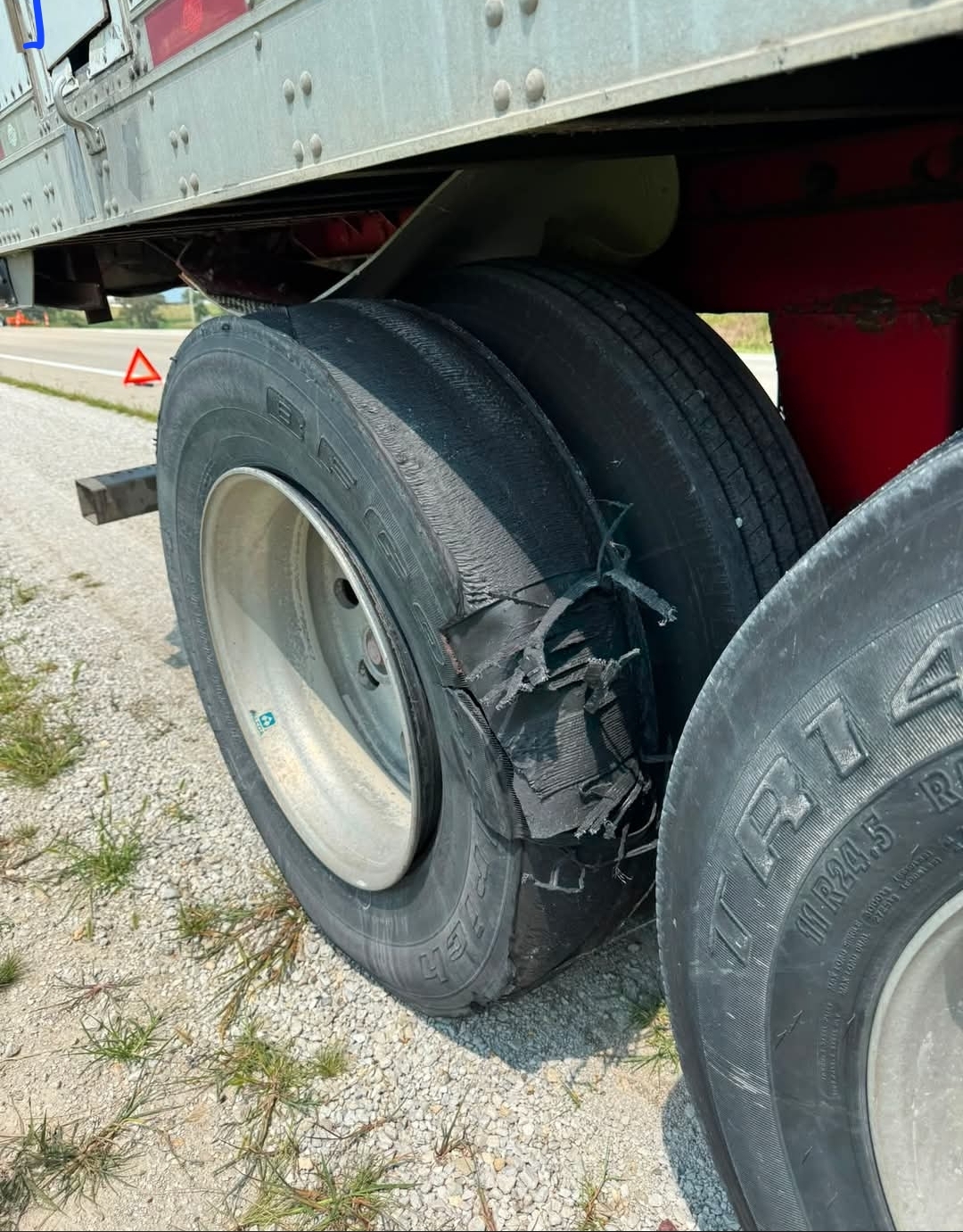
Your truck can handle serious work, but the wrong tire can waste fuel, wear fast, or feel unstable under a trailer. Most heavy-duty choices now favor highway miles and mixed use over pure off-road work. We’ve ranked 10 named options by their best use, known specs, and trade-offs.
Table of Contents
2. Cooper Discoverer AT3 XLT, Contractor Hauling With Light Trail Capability
3. Toyo Open Country AT3, Pavement-First Versatility With Snow Capability
4. BFGoodrich All-Terrain T/A KO3, Deep Snow and Demanding Off-Road Work
5. Falken Wildpeak AT4W, Highway Mileage, Wet Weather, and Weekend Dirt
6. Continental Terrain Contact A/T, Pavement, Wet Pavement, and Highway Runs
7. Goodyear Wrangler Duratra, Strong Support for Serious Towing
9. Cooper Discoverer AT3XLT, Road Hauling With Light Off-Road Use
10. BFG Goodrich HD Terrain T AKT, Purpose-Built Hauling Strength
1. The Tire Specialist (Our Top Pick)
The Tire Specialist is our top pick for fleets and owners who need the tire handled at the job site, not just selected from a catalog. We’re a Dallas-Fort Worth mobile tire service company for commercial trucks and fleet vehicles.
Our team provides on-site repair, tire replacement, and roadside assistance. That matters when a flat truck is blocking a route, delaying a delivery, or sitting beside a work site. A tire model may be right for the load, but it still needs the right fitment, pressure, and service plan.
We can help with on-site tire replacement when a repair is no longer safe. We also support fleet maintenance programs, which means a manager can track recurring tire needs instead of treating every failure as a separate event.
Need | What we check | Why it matters |
Heavy towing | Load index, load range, axle limits | Reduces flex and heat under a trailer |
Daily fleet work | Tire wear, pressure, position on the truck | Helps catch problems before a roadside failure |
Roadside trouble | Repair or replacement need | Gets the vehicle assessed at its location |
Dallas-Fort Worth routes | Mobile service coverage and fleet needs | Limits shop detours and driver downtime |
Our limitation is simple: The Tire Specialist is a service provider, not a tire model with a published load rating or tread warranty. For that reason, we won’t pretend to compare our service with a tire’s engineering data. We’ll help you match the tire to the truck, then keep the vehicle moving.
Fleet managers who want a broader look at commercial fitment can review our commercial truck tire selection guidance before setting a replacement plan.
2. Cooper Discoverer AT3 XLT, Contractor Hauling With Light Trail Capability
The Cooper Discoverer AT3 XLT fits contractors and weekend haulers who spend most of their time on roads but still reach gravel, dirt, or a rough work site.
Research used for this shortlist gives the tire a 60,000-mile tread-life figure. The model is also described as a fit for contractors and weekend haulers. That makes it a sensible choice when the truck carries tools or pulls a trailer during the week, then sees light trail use on days off.
Its appeal is balance. The tread is made for mixed driving rather than deep mud. That usually makes more sense for a work truck that must stay civil on the highway. A tire with too much off-road focus can add noise and a rougher feel during the long drive home.
We’d place this model on a truck that needs load-rated durability without becoming a dedicated trail rig. Check the exact size before buying. The same model name can have different load limits across sizes.
The caveat is winter depth. The research describes this tire as less suited to drivers who need elite snow performance. If your route crosses a snow belt or steep icy roads, compare a tire with a stated severe-snow rating instead.
For fleet work, we’d also inspect wear across the tread. Uneven wear can point to alignment, pressure, or suspension trouble. A long tread-life claim cannot correct those issues.
3. Toyo Open Country AT3, Pavement-First Versatility With Snow Capability
The Toyo Open Country AT3 suits drivers whose heavy-duty truck spends most of its time on pavement but still needs trail traction on weekends.
The research lists a three-peak mountain snowflake rating , often called 3PMSF. That mark identifies a tire that meets a defined severe-snow traction test. It does not mean the tire behaves like a dedicated ice tire, so we still match the choice to the local road conditions.
The model also stands out for its disclosed load capacity. One research source lists up to 3,970 pounds in a suitable LT size. That is the highest disclosed load figure in this shortlist, but the number only applies to the exact size and rating. We never use a model-wide figure without checking the sidewall.
A tire-size and vehicle-fitment lookup can be a starting point, then confirm the truck maker’s required size and load limits with the door-jamb label. The exact fitment details should be verified before choosing a tire.
This tire makes sense for a truck that hauls during the week and sees packed dirt on weekends. Its weakness is focus. It isn’t the first choice for pure rock work or deep mud, where a more aggressive tread may clear debris better.
Fuel use also deserves a careful view. Tire weight, tread block movement, and sidewall design can change rolling feel. We don’t promise a set mileage gain from any model because the truck, load, speed, and pressure all change the result.
4. BFGoodrich All-Terrain T/A KO3, Deep Snow and Demanding Off-Road Work
The BFGoodrich All-Terrain T/A KO3 is aimed at pure off-road work and deep snow. It belongs on a truck that regularly leaves the pavement, not one that only wants an aggressive look.
The research describes the KO3 as the strongest off-road choice in the group. It also points to improved sidewall puncture resistance and better deep-snow braking than the Falken Wildpeak AT4W in one cited review. Those findings speak to a narrow use case, so we won’t turn them into a promise for every truck or road.
Check the exact size, construction, and intended vehicle class before you compare a sidewall marking.
The trade-off is road manners. Aggressive tread can bring more hum, a firmer ride, and more tread movement on smooth pavement. That may be a fair trade for a truck that crosses loose ground each week. It may be a poor trade for a commuter that sees only asphalt.
We’d also watch pressure closely. A tough sidewall still needs the pressure listed for the actual load. Running too low can build heat. Running too high can reduce the contact patch and make the ride harsh.
Choose this model when off-road grip and snow work outrank quiet highway travel. If most of your miles are wet interstate miles, look lower on the list.
5. Falken Wildpeak AT4W, Highway Mileage, Wet Weather, and Weekend Dirt
The Falken Wildpeak AT4W fits owners who drive serious highway miles, face wet weather, and still use dirt or gravel roads on weekends.
The research lists a 65,000-mile tread-life figure and a three-peak mountain snowflake rating. Those two details give the model a clear position. It targets long road use while keeping a stated severe-snow traction mark.
One review in the source set reported shorter wet braking than the BFGoodrich KO3. That is a useful comparison, but braking results depend on test surface, tire size, vehicle setup, temperature, and tread condition. We treat video test data as a clue, not a guarantee.
Its main strength is the middle ground. The tread is more road-friendly than a mud tire, yet it still suits gravel and light trail work. That profile works well for a contractor who has a long commute before reaching a site.
The limitation is that a balanced tire rarely wins every task. A dedicated off-road tire may dig better in deep mud. A highway tire may ride more quietly. A fleet buyer should choose based on the route mix, not the tread’s look in a photo.
Before fitting this model, confirm that the exact size has the required load range. A 3PMSF mark answers a snow-traction question. It does not answer the truck’s axle-load question.
Key Takeaway:A tire’s best-use label is only useful after you match it to the truck’s exact size, load requirement, and route.
6. Continental Terrain Contact A/T, Quiet Daily Highway and Wet-Pavement Performance
The Continental Terrain Contact A/T is for drivers whose heavy-duty truck spends the majority of its miles on pavement, including wet pavement, highway runs, and daily commuting.
The research lists a 65,000-mile tread-life figure and places this model in the pavement-first group. That makes it a strong fit when highway travel and regular commuting are the truck’s main jobs.
For a daily truck, a pavement-focused tire can be a sensible choice when off-road driving is limited. Drivers who spend most of their time on highway routes may prefer a tire suited to those regular conditions.
Its 65,000-mile tread-life figure and pavement-focused use make it a practical match for highway travel and daily commuting. We’d still verify the exact light-truck size and load details before ordering, so the tire matches the truck.
For a daily fleet truck, this is the decision rule: choose a pavement-focused tire when most miles involve highway runs, wet pavement, and commuting.
7. Goodyear Wrangler Duratra, Strong Support for Serious Towing
The Goodyear Wrangler Duratra is aimed at serious towing strength. The research lists a 3,415-pound load rating for the referenced configuration.
That number can help when comparing choices, but it must be read with the size and load range. A tire’s rating applies to a specific configuration. We always compare it with the truck’s axle rating, payload, and trailer setup.
The model suits owners who value a firm, stable feel under a heavy trailer. A strong towing setup can feel more settled when the trailer loads the rear axle, though tire pressure and weight balance still control much of the result.
The trade-off is comfort. A tire built around towing can feel firmer when the truck is empty. More aggressive tread can also add road sound. That may be acceptable for a work truck but tiring for a daily commuter.
We’d place this option on a truck that pulls often and spends less time in quiet city driving. Before the first tow, check cold pressure and inspect the sidewalls. A new tire still needs a correct setup.
8. BFG Goodrich Allterrain KO3, High-Load Towing Stability
The BFG Goodrich Allterrain KO3 is listed for towing stability, with a disclosed load rating of 3,860 pounds in the research source.
This entry is written slightly differently from the BFGoodrich All-Terrain T/A KO3 above, but we keep both names because they appear as separate research entries. Confirm the precise product name, size, and construction before purchase. Similar naming can lead to the wrong order.
A higher disclosed load figure can help a truck maintain stability under a large trailer. It does not raise the truck’s legal payload or axle limit. The truck remains the limiting factor, even when the tire rating is higher.
The research also describes this model as an off-road-capable towing option. That gives it a wider use range than a road-only tire, but it may bring the same costs in ride feel and noise that come with more open tread.
For fleet managers, consistency may matter more than a single high rating. If several trucks share the same tire size, using a clear inspection and pressure process can simplify service. We can help reduce downtime when a tire issue appears at a site instead of waiting for the truck to return to a shop.
9. Cooper Discoverer AT3XLT, Road Hauling With Light Off-Road Use
The Cooper Discoverer AT3XLT is listed for road hauling with light off-road use. The research gives it a 60,000-mile tread-life figure and a 3,860-pound load rating.
This entry overlaps with the Cooper Discoverer AT3 XLT listed earlier. We’ve kept the wording as supplied in the source set because the two entries may reflect different naming or comparison records. That is a reason to check the molded sidewall and product code before buying.
The stated use fits a common work pattern. A truck may carry materials on pavement all week, then use a gravel lot or rough access road. It needs load support and predictable road handling, but it does not need a deep-mud tread.
The 60,000-mile figure gives buyers a useful service-life reference. It is not a promise for every truck. Alignment, pressure, rotation, load, heat, and driving style can change wear sharply.
We’d avoid using this type of tire as a substitute for a true off-road model. Light trail use is one task. Repeated rock, mud, or deep snow is another. Make the route call before the purchase call.
10. BFG Goodrich HD Terrain T AKT, Purpose-Built Hauling Strength
The BFG Goodrich HD Terrain T AKT is listed as a purpose-built hauling tire, with a disclosed load rating of 3,415 pounds.
Its place on this shortlist comes from the hauling focus rather than a long tread-life claim. That distinction matters. Some buyers need a tire that supports a demanding load first. Others need the quietest ride or the longest stated tread life.
For a heavy trailer, we look at load index and load range before tread style. The load index is the coded number that states how much weight one tire can carry. Load range describes the casing’s pressure and load class. Neither figure should be read alone.
A purpose-built hauling choice may ride firmer when unloaded. It can also make less sense for a truck that spends most of its day commuting. We’d reserve this model for a truck where trailer work is a core job, not an occasional task.
Before mounting any tire, compare the sidewall with the door-jamb label. Then set pressure cold and recheck it before a long haul. Our truck tire pressure guide explains why load and temperature change the pressure check.
How to Choose Among Heavy-Duty Truck Tires
The best heavy duty truck tires are the ones that match the truck’s actual work. Start with the vehicle label, not the tread pattern.
Load index and load range
Check the load index for the exact tire size. Research in this shortlist shows disclosed ratings ranging from 3,415 to 3,970 pounds, but those figures do not apply to every size.
D-rated and E-rated tires can differ in maximum pressure and casing strength. A D-rated tire can sometimes show a higher load rating than an E-rated tire in another size. So we never choose by the letter alone.
Fitment and actual size
Read the full sidewall marking. It includes the tire width, aspect ratio, wheel diameter, load index, and speed rating. A tire that looks close in size may still rub, change clearance, or alter the speedometer.
Check the truck maker’s door-jamb label. Then compare the tire maker’s exact size chart. If the truck has aftermarket wheels or suspension changes, verify clearance at full steering lock and under load.
Tread life and warranty
Only three of the researched tire entries disclose tread-life figures. Those figures cluster between 60,000 and 65,000 miles. That range helps with planning, but it is not a guaranteed replacement date.
Warranty terms can also vary by tire size, rotation records, and service conditions. Keep inspection and rotation records if the warranty requires them.
Weather and route
Mostly highway:Favor a quieter, road-focused all-terrain tire.
Wet routes:Look for test data tied to wet braking or hydroplaning.
Deep snow:Check for the three-peak mountain snowflake mark.
Gravel and light trails:Choose a mixed-use tread with suitable sidewall protection.
Heavy mud or rock:Accept more noise and firm ride for stronger off-road focus.
Maintenance after fitment
Check pressure at least weekly and before a long haul. Inspect for cuts, bulges, and uneven wear. A truck that carries changing loads needs more attention than one that runs empty every day.
For a fleet, record the tire position, installation date, pressure checks, and removal reason. That turns tire replacement into a maintenance process instead of a roadside surprise.
Pro Tip:Take a photo of each tire’s sidewall before ordering replacements. It gives the service team the exact size and rating needed.
FAQ
What are the best heavy duty truck tires for towing?
The best heavy duty truck tires for towing have the correct load index, pressure range, and fitment for your truck. The Goodyear Wrangler Duratra, BFG Goodrich Allterrain KO3, and BFG Goodrich HD Terrain T AKT are listed for towing or hauling use. Always compare the tire rating with the truck’s axle and payload limits.
Are E-rated tires better than D-rated tires for heavy hauling?
E-rated tires aren’t automatically better than D-rated tires for every truck. E-rated construction may allow higher pressure, but the exact load index matters more than the letter alone. A D-rated tire in one size can carry more than an E-rated tire in another. Check the full sidewall marking and vehicle label.
What does the three-peak mountain snowflake rating mean?
The three-peak mountain snowflake rating means the tire meets a severe-snow traction test. It is useful for buyers who face regular snow, but it does not promise strong ice braking or replace safe winter driving. In this shortlist, the Toyo Open Country AT3 and Falken Wildpeak AT4W carry the stated rating.
How long do heavy-duty truck tires last?
Heavy-duty truck tires can have stated tread-life figures between 60,000 and 65,000 miles in the researched examples. Actual life depends on pressure, alignment, load, heat, road surface, and driving habits. Inspect the tread and sidewalls often. Replace a tire when damage or unsafe wear appears.
Can all-terrain tires handle heavy trailers?
Some all-terrain tires can handle heavy trailers, but the tread pattern alone does not prove it. Check load index, load range, maximum pressure, and the truck’s axle limits. A tire may look rugged yet lack the rating needed for the load. Fitment should come before appearance.
Conclusion
For most pavement-heavy work, we’d start with a correctly sized road-friendly all-terrain tire such as the Falken Wildpeak AT4W, a pavement-focused all-terrain tire, or the Toyo Open Country AT3. For deep snow or repeated off-road work, look at the more aggressive options. Before you order, send The Tire Specialist your tire size and truck details so we can confirm the fit and plan on-site service if needed.


Comments