
Best Tire Pressure for Trailer Tires: How-To
The right PSI keeps a trailer stable, protects the tread, and lowers the risk of a roadside tire failure. The hard part is that trailer tires don't share one universal pressure. We’ll show you how to read the tire and wheel ratings, match PSI to the load, and check the setup before every trip.
Table of Contents
1. The Tire Specialist
Need a clear answer when the numbers don't match? Start with the tire sidewall, the trailer data plate, and the wheel rating. Then get expert help before changing pressure below the marked value.
At The Tire Specialist , we work with commercial trucks and fleet vehicles across Dallas-Fort Worth. Our mobile team can inspect a trailer tire on-site, check for damage, and handle repair or replacement when a tire isn't safe to keep running. That helps fleet managers deal with a tire issue without sending the whole vehicle to a shop.
The tire doesn't set the only limit. The wheel has its own PSI rating, often stamped on the rim. The tire, wheel, and trailer maker's specification must agree. If the tire allows more pressure than the wheel, the wheel sets the ceiling. Never inflate past the lowest rated part.
We also check the valve stem. A high-pressure tire needs a valve stem that can handle the same pressure. A mismatch can cause a slow leak or sudden loss, even when the tire itself has the right rating.
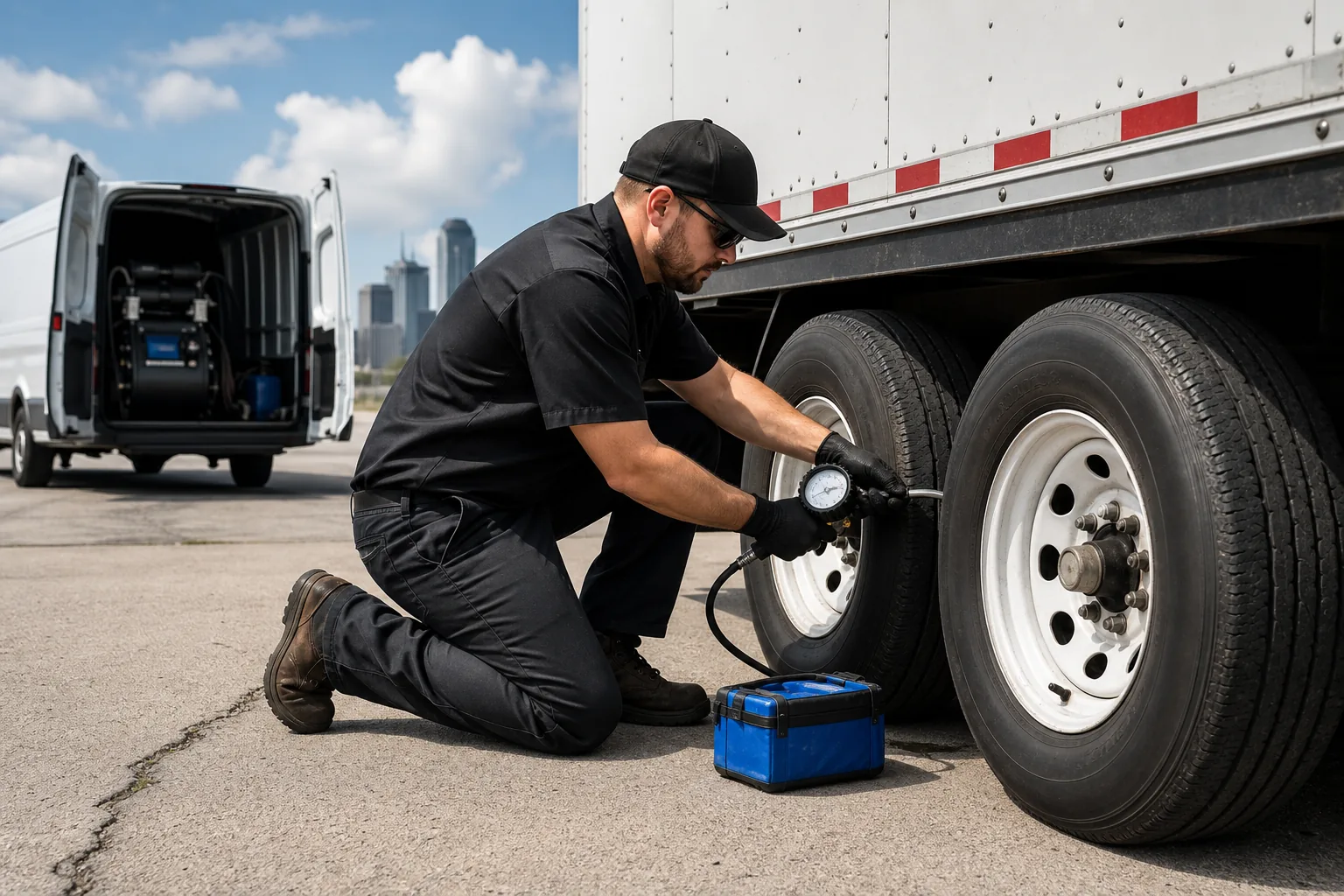
Trailer tires are often marked with a maximum cold PSI. “Cold” means the tire has sat long enough to reach outdoor temperature. It doesn't mean you should bleed air from a warm tire after driving.
For fleet teams, our truck tire inspection checklist can help turn this check into a repeatable handoff. Write down the cold PSI, tire condition, and any repair needed before the trailer leaves the yard.
The safe rule is simple: use published tire data first. Don't copy the PSI from a passenger car or guess from how the tire looks.
Step 2: Calculate the Correct PSI for Your Trailer Load
To find the best tire pressure for trailer tires, first find the actual load on each tire. PSI supports a rated load. It isn't a comfort setting that you can choose by feel.
Start with the trailer's gross vehicle weight rating, or GVWR. GVWR is the maximum permitted total weight of the loaded trailer. It includes the trailer itself, cargo, fluids, and installed gear. The actual loaded weight may be lower, so weigh the trailer when the load changes often.
Next, find the axle count and the tire count. A two-axle trailer often has four tires, but don't assume the weight splits evenly. Uneven cargo can put more load on one side. An axle scale gives better information than a guess.
Read the tire size, load range, and maximum cold PSI.
Read the trailer's tire and loading label.
Check the wheel's maximum PSI rating.
Measure the loaded axle or tire weight when possible.
Use the tire maker's load and inflation chart for that exact size.
Don't divide GVWR by the tire count and then invent a PSI. Use that division only as a rough load check. The tire chart controls the final pressure because tire construction and size change the load capacity at each PSI.
Check | What it tells you | What to do |
Trailer data plate | The maker's listed tire and inflation setup | Use it as your starting point |
Tire sidewall | Size, load range, and maximum cold PSI | Never exceed the marked limit |
Wheel stamp | The rim's pressure limit | Stay at or below the lower rating |
Loaded scale reading | The weight each axle carries | Compare it with the tire chart |
Speed rating | The tire's tested speed limit | Stay within the rating, especially under load |
Public pressure data can be surprisingly thin. Full-load figures ranged from 50 to 105 PSI, but partial-load guidance was missing from every entry. That gap is why we don't recommend lowering pressure just because a trailer feels bouncy when empty.
A low-pressure setting may reduce load capacity. It may also increase heat and sidewall flex. The basic definition of tire pressure helps explain why the air inside the tire supports the vehicle, but your tire's own chart must decide the working number.
If you haul changing loads, ask the tire maker or a qualified tire professional for a chart-based answer. Keep that answer with the trailer records so the next driver doesn't reset the tires by guesswork.
Step 3: Check and Adjust Pressure Before Every Trip
Yes, check trailer tire pressure before every trip, while the tires are cold. A tire can lose air while parked, and temperature changes can shift the gauge reading.
Use a quality gauge that fits the valve stem. Check all tires, not only the tire that looks low. A visual check cannot show a small pressure loss, and trailer tires can look firm while carrying less than their rated load.
Park on level ground and let the tires cool.
Remove each valve cap and take one reading.
Compare every tire with the target from the chart or label.
Add air in small amounts, then check again.
Replace the caps and record the readings.
Check the spare, too. It may sit for months and still be expected to carry the trailer after a puncture. Set it to the specified cold pressure, then inspect its age and sidewall before trusting it.
Season changes deserve a fresh check. Cold weather can lower the gauge reading. Hot weather can raise pressure after driving. Set pressure when cold, and don't release air from a hot tire unless a qualified technician tells you to do so.
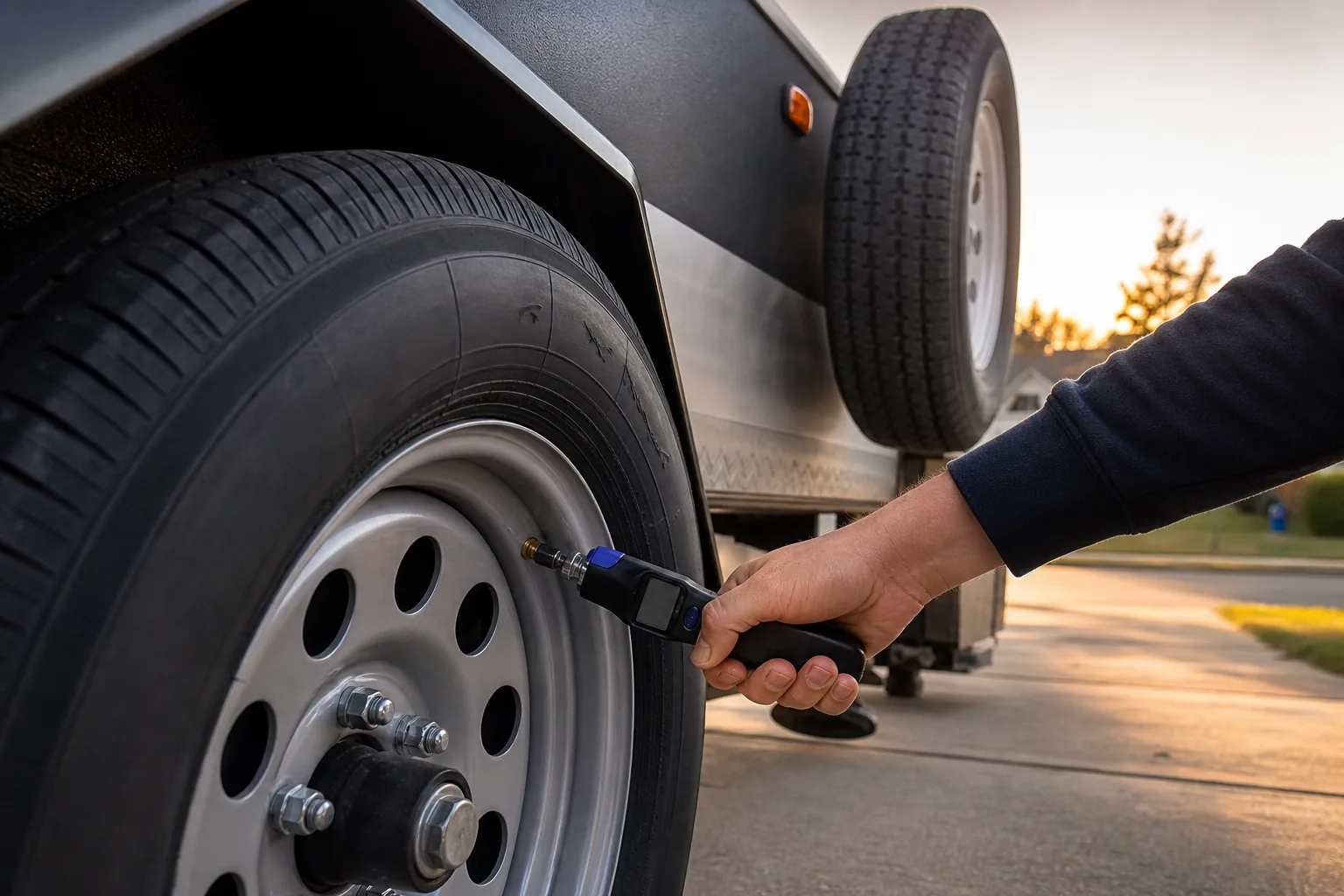
We also recommend a TPMS, or tire pressure monitoring system. A TPMS sensor can warn you about pressure loss while the trailer is moving. It won't replace a cold check, but it can give you time to pull over before a small leak becomes a damaged tire. The definition of TPMS covers the basic purpose of these systems.
Before leaving, inspect the valve stems and check lug nuts with the trailer maker's specified method. Pressure cannot correct a loose wheel. If a tire loses air again after inflation, stop treating it as a routine top-up and arrange an inspection.
Step 4: Use a Tire Chart Example
A chart example shows why tire size alone cannot answer the PSI question. Consider the listed figures for several trailer tire sizes, then compare them with your own sidewall and load chart.
Tire entry | Reported cold or full-load PSI | What we can safely conclude |
Good Year Endurance 205 75 R15 | 26+ PSI cold | Use its listed cold inflation pressure |
GY Endurance ST 225/75 R15 | 70 PSI cold | Different size and setup, so don't copy another tire's number |
ST205/75D15 6PR | 50 PSI full load | Check the exact load range and tire construction |
5.30-12 | 105 PSI full load | High-pressure setup needs a matching wheel and valve stem |
4.80 x 12 | 60 PSI full load | Do not treat it as a universal small-trailer setting |
Westlake ST205/75R15 | 65 PSI cold | Follow its own chart and sidewall |
The spread is the point. A 26+ PSI figure and a 105 PSI figure can both appear in trailer-tire information, yet they describe different tires and conditions. The number is useful only when the tire size, load, wheel, and chart all match.
Suppose your trailer has a 225/75 R15 tire. You cannot use a 205/75 R15 value because the sizes differ. You also cannot replace a trailer label with a higher load-range tire and assume the new maximum PSI is the correct daily setting. Compare the new tire with the axle rating, wheel rating, and maker's inflation guidance first.
When the chart lacks a partial-load number, keep the pressure at the maker's stated cold setting unless the maker gives a specific lower value. That decision may produce a firmer ride, but it avoids turning a light load into an unverified pressure experiment.
Step 5: Inspect for Safety Risks and Know When to Get Help
Improper pressure can lead to heat buildup, uneven tread wear, trailer sway, or a blowout. Underinflation is especially risky because the sidewall flexes more as the tire rolls. Overinflation can reduce the contact patch and make the ride harsh.
Look for these warning signs before moving the trailer:
Repeated pressure loss on one tire.
Cracks, cuts, bulges, or exposed cords.
Uneven wear across the tread.
Heat or a burning smell after a short drive.
A damaged valve stem or missing valve cap.
A wheel that does not match the tire's pressure rating.
Speed matters, too. A speed rating is the tire's tested speed limit under stated conditions. Exceeding it can increase heat, especially when the trailer is loaded. Stay below the tire rating and obey the posted trailer speed limit.
Age matters even when tread looks good. Many tire makers point owners toward replacement after roughly five to seven years, but the tire maker's guidance controls. Check the date code and replace tires with dry rot, sidewall cracking, or long storage damage.
For a commercial trailer, downtime can affect a route, a delivery window, and the next driver's schedule. Our guide to tire blowout causes can help fleet teams review common failure points, but a damaged tire should be inspected in person.
The Tire Specialist provides mobile commercial tire repair, replacement, and roadside assistance in the Dallas-Fort Worth area. If a trailer tire loses pressure on the road, move to a safe location and arrange expert help rather than driving on a damaged tire.
Use professional service when the PSI keeps dropping, the wheel rating is unclear, or the tire has heat damage. We can help you decide whether the tire needs air, repair, or on-site tire replacement.
FAQ
What is the best tire pressure for trailer tires?
The best pressure is the cold PSI listed for your exact tire, load, and trailer setup. Read the sidewall and trailer data plate, then confirm the wheel rating. Don't use a car's door-sticker pressure or another tire's chart. If the tire and trailer labels disagree, pause before traveling and ask the tire maker or a qualified technician.
Should trailer tires be inflated to the maximum PSI?
Trailer tires should reach the maker's specified cold PSI, which may be the maximum listed on the sidewall. That isn't true for every tire and trailer. Use the chart and trailer label together. Never exceed the wheel's rating, even if the tire allows more pressure.
Can I lower trailer tire pressure when the trailer is empty?
Don't lower trailer tire pressure just because the trailer rides harshly when empty. Lower PSI can reduce the tire's load capacity and may cause excess flex. Some tire makers publish partial-load settings, but many public charts don't. Use a lower setting only when the exact manufacturer guidance supports it.
How often should I check trailer tire pressure?
Check trailer tire pressure before every trip while the tires are cold. Check again after long storage, major weather changes, or any impact. A TPMS can warn you about pressure loss while driving, but it doesn't replace a cold reading with a reliable gauge.
What should I do if one trailer tire keeps losing air?
Stop using the tire until the leak is found. Repeated pressure loss can come from a puncture, valve stem, bead seal, or wheel problem. Add air only to move the trailer to a safe inspection point. The Tire Specialist can assess the tire and arrange repair or replacement when needed.
Our recommendation is to set cold PSI from the exact tire chart, then record the reading before each trip. If the numbers conflict or a tire keeps losing air, contact The Tire Specialist for mobile help before the trailer returns to service.


Comments