Best Tire Rotation Interval for Semi Trucks
Keeping semi‑truck tires on a predictable rotation schedule cuts downtime and saves money. The industry swings between 5,000 mi and 7,500 mi, but the right number depends on your fleet’s habits. Below is a step‑by‑step plan that gets the wear even and the trucks moving.
Table of Contents
1. The Tire Specialist
The Tire Specialist is a Dallas‑Fort Worth mobile service that brings repair, replacement, and roadside assistance right to your fleet yard. Because the team works on‑site, you avoid the hours a truck spends at a shop. Their technicians tailor service to each rig’s load and route. Why Timely Semi Truck Tire Replacement Matters in Dallas TX - The Tire Specialist backs the claim with data on reduced idle time.
When you choose The Tire Specialist , you get a single point of contact for every tire event. That means scheduling is simple, paperwork stays in one place, and you can track all rotations in one fleet‑management dashboard. The only caveat is that service is limited to the DFW metro area, so out‑of‑town rigs will need a partner there.
Step 2: Set a Starting Rotation Interval of 5,000 to 7,500 Miles
Start with the broad industry window of 5,000 to 7,500 mi. Enterprise Fleet Management’s white‑paper supports this range, but the exact figure should reflect your trucks’ load patterns and driving style.Enterprise Fleet Management explains that a narrower interval can catch uneven wear earlier.
Set your maintenance software to flag a rotation at the lower end of the range for heavy‑load trucks, and at the upper end for lighter duty units. By doing this you create a baseline that can be tweaked later.
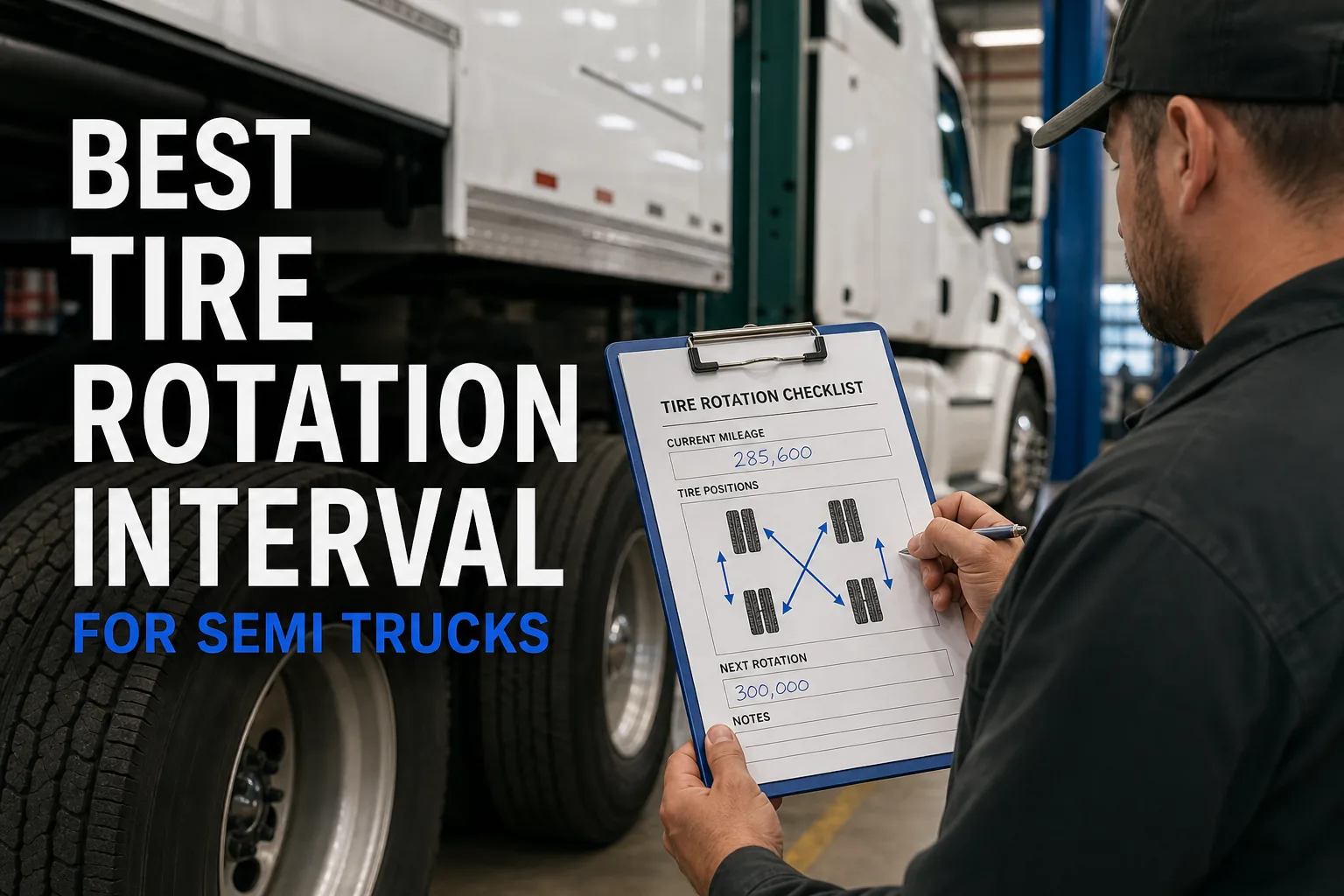
Once the interval is entered, run a quick audit of your current tire logs. If any rig already exceeds 5,000 mi without a rotation, schedule it for the next service window.
Step 3: Use 7,500 Miles as a Usable Fleet Baseline
Colonial South Chevrolet’s 2026 factory guide pins 7,500 mi as the official rotation point for many trucks. That number works well for fleets that track mileage reliably and want a single, easy‑to‑remember rule.Colonial South Chevrolet says the interval helps keep handling steady and maximizes tire life.
Adopt 7,500 mi as the default for rigs with stable routes and consistent loads. For trucks that travel short hauls or have irregular mileage, keep the 5,000‑mi trigger as a safety net.
Our fleet‑maintenance plan ties this baseline to the service calendar, so every rotation aligns with oil changes or major inspections. That reduces paperwork and keeps the schedule top of mind for drivers.
Fleet Tire Maintenance Dallas | Prevent Downtime & Save Costs
Step 4: Inspect Tread Wear Before Each Rotation
Before you swap tires, do a quick visual check for uneven tread, sidewall cracks, or punctures. Some commercial fleets skip this step, assuming mileage alone tells the whole story.
Use a tread depth gauge and compare all four corners. If any tire is more than 2/32 in below the shallowest, rotate it sooner than the mileage schedule suggests.
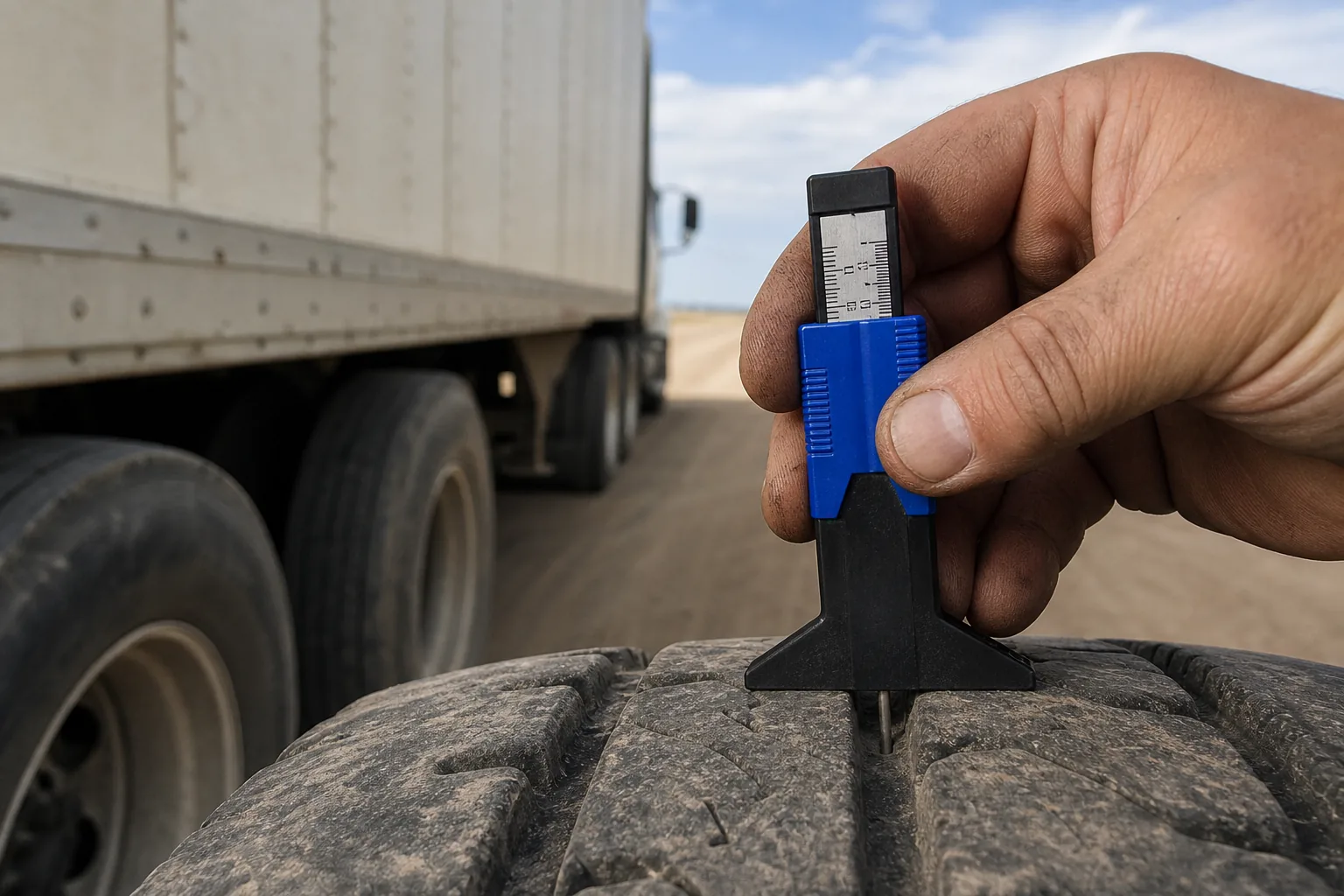
Document the findings in your fleet log. The record helps you spot patterns, like a particular axle that wears faster, so you can adjust load distribution later.
Step 5: Adjust the Schedule for Heavy Loads, Heat, and Local Routes
Heavy loads, high ambient temperatures, and stop‑and‑go city routes all accelerate tire wear. In harsh conditions, more frequent rotations can help manage tire wear.
For trucks that haul over 30 000 lb or operate in the Dallas summer heat, shift the rotation trigger toward the 5,000‑mi mark. Conversely, long‑haul rigs that cruise at steady speeds on highways can stay near the 7,500‑mi point.
Keep a simple spreadsheet: column A lists each truck, column B notes its typical load class, column C records the average ambient temperature on its routes, and column D shows the customized rotation mileage.
Semi Truck Tire Replacement Dallas | Fast & Reliable Service
Step 6: Record the Service and Arrange Mobile Help When Needed
After each rotation, log the date, mileage, and any findings (tread depth, damage, pressure). This creates a history that helps predict future wear trends.
If a truck develops a flat or a severe cut, call The Tire Specialist. Their mobile crew can replace or repair the tire on the spot, keeping the rig out of the shop and back on the road in under an hour.
By keeping detailed records and using on‑site service, you turn a routine rotation into a proactive safety net.
FAQ
What is the ideal tire rotation interval for most semi trucks?
The ideal interval sits between 5,000 and 7,500 mi. Many OEMs recommend 7,500 mi, but fleets with heavy loads often benefit from the lower 5,000 mi mark.
How often should I inspect tread wear?
You should check tread depth before every rotation. A quick gauge reading catches uneven wear early and prevents costly replacements.
Can I rely on mileage alone?
Mileage gives a baseline, but factors like load weight, temperature, and road quality can shorten tire life, so supplement mileage with visual inspections.
What does on‑site service save me?
Mobile service eliminates shop downtime. The Tire Specialist can replace a tire at the depot, often within 30 minutes, keeping your fleet moving.
Do I need a special tool for rotation?
No special tools are required beyond a torque wrench and a tread depth gauge. The Tire Specialist brings all equipment needed for a quick, safe rotation.
Conclusion
Start with a 5,000‑to‑7,500 mi window, use 7,500 mi as your default baseline, and adjust for load and climate. Then let The Tire Specialist handle on‑site rotations and repairs so your trucks spend more time hauling and less time waiting.


Comments