Best Commercial Truck Tire Bead Sealant Options
A bead leak can keep a truck losing air even when the tread looks fine. Bead sealant may help, but don’t assume mobile truck service includes it. We’ll compare two named products and show what to verify before using either on a commercial tire.
For a leak that needs a field check, our mobile truck tire repair team can assess the tire and wheel at the truck’s location.
Table of Contents
1. Compact Car 2-in-1 Tire Sealant & Bead Sealer Kit by TireJect: a light-duty option, not a default fleet choice
This named kit is described for compact cars, so we wouldn’t treat it as a go-to product for a commercial truck. It may be worth reviewing for a compact vehicle in a mixed fleet, but truck fit needs proof from the product maker and tire maker.
The name combines “tire sealant” and “bead sealer.” Those terms can point to different jobs. Bead sealant is applied at the tire-and-rim contact area during mounting. Internal tire sealant goes inside the tire and is intended for a different type of leak. The product’s exact instructions should decide where and how it’s used, not its name alone.
That difference matters in a fleet shop. If a technician reaches for an internal sealant when the problem is a damaged bead or wheel seat, the leak may remain. If a bead product is used where the instructions call for internal application, it may not do the job the fleet expects.
The product’s compact-car wording is the main limit for truck operators. A commercial tire has a different size, load duty, and service context. The product’s name and description don’t establish approval for heavy truck tires, nor do they show performance under truck heat or load cycles. We’d ask the maker directly before adding it to a fleet maintenance program.
Check the product instructions and ask the maker about its stated scope; don’t assume commercial use without truck-specific approval.
Could fit:A compact-car application where the product instructions match the repair need.
Needs verification:Use on any commercial truck tire, especially where load and service conditions differ.
Do not assume:That an internal tire sealant and a bead-applied product are interchangeable.
For a truck, the key question isn’t whether a product says “sealant.” It’s whether the maker approves that product for the specific tire and wheel assembly.
2. Xtra Seal 14-101B Extra Heavy Duty Bead Sealer 32 oz Can: a heavy-duty product to verify for truck use
Xtra Seal 14-101B Extra Heavy Duty Bead Sealer 32 oz Can is described as a thicker, extra-heavy-duty bead sealer. It’s the more relevant of these two named choices to investigate for commercial work, but the name alone isn’t proof that it’s approved for every truck tire.
Product material says the formula isn’t the runny type and is intended to seal cracks around the rim. That description makes it easier to distinguish from a low-viscosity internal tire sealant. It still doesn’t tell us which truck tires, wheels, or service conditions the maker approves.
For a fleet, that missing detail matters. The bead area on a commercial tire must hold air while the assembly carries the vehicle’s load. A sealant label that says “extra heavy duty” doesn’t confirm suitability for a given tire size or wheel design. Before use, match the product instructions to the tire and rim maker’s guidance.
We’d also keep the repair diagnosis in view. A bead product may help when air escapes at the tire-rim interface. It won’t repair a cracked wheel, a badly corroded bead seat, or a damaged tire bead. If the wheel or tire is damaged, sealant can hide the symptom for a time without fixing the cause.
Use this option as a product to verify, not as an automatic fleet standard. Ask whether the instructions allow the tire type in question, whether the product is intended for the specific wheel material, and whether the maker sets limits for use.
Best fit to investigate:A shop or fleet that needs a thicker bead-sealing product and can confirm its approved use.
Known description:Extra heavy duty, thicker than runny sealers, and intended to seal cracks around the rim.
Still to confirm:Truck-specific approval, durability under fleet duty, and application limits.
That last point is the deciding one. If the manufacturer’s current instructions don’t clearly cover the tire and wheel, don’t guess.
Compare the Two Products by Truck Fit, Format, and Verification Needs
Neither product has enough published detail to call it a universal commercial-truck choice. One is explicitly framed around compact cars. The other is described as extra heavy duty, yet its truck-specific approvals still need checking.
Option | What’s established | Truck-fit signal | What we’d verify |
Compact Car 2-in-1 Tire Sealant & Bead Sealer Kit by TireJect | Named as a compact-car 2-in-1 kit | Light-duty wording; not a default fleet pick | Whether the maker approves the exact commercial tire and wheel |
Xtra Seal 14-101B Extra Heavy Duty Bead Sealer 32 oz Can | Described as a thicker, extra-heavy-duty bead sealer | More relevant to investigate, but not confirmed for every truck use | Approved tire types, wheel compatibility, and application directions |
Format and viscosity can guide a first review, but they don’t prove long-term performance. Neither product description offers a controlled comparison for truck-level heat, mileage, or load cycles. We wouldn’t rank either product on durability without that evidence.
We’d also separate three products that are often confused. Bead sealant goes on the bead or rim contact area. Mounting lubricant helps a tire move onto the wheel during installation. Internal tire sealant goes inside the tire. One product should not be used in place of another unless its maker says that use is allowed.
For a purchasing review, put the maker’s instructions beside the tire and wheel specifications used by your fleet. If the intended use isn’t clear, keep the product out of the approved shop stock until it is.
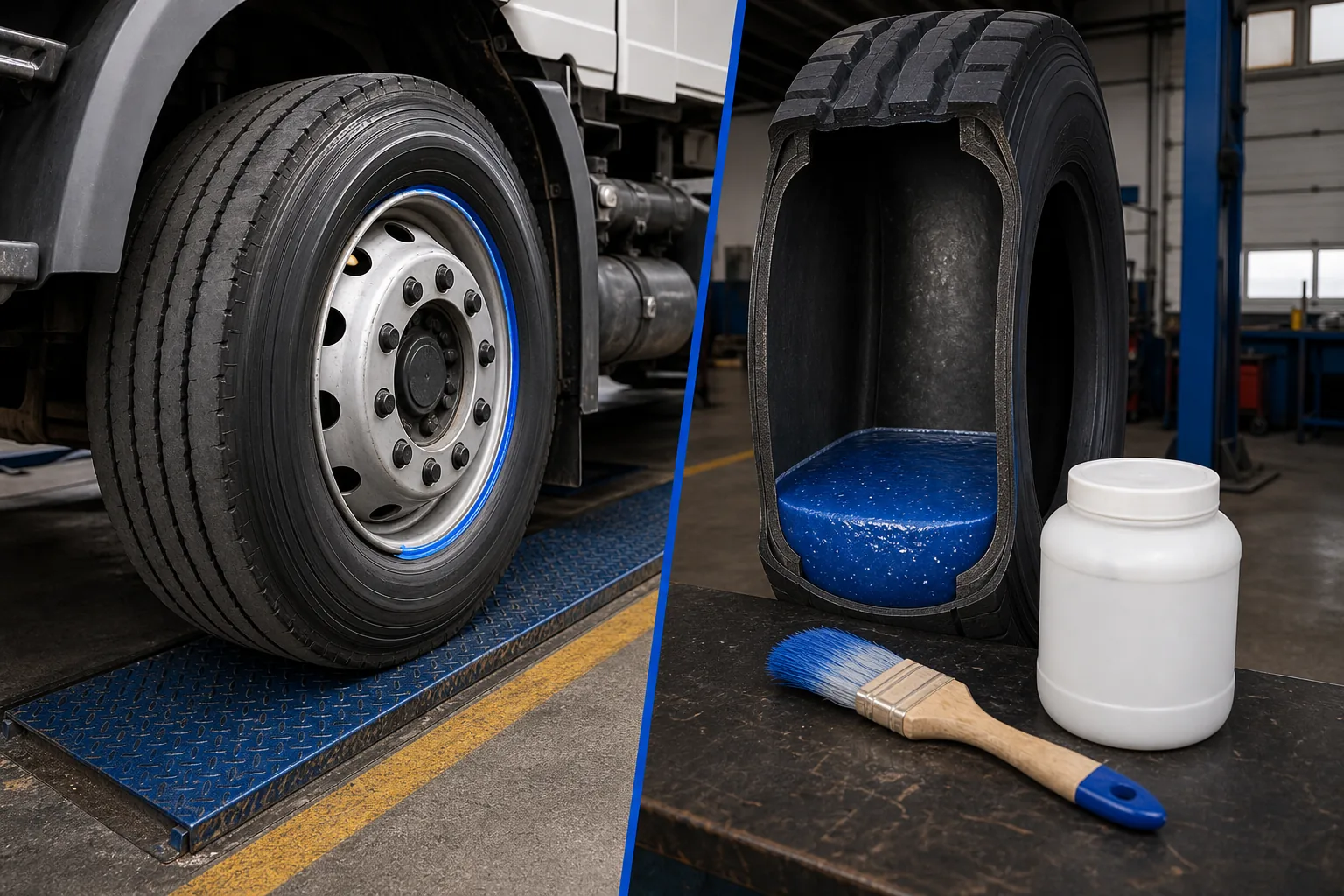
Truck-Specific Bead-Leak Causes and Sealant Fit
A bead leak is air escaping where the tire bead meets the rim. Commercial truck bead sealant can sometimes help with a small sealing gap, but first we need to find why the air is getting out.
Common causes include wheel-seat corrosion, dirt or other debris at the bead, an imperfect rim surface, or damage to the tire bead. Under-inflation can add stress during service and use. A leak that returns after mounting may point to a surface or part problem rather than a need for more sealant.
Truck wheels and tires work under load. The tire must match the wheel, and the assembly must be handled with the correct service process. A small low spot on a rim can create a slow leak, but a crack or severe corrosion calls for a proper inspection and likely repair or replacement, not a coating to cover it.
Use the symptom to guide the next check:
Air bubbles at the bead:Confirm the leak location on both sides of the wheel before choosing a repair.
Visible rust or pitting:Check the bead seat for damage that may stop a seal from holding.
Damage on the tire bead:Have the tire inspected; sealant isn’t a substitute for sound tire structure.
Repeated pressure loss:Recheck the wheel and tire instead of applying more material by habit.
Bead sealant may reduce slow leaks and repeat mounting work when the leak is minor and the product is approved for that assembly. But it can’t make a damaged wheel safe or restore a damaged tire. We’d record the leak location and inspection result in the fleet maintenance program so the next technician knows what was found.
Correct pressure checks matter after repair, too. Our truck tire pressure guide explains why pressure needs to be checked against the tire’s service requirements, rather than guessed from appearance.
Follow the tire and wheel makers’ instructions for the specific assembly in your bay.
Key Takeaway:Sealant may help a small bead leak, but it can’t correct a damaged tire bead or wheel.
Truck-Service-Bay Application, Safety, and Fleet Handling
Safe application starts with the repair process, not the can. A bead sealer is generally applied to the bead area during mounting, but the exact product directions control the method. Some use a brush or a brush-cap; don’t assume every formula uses the same tool or amount.
When the product instructions call for bead application, the aim is a thin, even coat on the specified contact area. Excess material can make cleanup harder, while missed spots may leave a leak path. Don’t spread it over surfaces the manufacturer says to keep clean.
In a truck service bay, a careful workflow helps avoid a rushed repeat job:
Confirm the leak is at the bead and inspect the tire and wheel for damage.
Check that the tire, rim, and sealant instructions match the intended use.
Prepare the wheel and bead as directed by the product maker.
Apply only as instructed, then mount and inflate using approved shop procedures.
Check the assembly for leaks and confirm pressure before returning it to service.
These are general checks, not a replacement for manufacturer directions or trained service practice. Commercial assemblies can be hazardous during mounting and inflation. Use the right mounting equipment and follow the tire maker’s safety steps. Don’t invent a torque value or pressure target; use the specifications for that wheel and tire.
Under-inflated tires can overheat and become unsafe. A tire that has been run low may have internal damage even if it holds air after a bead repair. If a commercial tire has lost pressure on the road, don’t keep driving on it just because sealant might be available. Stop in a safe place and arrange an inspection.
Fleet records can make the repair easier to review. Note the truck, tire position, leak location, product used, and the final inspection result. This gives the next shift a clear handoff and helps a manager spot repeat bead leaks on the same wheel or vehicle.
Need an on-site tire check in Dallas-Fort Worth? We at The Tire Specialist provide mobile commercial tire repair and on-site tire replacement. A technician can inspect the leak and help determine whether repair or replacement is the right next step.
Pro Tip:Keep the product label and current instructions with the shop’s approved materials so technicians can confirm the right use before mounting.
Frequently Asked Questions
What does commercial truck tire bead sealant do?
Commercial truck tire bead sealant helps close small air paths where a tire bead meets the rim. It’s applied to the bead area during mounting when the product instructions allow that use. It can’t fix a cracked wheel or damaged tire bead, so inspect the full assembly before relying on sealant.
Can I use passenger-car bead sealant on a truck tire?
Don’t assume passenger-car bead sealant is approved for a truck tire. Check the product maker’s instructions and confirm they cover the tire and wheel in your fleet. A compact-car product name is a reason to verify its scope, not evidence that it can handle commercial truck service.
Is bead sealant the same as tire mounting lubricant?
No. Bead sealant helps seal the tire-to-rim contact area, while mounting lubricant helps the tire move onto the rim during installation. Internal tire sealant is different again because it goes inside the tire. Use each material only for the purpose stated in its instructions.
Can bead sealant fix a corroded truck rim?
Bead sealant may help with a minor sealing gap, but it can’t repair a damaged or severely corroded rim. Have the bead seat inspected first. If corrosion has changed the rim surface or the wheel is cracked, follow the wheel maker’s service guidance instead of trying to cover the defect.
Should I drive a truck with a slow bead leak?
A slow leak still needs attention because the tire can become under-inflated while the truck is in service. Don’t rely on sealant as permission to keep driving. Check pressure safely, take the vehicle out of service if needed, and arrange a qualified inspection to find the leak and assess the tire.
Conclusion
For commercial use, we’d investigate Xtra Seal 14-101B first, but only after confirming truck-specific approval. We wouldn’t make the compact-car TireJect kit a fleet default. If a bead leak is keeping a truck out of service in Dallas-Fort Worth, contact The Tire Specialist online to arrange an on-site inspection and determine the next safe step.


Comments