
Diesel Truck Maintenance Checklist
- 6 days ago
- 12 min read
A diesel truck can run for years, but missed checks can turn a small fault into roadside downtime. Most checklists name the parts but skip the tools, timing, and common mistakes. We’ll fix that with a clear process for DFW fleet managers, owner-operators, and truck owners.
Use your owner’s manual as the final word, then build your daily, weekly, monthly, and mileage-based routine around actual use.
Table of Contents
Step 1: Build a Maintenance Schedule From Your Truck’s Manual
Yes, your owner’s manual should lead your diesel truck maintenance checklist because each engine has its own service needs.
Start by finding the maintenance section for your exact year, engine, transmission, axle setup, and emissions package. A diesel pickup used for short trips needs a different plan from a commercial truck that hauls every day. Record both mileage and engine hours when the manual lists both.
Make one master record for every truck. Include the VIN, current mileage, engine hours, last service date, and next due point. Assign one person to review the list each week. A missed handoff is a common cause of overdue work in a busy fleet.
Split the schedule into four time blocks:
Before each shift:Look for leaks, tire damage, warning lights, and unsafe loose parts.
Weekly:Check cold tire pressure, tread condition, fluid levels, and battery condition.
Monthly:Review belts, hoses, brakes, lights, suspension parts, and service records.
By mileage or hours:Follow the manual for oil, filters, coolant, transmission fluid, differentials, and transfer-case service.
Research reviewed for this topic found 31 checklist items, but only 14 included a suggested interval. Monthly checks were the most common. That gap matters because a generic calendar can miss the effect of heavy loads, dust, long idling, heat, or short trips.
Use the manufacturer’s schedule as the base. Then add a note beside each item that explains why your fleet checks it sooner or more often. The truck maintenance schedule guidance also stresses the need to match service timing to use and operating conditions.
For a fleet, tie each task to a work order. The driver reports the issue. The supervisor decides if the truck can run. The technician closes the task after the repair is checked. This simple chain keeps a verbal report from getting lost.
Key Takeaway:A useful schedule records both the manufacturer’s interval and the conditions that may shorten it.
By now you should have a service calendar, one record per truck, and a clear owner for each task.
Step 2: Check the Engine Oil, Filter, and Air Filter
Yes, oil checks belong near the top of every diesel truck maintenance checklist because fuel contamination can reduce oil quality.
Park on level ground and let the engine sit long enough for oil to drain into the pan. Check the dipstick against the marks. A low reading needs attention, but an unusually high reading also needs investigation. Diesel fuel can enter the oil in some failure conditions, so a rising level is not something to ignore.
Look at the oil’s condition without treating color as a final diagnosis. Dark oil is common in diesel engines. Watch for a fuel smell, a thin feel, metal flakes, coolant traces, or a level that changes between checks. If you see one of those signs, tag the truck for inspection instead of guessing.
Change the oil and filter at the mileage or hour interval in the manual. Use the required oil grade and filter type. Write the date and mileage on the service record. For a fleet, record the filter part number too. That helps trace a repeat problem if pressure drops or a leak starts after service.
Next, inspect the air filter housing. Make sure the lid seals well and the intake tube has no split or loose clamp. A clogged filter can limit airflow. A badly sealed housing can let dust reach the engine. Do not replace a filter based only on a quick glance. Follow the manual’s inspection method and service limit.
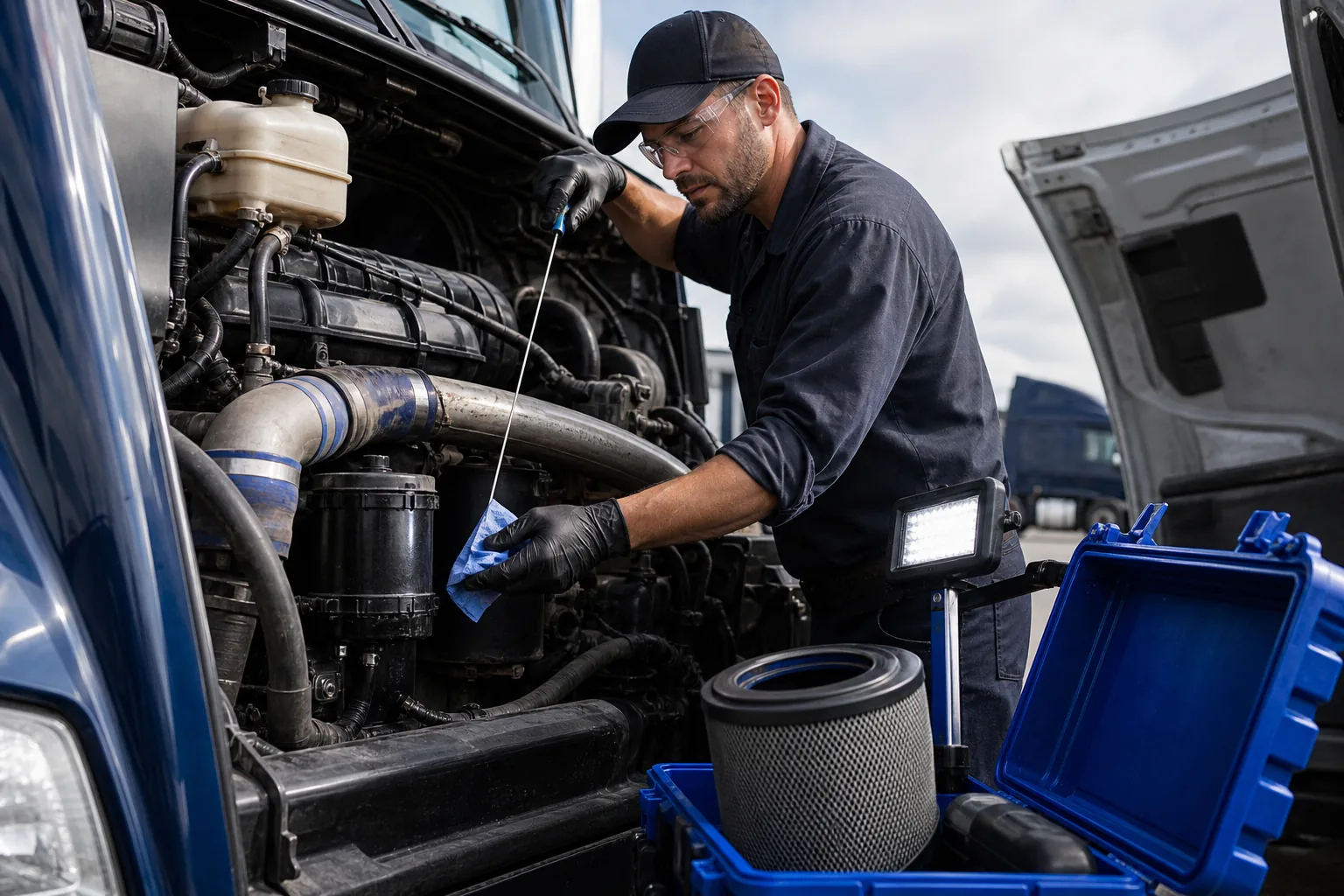
Keep the inspection safe. Shut the engine off before reaching near moving parts. Let hot surfaces cool. Clean around the fill cap before opening it so dirt does not fall inside.
Our preventive truck maintenance guide follows the same habit: inspect first, record the finding, then send the truck for service when a fault needs more than a quick check.
By now you should have a verified oil level, a clean service record, and an air intake that seals correctly.
Step 3: Maintain the Fuel System and Reduce Soot
Fuel care is a key part of a diesel truck maintenance checklist because contamination can damage high-pressure fuel parts.
Start at the fuel cap. Keep dirt and water away from the opening. If gasoline enters a diesel truck, do not cycle the key or start the engine. Moving the wrong fuel through the system can spread the problem. Stop and follow the manufacturer’s response procedure.
Check the fuel filter at the manual’s interval. Some trucks have a water separator or a drain point. Learn its location and use the exact procedure in the manual. Water in fuel can harm injectors and other parts. If the warning light appears, drain or replace the filter only as the manufacturer directs.
When a filter comes off, inspect the old fuel for water, dirt, rust, or dark debris. Save a small sample only if your shop has a safe way to handle it. A repeat contamination issue may point to a storage tank, fuel can, or supplier problem rather than the truck itself.
Fuel additives need care. Some products claim to clean injectors, improve lubricity, or lower soot. Do not pour in a product just because another truck uses it. Check the manual, emissions warranty terms, and product directions first. The wrong additive or dose can create a new problem.
Watch the signs of poor fuel delivery. Hard starts, rough idle, lost power, rising smoke, or a sudden change in fuel use should trigger a record and diagnosis. Do not treat black smoke as a harmless performance trick. It can signal incomplete combustion and wasted fuel.
Modern emissions systems also need the truck to reach normal operating temperature. Frequent short trips and long idle periods can make soot control harder. When the truck’s manual allows it, a sustained highway run can support normal regeneration. Never force a regeneration when warning lights, fault codes, or the manual say service is required.
For fleets, track fuel source, filter changes, warning lights, and regeneration complaints together. A pattern across several trucks may point to fuel quality. A single-truck pattern may point to that vehicle’s system.
Pro Tip:Write the fuel source on the service record after a contamination event. That detail can help you find the cause before another truck has the same fault.
By now you should know the next filter service point, the correct water-separator procedure, and the warning signs that need expert help.
Step 4: Inspect Coolant, DEF, and the Exhaust System
Yes, coolant and emissions checks belong together in a diesel truck maintenance checklist because both systems can stop a truck when ignored.
Check coolant only when the engine is cool. Use the level marks on the clear reservoir. Never remove a hot radiator cap. Hot coolant can spray out under pressure and cause severe burns.
Look for a low level, dried residue, wet hoses, cracked clamps, or a sweet smell. A small leak can become a major loss of coolant on a long haul. Check the condition and concentration at the interval in the manual. Use only the coolant type approved for that engine. Mixing types without confirmation can create a service problem.
Inspect the drive belts and hoses while the engine is cool. Look for fraying, glazing, swelling, soft spots, and cracks. Pressing on a hose is not a full test, but it can reveal a clear change in condition. Replace damaged parts before a trip, not after the truck overheats.
DEF is separate from diesel fuel. Check its level and refill it with approved fluid before the tank gets low. Keep the cap and filler area clean. DEF can damage painted surfaces and some metals, so rinse spills at once with water. Never put DEF in the diesel tank.
Read the dashboard messages. A DEF warning may progress to reduced engine power or a no-start condition, depending on the truck. Your manual will state the warning stages and refill rules. Do not wait for the last warning when the truck has a scheduled route.
Then inspect the exhaust system. Look at joints, clamps, heat shields, and visible pipes. Black marks near a joint can point to an exhaust leak. Heavy rust or a loose section needs a shop’s review. Exhaust parts get extremely hot, so inspect only when the system has cooled.
For trucks with a diesel particulate filter, watch regeneration messages and fault codes. Do not interrupt a normal regeneration unless safety requires it. If the system keeps filling with soot or asks for repeated service, find the cause. A cleaner may help in some cases, but it cannot repair a failed sensor, injector, or filter.
Record coolant level, DEF level, warning messages, and exhaust damage in the same work order. That gives the technician a better starting point.
By now you should have checked the cool reservoir, planned the next DEF refill, and inspected the exhaust without touching hot parts.
Step 5: Test the Batteries, Electrical System, and Cold-Start Equipment
Yes, battery work deserves its own place in a diesel truck maintenance checklist because many diesel trucks use more than one battery.
Start with a visual check. Look for cracked cases, swelling, loose hold-downs, corrosion, and wet spots. Clean, tight terminals help the starter get the current it needs. Do not scrape corrosion into your eyes or breathe dust from the terminal area.
Test each battery in a dual-battery setup. A pair can still crank poorly when one battery is weak. Record the test result by battery position. If one fails and the other is much stronger, ask the technician whether both should be assessed before the truck returns to work.
Inspect the cables from the batteries to the starter and ground points. Look for rubbed insulation, loose connections, and green corrosion. Check the alternator belt and watch for charging warnings. A battery that keeps going flat may have a charging fault, a parasitic drain, or a battery that cannot hold a charge.
Cold weather adds another demand. Confirm the block heater cord has no cuts and that the connection is safe. Use the heater only as the manual directs. Do not run a damaged cord across a traffic path or leave it where water can collect around the plug.
Follow the cold-start steps in the manual. Wait for the glow-plug or intake-heater indicator when the truck uses one. Do not hold the starter for long repeated periods. If the engine cranks slowly or needs several attempts, stop and diagnose the issue.
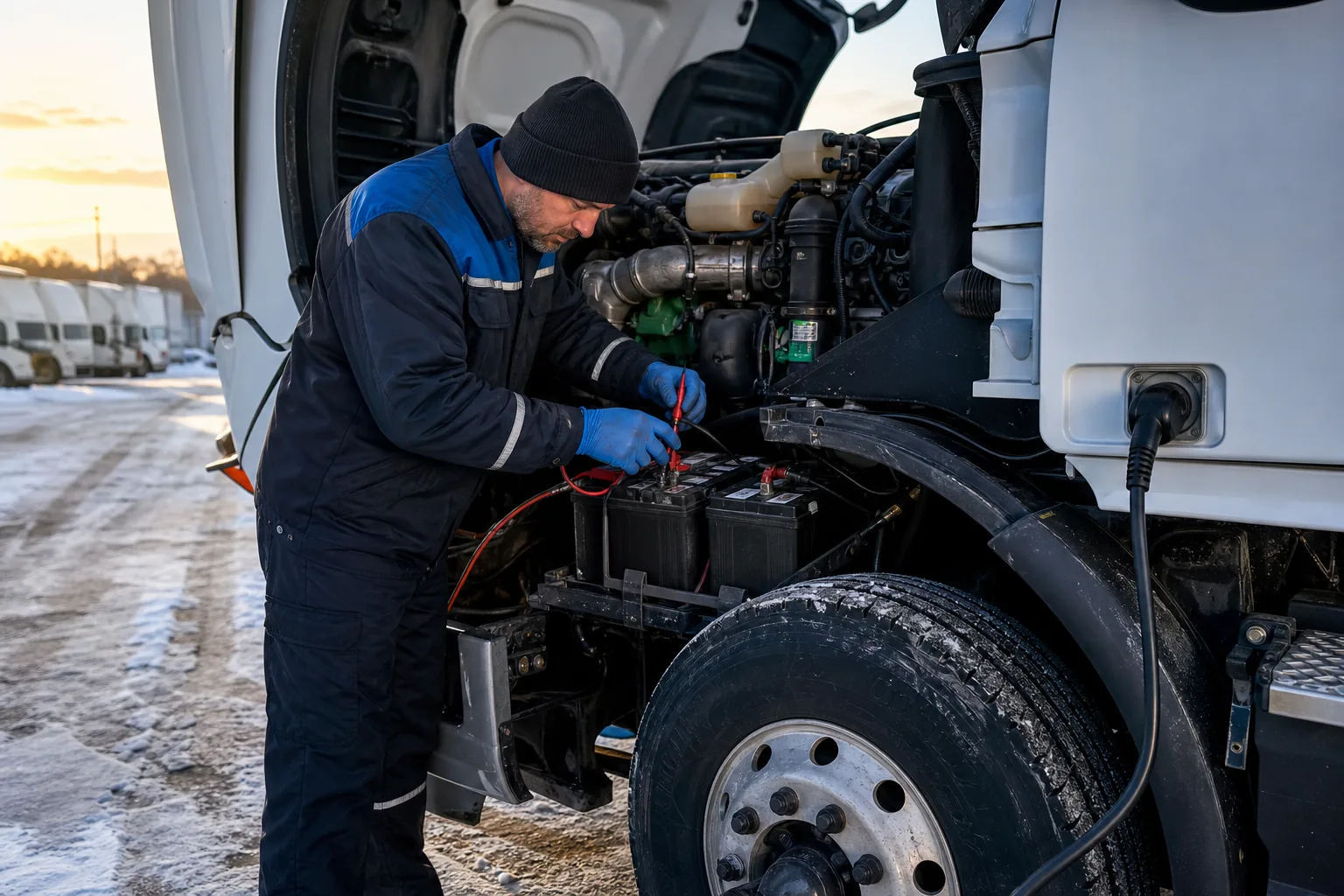
Check lights, signals, marker lamps, and trailer connections. A failed lamp can create a safety issue even when the engine runs well. Replace damaged connectors and clean corrosion from plugs with the correct electrical cleaner.
Keep battery checks in the seasonal plan. Add them before the coldest part of the year and before periods of heavy accessory use. The exact timing still belongs to the truck maker’s service plan.
By now you should know the condition of each battery, the state of the charging system, and whether the cold-start equipment is safe to use.
Step 6: Inspect Brakes, Tires, Wheels, and Driveline Components
Yes, this is the safety-heavy part of a diesel truck maintenance checklist. Start with the truck secured on level ground, the parking brake set, and the wheels blocked when needed.
Check brake fluid on systems that use hydraulic brakes. A low level can point to worn friction material or a leak. For air brakes, watch the pressure build and listen for leaks. Do not put a truck into service when pressure does not reach the required range.
Inspect pads, shoes, rotors, drums, lines, hoses, and cables. Look for thin friction material, cracks, corrosion, wet spots, and uneven wear. A pull, grind, soft pedal, vibration, or warning light needs prompt service. Brake work on a heavy truck belongs with a qualified technician when the inspection finds a fault.
Move to the tires. Check pressure when the tires are cold. Use the pressure listed for the truck, tire, load, and axle. The pressure on one tire does not prove the rest match. Record readings by wheel position so a slow leak stands out over time.
Inspect tread depth with a proper gauge. Look for cuts, bulges, exposed cords, embedded objects, shoulder wear, cupping, or a tread pattern that feels uneven. Steer tires have different safety and legal limits from drive and trailer tires. Confirm the current requirement for your vehicle and service area.
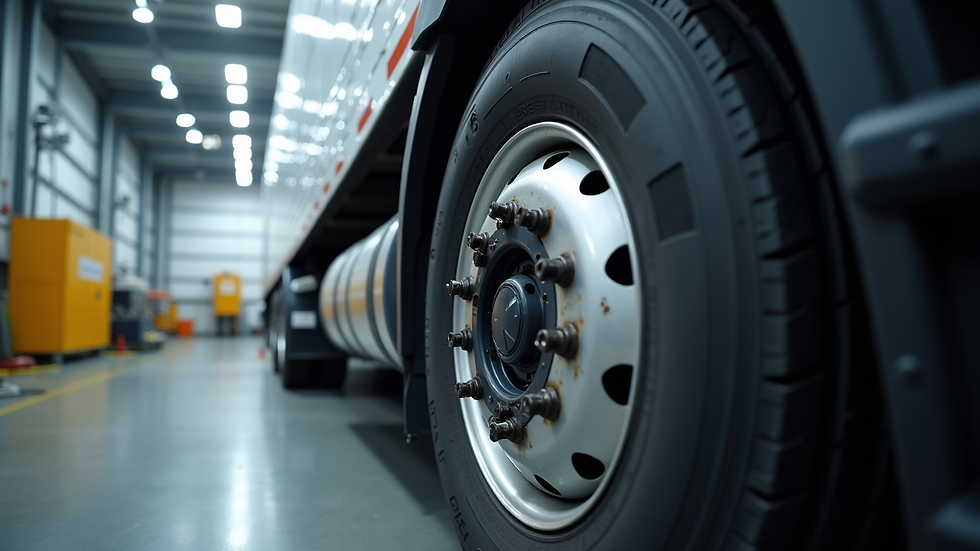
Check valve stems, caps, wheel studs, and lug nuts. Use the manufacturer’s torque specification and a calibrated torque wrench after wheel service. Do not guess with an impact tool. A loose wheel needs immediate attention.
When a tire needs service at a yard, job site, or roadside stop, semi-truck tire maintenance guidance can help your team set a repeatable inspection routine. For DFW fleets, The Tire Specialist provides mobile commercial tire repair, replacement, and roadside assistance at the truck’s location.
Finish underneath. Check transmission fluid as the manual directs. Inspect the transfer case on four-wheel-drive trucks. Look at the front and rear differentials, U-joints, and driveshaft for leaks, cracks, loose connections, poor alignment, or missing lubrication.
A piece of clean cardboard under a suspected leak can help confirm where fluid lands overnight. It does not replace a lift inspection. Mark the truck out of service if a leak reaches a brake part or if a driveline part feels loose.
By now you should have tire readings, wheel findings, brake notes, and a list of driveline issues that need follow-up.
Step 7: Complete the Final Walkaround and Respond to Problems
Need a final check? Yes, finish every diesel truck maintenance checklist with a walkaround that asks one question: can this truck safely leave?
Walk in the same direction each time. Start at the driver’s door, move around the front, then inspect the passenger side and rear. A fixed route makes it less likely that a rushed driver skips the same corner every day.
Check headlights, high beams, signals, brake lights, marker lights, and trailer lamps.
Look at mirrors, windows, wipers, steps, grab handles, and body panels.
Confirm the fuel cap, DEF cap, hood latches, and access panels are secure.
Look beneath the truck for fresh fluid spots or hanging parts.
Check the spare tire, tow hitch, safety gear, and visible trailer connections.
Review dashboard warnings after the engine starts.
Use three response levels. A safety fault means the truck stays parked. A service fault means the truck may move only under the fleet’s approved plan. A minor observation goes into the next scheduled work order, but it still needs a due date.
Take a photo when company policy allows it. Note the truck number, wheel position, warning message, mileage, and time. A short, clear report helps the next person act without repeating the whole inspection.
Do not reset a warning light just to clear the dash. Find out why it appeared. Do not keep driving on a tire with a bulge, exposed cord, rapid pressure loss, or serious sidewall damage.
The Tire Specialist can help DFW fleets handle tire problems without sending every truck to a shop. Our mobile team supports on-site tire replacement, flat repair, and roadside assistance for commercial trucks and fleet vehicles. That can shorten the delay when a tire issue appears away from the yard.
Set a review time after each shift. The fleet manager should look for repeat faults, overdue tasks, and trucks that generate the same warning more than once. Patterns tell you where the schedule or driver training needs work.
By now you should have a signed inspection record, a decision for every fault, and a clear next step before the truck moves.
FAQ
How often should a diesel truck be serviced?
A diesel truck should be serviced at the intervals in its owner’s manual, with extra checks based on load, weather, dust, idling, and route type. Use a daily walkaround for visible faults. Add weekly tire and fluid checks. Track mileage and engine hours so a truck does not pass a service point while it sits on a busy route.
What should I check on a diesel truck every day?
Check for leaks, tire damage, low pressure, loose wheel parts, brake concerns, lights, fluid warnings, and dashboard alerts each day. Look at the fuel and DEF caps before starting work. A daily diesel truck maintenance checklist should also give drivers a clear way to report a fault and stop the truck when safety is in doubt.
How do I keep a diesel truck’s DPF from clogging?
Keep the engine and fuel system serviced, avoid unnecessary idling, and follow the truck’s regeneration instructions. Short trips may prevent the system from reaching normal operating conditions. Watch the soot or exhaust-filter message. If regeneration fails or warnings return, have the fault diagnosed instead of relying on repeated cleaner treatments.
How often should diesel truck tires be checked?
Check tire pressure when cold before work begins, then inspect tread and sidewalls before each long trip. A deeper inspection belongs on the weekly or monthly schedule based on use. Measure tread depth and record readings by wheel position. The Tire Specialist can handle mobile commercial tire service when a fleet truck has a flat or damaged tire.
What tools do I need for a diesel truck inspection?
Useful tools include a reliable tire-pressure gauge, tread-depth gauge, flashlight, clean rag, cardboard for leak checks, and a calibrated torque wrench for wheel service. Use battery test equipment only if you know the safe procedure. Many published checklists name inspection items but omit tools, so add your tool list to each fleet SOP.
Should I follow mileage or time intervals first?
Follow whichever interval the manufacturer says comes first, unless the manual gives a different rule. Time matters for trucks that sit, while mileage and engine hours matter for trucks that work hard. Record all three when possible. Then adjust the plan for severe service, but keep the manufacturer’s specifications as the starting point.
Conclusion
Use the owner’s manual as your base, then turn it into a schedule that drivers and technicians can follow without guessing. Start today by checking one truck, recording its current mileage and hours, and booking any tire issue before the next route. When a DFW fleet needs help at its location, The Tire Specialist is ready to support mobile commercial tire service.

Comments