How to Arrange Box Truck Tire Service Dallas
Your box truck breaks down, the clock starts ticking, and every minute of downtime hurts the bottom line. Follow these five steps and you’ll have a certified tech on site, the tire fixed, and your fleet back in motion.
Table of Contents
Step 1: Get the Box Truck and People to a Safe Spot
Pull the truck onto the shoulder or into a nearby parking lot. Turn on hazard lights, set wheel chocks, and engage the parking brake. If traffic is heavy, flag a safe distance from the lane and use reflective triangles.
Once the vehicle is stable, have the driver and any passengers exit on the side away from traffic. Walk around the truck to look for any leaks or obvious damage that might need extra caution when the tech arrives.
Our crews recommend a quick visual check before the call so the dispatcher knows whether you need a simple patch or a full tire swap. For help picking a provider, see our guide to box truck tire replacement services in Dallas .
Document the location, the exact mile marker, and any nearby landmarks. That info helps the dispatch map the fastest route.
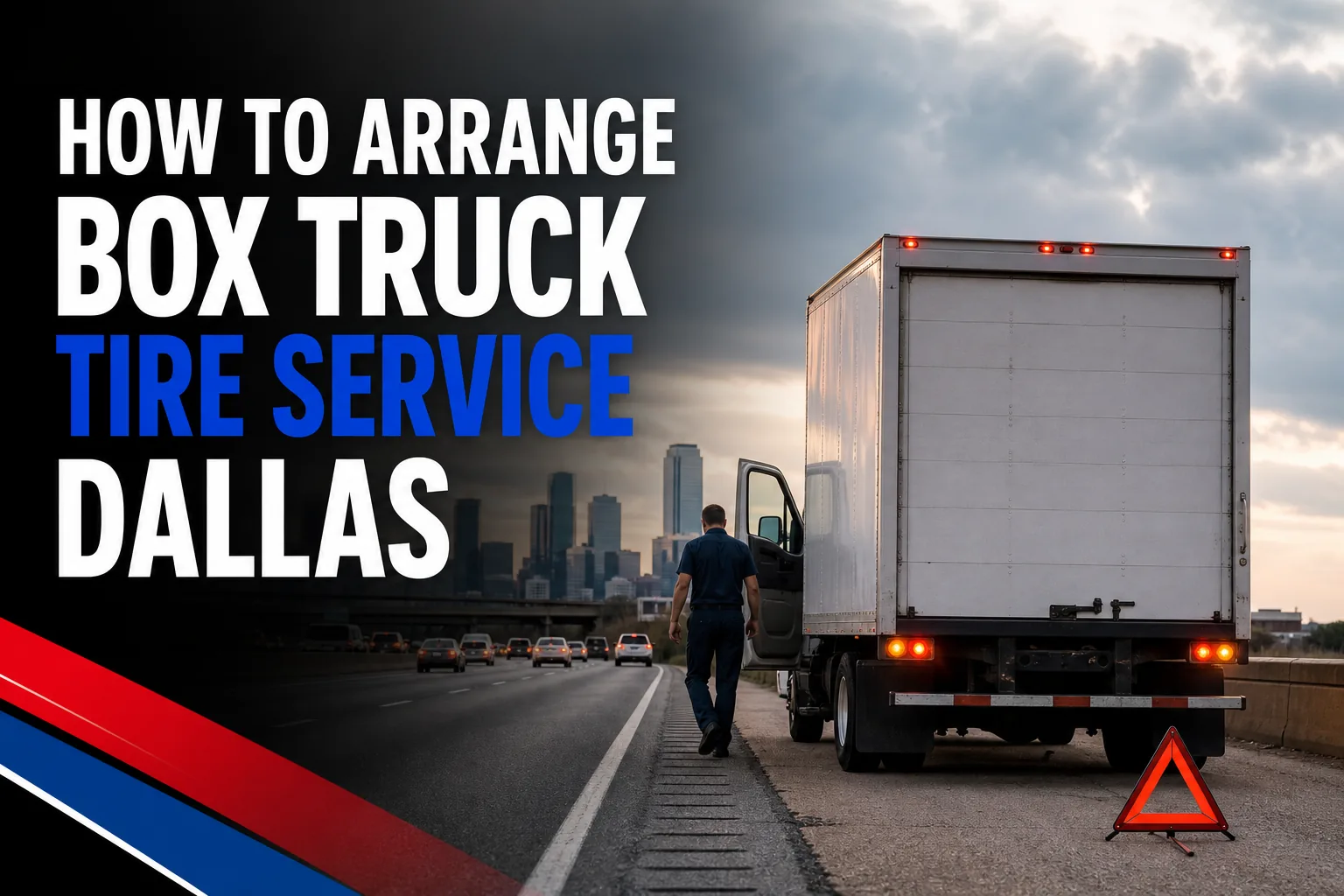
By now you have the truck secured, the crew out of danger, and the scene ready for a mobile service unit.
Step 2: Check the Tire and Gather Details for the Service Call
Read the sidewall markings. You’ll see a string like295/75R22.5 154/150 Lthat tells you size, load index, and speed rating.
Write down the exact size, load index, and any special codes. Compare that to the vehicle’s specification sheet to confirm the replacement will match the axle’s load.
When you note the tire’s age, look at the DOT code; the last four digits indicate the week and year of manufacture. Newer tires usually have better tread depth and less risk of sidewall failure.
Gather the truck’s VIN, the driver’s contact, and any load‑specific notes (like a refrigerated unit or heavy freight) and keep them handy for the dispatcher.
Now you have the exact tire specs and the truck’s operational details ready to share.
Keep these details handy when contacting our team .
Step 3: Contact a Dallas Mobile Commercial Tire Service
Dial the provider’s 24/7 dispatch line or use their online request form. Give the dispatcher the safe‑spot address, tire size, load details, and whether you need a repair or a full replacement.
Ask three quick questions: Do they carry TIA‑certified technicians? What’s the guaranteed arrival window for a box‑truck call? Can they bring the exact tire size you need?
Most Dallas services operate with GPS‑tracked trucks, so they can give you a live ETA. Write that down and share it with the driver so they can stay out of traffic while waiting.
If you have a fleet program, mention it. The Tire Specialist offers customized fleet maintenance programs that help cut down on surprise tire problems.
At this point the service unit is en route, stocked with the right tire, a portable air compressor, and the tools to balance the wheel on site.
Step 4: Prepare for the On‑Site Tire Repair or Replacement
Clear the area around the wheel. Remove any debris, and make sure there’s enough room for the tech’s lift or hoist to swing into place.
If the truck is on a road shoulder, set up traffic cones and a high‑visibility safety triangle on the opposite side of the lane. This protects both the crew and passing vehicles.
Have the driver turn off the engine, engage the parking brake, and place a wheel chock on the opposite side of the tire being worked on.
Gather any spare tires, valve stems, or tire repair kits you keep on hand. Even if the tech will bring fresh parts, showing you have a spare can speed up the swap.
When the tech arrives, they’ll first verify the tire size and condition against the info you sent. A quick visual inspection confirms there are no sidewall cracks or rim damage that would require additional work.
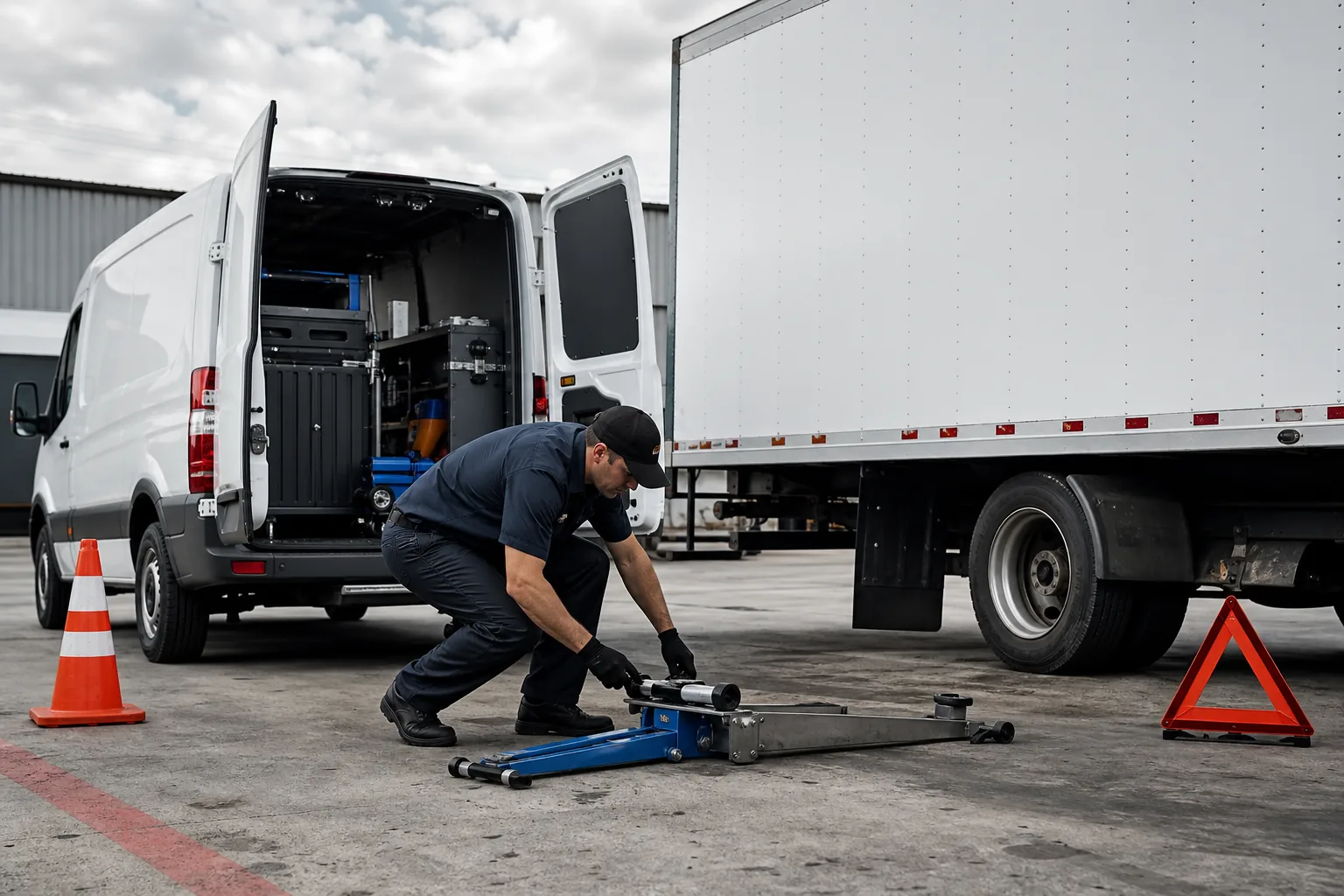
With the site secured and the equipment ready, the tech can move straight to the repair or replacement.
Step 5: Check the Work and Plan the Next Safe Stop
After the tire is on the wheel, the tech will inflate it to the manufacturer’s recommended pressure. That pressure varies with load and axle position, so it’s not a one‑size‑fits‑all number.
Proper inflation supports load‑carrying capacity, reduces rolling resistance, and helps prevent premature casing damage.
Ask the tech to run a pressure check with a calibrated gauge and to verify that lug nuts are torqued to spec. A final walk‑around should include checking for any stray tools, debris, or loose fasteners.
Ask the driver to perform a short test drive at low speed. Listen for vibrations or wobble that could signal a hidden issue.
When everything checks out, ask for a copy of the work order so you have a dated record for compliance and warranty purposes.
Finally, schedule the next routine tire inspection based on mileage or time intervals. A good rule is to inspect each tire regularly, based on mileage and time.
By now you’ve minimized downtime, captured the service details, and set up a preventive check to keep future breaks from happening.
Frequently Asked Questions
What is the typical response time for box truck tire service in Dallas?
It depends on your location, traffic, and how busy crews are at that moment. The Tire Specialist is available 24/7 across Dallas-Fort Worth and will get to you as quickly as possible.
Do I need to have a spare tire on a box truck?
You don’t have to carry a full spare, but having a temporary plug‑and‑patch kit can keep the truck moving until a mobile service arrives.
Can the same mobile crew handle both repair and a full tire swap?
Yes, most Dallas mobile units, including The Tire Specialist, arrive stocked with common commercial sizes and the tools to repair or replace on the spot.
How often should I check tire pressure on a box truck?
Check pressure at least once a week and before any long haul.
What paperwork do I get after the service?
Ask for a work order that lists the technician, parts used, pressure reading, and torque values, and keep it with your fleet records.
Pick The Tire Specialist for fast, certified box‑truck tire service in Dallas and schedule your first service request today.


Comments