.png)
How to Get a Refrigerated Truck Tire Replacement Service in DFW
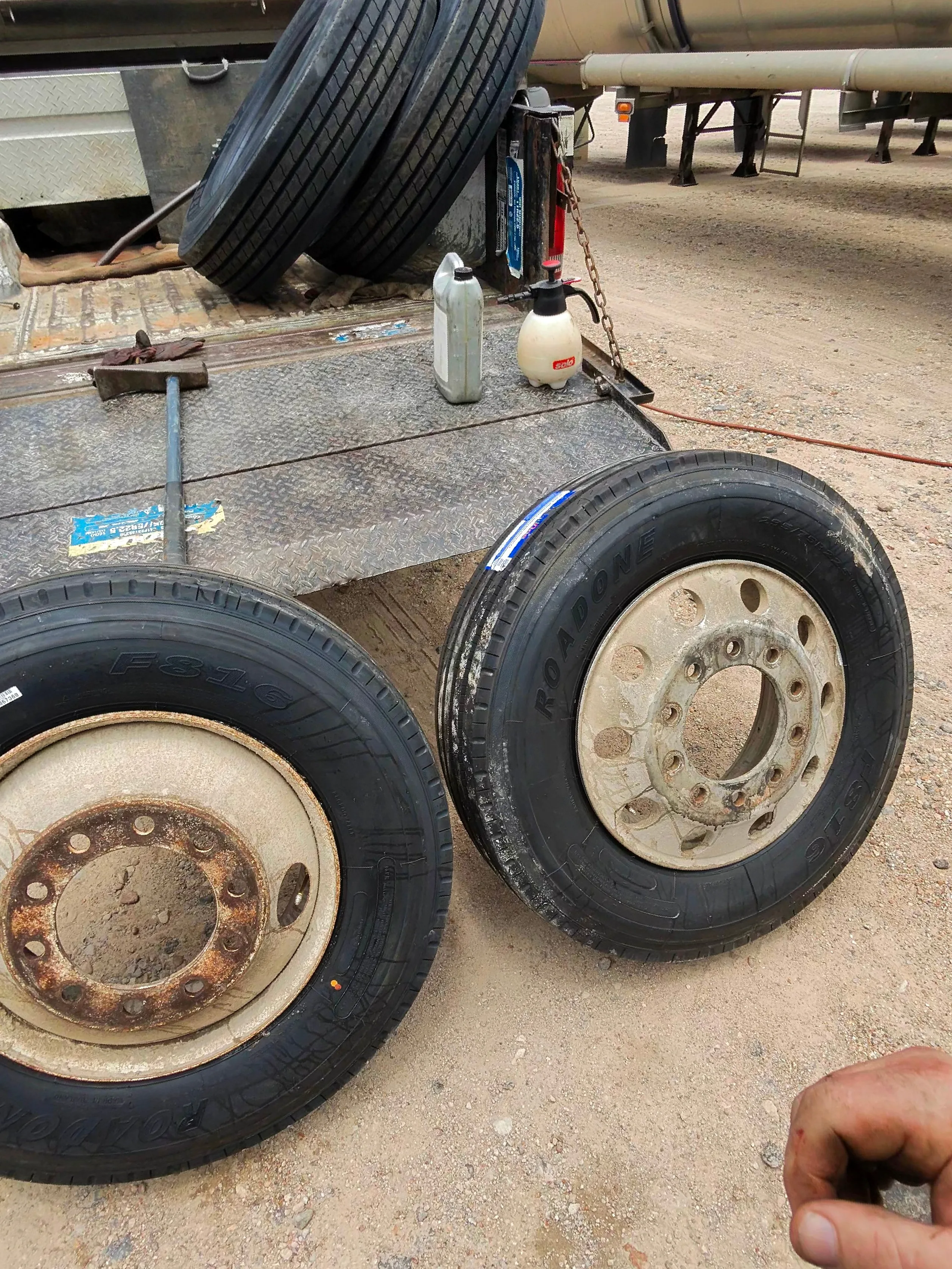
Got a flat on a refrigerated trailer and need to get back on the road fast? Here’s the step‑by‑step guide that gets your truck moving with minimal downtime.
Table of Contents
Step 1: Get the Refrigerated Truck to a Safe Stop
First, pull off the road onto a wide shoulder or a nearby lot. Turn on the hazard flashers and set the parking brake. If you’re on a busy highway, set out warning triangles to warn oncoming traffic: one about 10 feet behind the truck on the traffic side and one about 100 feet behind, plus one about 100 feet ahead on a two‑way road. The goal is to create a clear safety zone before anyone tries to inspect the tire.
Next, check the load. Heavy cargo can shift when the truck stops abruptly, so engage any load‑securing devices and make sure the trailer doors are closed. A quick visual scan for leaks or spilled refrigerant helps you avoid a second emergency while waiting for help.
Finally, call for assistance. The driver should have a list of approved mobile tire providers ready. When you give the dispatcher your exact location, the truck’s make, model, and tire size, they can match the right technician and spare tire to the job.

Step 2: Identify the Tire and Share the Right Details
Accurate information speeds up the response. Write down the tire’s size code, which appears on the sidewall (e.g., 295/75R22.5). Note the axle position, steer, drive, or trailer, because each location may need a different spare.
Take photos of the damaged area. A clear picture of any cuts, bulges, or puncture sites lets the service crew decide whether a repair or full replacement is needed before they arrive. Include a shot of the tread depth using a gauge if you have one.
When you call, read this information aloud: truck make, model, tire size, axle location, and any visible damage. If the truck is in a yard, also note the nearest gate or loading dock so the technician can plan a safe approach.
Pro Tip: Keep a small notebook in the cab with a template for tire details. It cuts the call time in half and reduces the chance of mis‑communication.
Step 3: Arrange Mobile Tire Service in the Dallas–Fort Worth Area
Now that you have the facts, it’s time to schedule a mobile crew. In DFW, several providers cover the metro area; comparing mobile tire replacement services in Dallas–Fort Worth can help fleets assess their options, and The Tire Specialist offers 24‑hour roadside service with TIA‑certified technicians.
Give the dispatcher the truck’s location, the tire size, and the damage photos. A reputable service will confirm they have the right tire in stock and give you an ETA. If the provider offers a fleet program, you can ask whether the call qualifies for a priority dispatch.
While you wait, you can review your fleet’s service history. Our guide to commercial truck tire replacement next steps covers what to have ready.
If speed is your top priority, ask each provider for a realistic arrival time for your exact location, not just a “24/7” promise.
Once the ETA is set, make sure the truck’s doors are unlocked and the area is clear. The technician will need room to set up a hydraulic lift, a bead‑breaker, and a calibrated torque wrench.
Key Takeaway:A clear, documented tire request cuts dispatch time and helps the crew bring the right parts on the first visit.
Step 4: Have the Tire Replaced and the Wheel Checked
When the tech arrives, they will first inspect the rim for cracks, dents, or corrosion. Even a new tire can be unsafe if the wheel is compromised. The technician will then deflate the damaged tire, break the bead, and remove it using a commercial‑grade tire changer.
After the old tire is off, the new tire is placed on the rim, the beads are seated, and the wheel is inflated to the manufacturer’s pressure using an inflation cage. The tech then torques each lug nut to the spec listed in the vehicle’s service manual. Proper torque prevents wheel‑off events that can cause serious accidents.
Once the tire is on, the crew checks the adjacent tires for proper dual‑inflation pairing, especially on drive and trailer axles. They also run a quick visual inspection for any foreign objects that might have caused the original failure.
Finally, the technician performs a short road test, listening for abnormal vibrations or noises. After the test, re‑check the lug nut torque after the first 50 to 100 miles, a common industry recommendation.
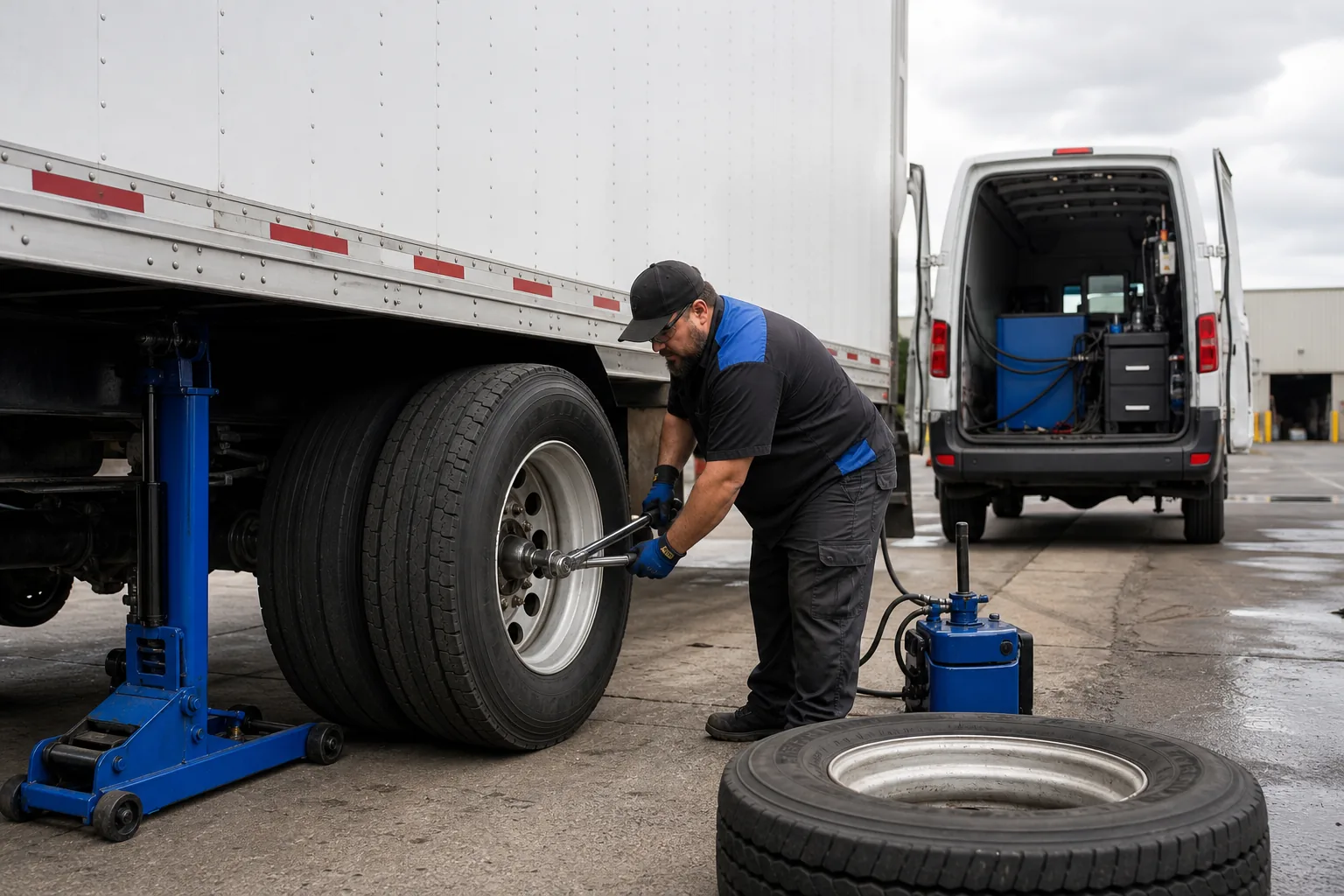
Pro Tip:Ask the tech to record the new tire’s pressure and torque values in your fleet management system. That data helps you spot trends before the next failure.
Step 5: Verify the Repair Before Returning to the Route
Before you hit the highway, do a final walk‑around. Check that the hazard lights are off, the reflective triangles are removed, and the wheel wells are free of debris. Verify that the driver’s seat belt and any load‑securing devices are still in place.
Ask the technician for a written work order that includes the tire brand, size, serial number, and the torque specification used. This paperwork is useful for warranty claims and for tracking recurring issues across your fleet.
Log the event in your fleet’s maintenance software.
Once everything checks out, the driver can resume the route. Keep an eye on the tire pressure for the first 100 miles; a sudden drop could indicate a hidden puncture or valve issue.
Frequently Asked Questions
What should I do immediately after a refrigerated truck tire blows out?
Pull safely off the road, activate hazard flashers, set out reflective triangles, and secure the load before calling a mobile tire service.
How long does a typical mobile tire replacement take?
It depends on the tire position, the wheel condition and the site. Ask the technician for an estimate once they see the damage.
Do I need to provide a spare tire for refrigerated trucks?
Not usually. Ask whether the mobile service will bring a matching tire, and use your own spare only if it is the right size and in good condition.
Are TIA‑certified technicians required for refrigerated units?
They are not legally required, but TIA training covers safe commercial tire service, such as mounting, inflation and wheel torque, which applies to reefer units as much as any other truck.
Can a puncture be repaired on‑site, or does it always need a new tire?
If the damage is in the tread area and meets size criteria, a plug‑and‑patch can be done; sidewall cuts or large punctures require a full replacement.
Conclusion
For fast, certified refrigerated‑truck tire replacement in DFW, start with The Tire Specialist’s 24‑hour roadside service and TIA‑certified crew. Call them, share the tire details, and let the mobile team handle the swap so you can get back to delivering on schedule.
Comments