.png)
Construction Vehicle Tire Repair Near Me: What to Do
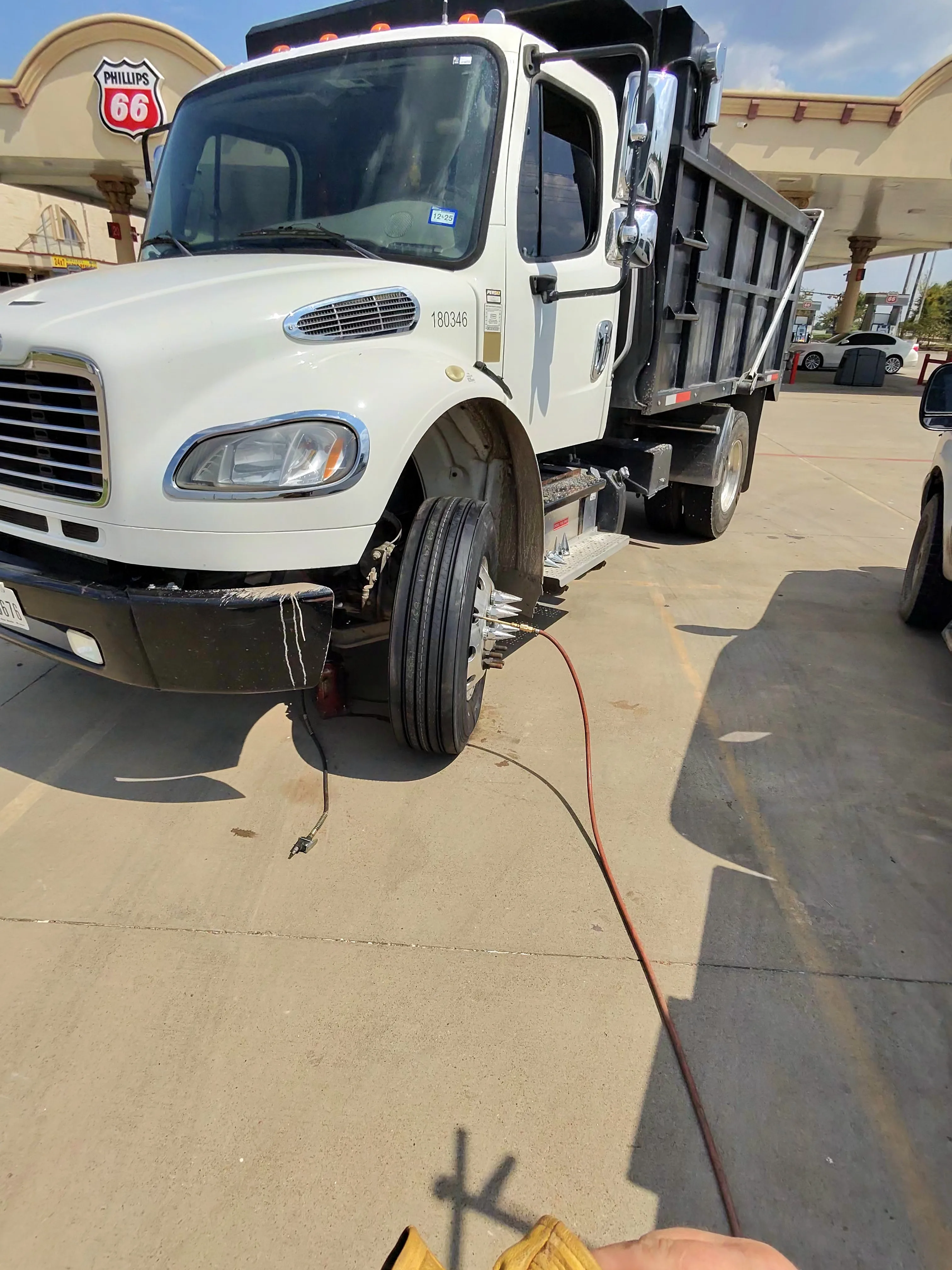
If you're searching for construction vehicle tire repair near me, a flat or damaged tire can leave a crew waiting on site. Start by clearing the work area, then gather the tire and vehicle details a mobile service needs. We’ll help you coordinate the visit and check the repair before work resumes.
Table of Contents
Step 1: Secure the Work Area and Keep People Clear
Yes, safety comes first. Stop work near the disabled vehicle and keep workers, visitors, and other equipment away from the tire. Follow your site’s traffic plan and tell the supervisor or safety lead what happened.
If the vehicle is near a road or active haul route, use your site’s warning and traffic controls. Don’t stand between moving equipment and the disabled vehicle. Don’t try to change a tire beside traffic or in an unstable work area. Wait for a safe plan and trained help.
Keep people clear while service is being arranged, even if the tire problem looks small.
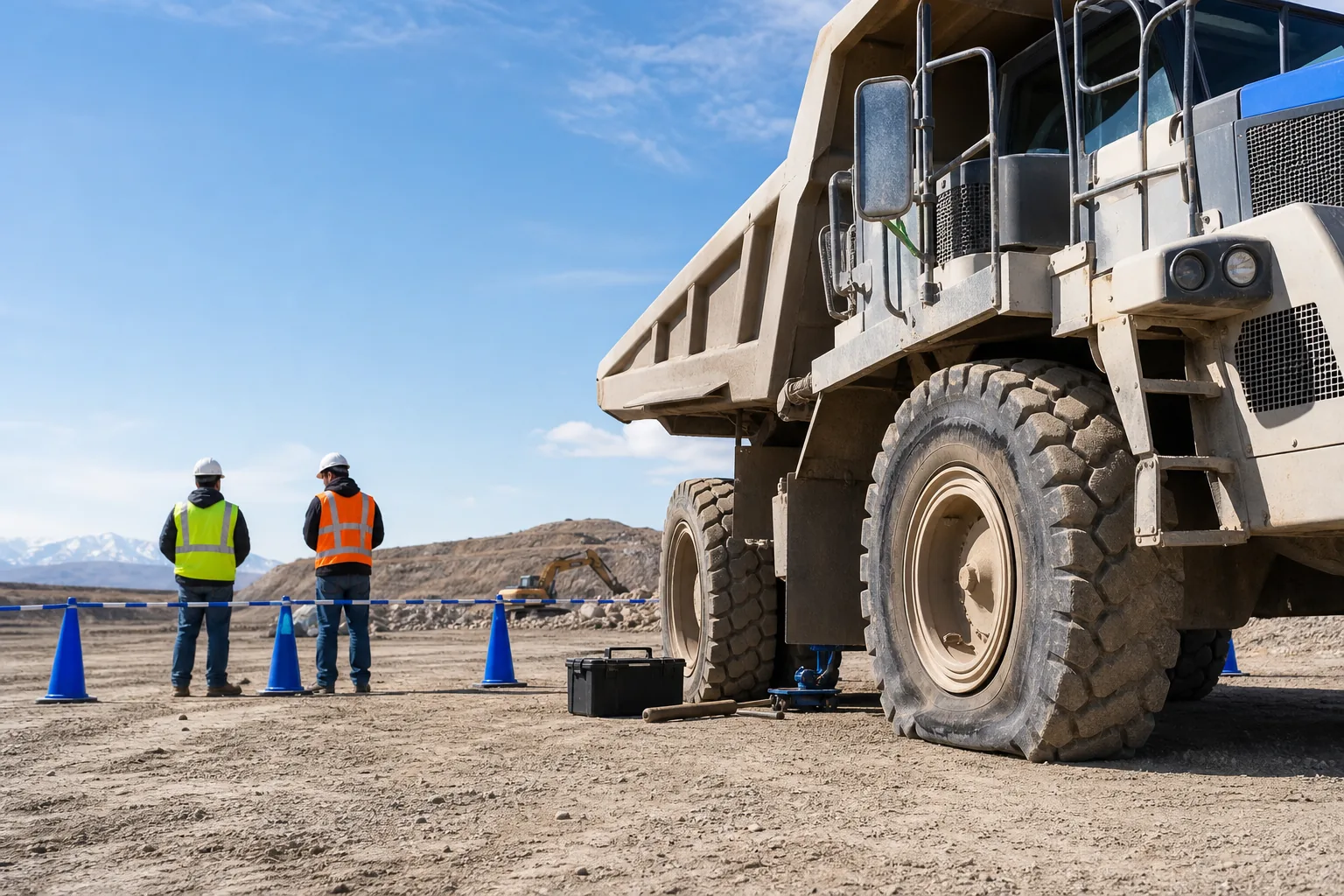
Share the location of the vehicle with your site lead and mark a safe access route for the service crew. If you can’t make the area safe, pause and ask the site safety lead to set controls before anyone approaches the tire.
If the tire issue happens on a public road, move people to a safe place away from traffic and follow local emergency procedures. Our safe steps for an emergency tire repair can help crews prepare for a roadside tire problem.
Milestone:Keep the work zone controlled, name one person to coordinate service, and make sure the disabled vehicle won’t be moved until the area is safe.
Step 2: Identify the Vehicle, Tire, and Damage
Yes, the service team needs a clear picture of the job. Note the vehicle type, its location on site, and which wheel is affected. A loader, dump truck, service truck, and road tractor may need different tires or tools, so be specific.
Read the tire sidewall only if you can do so safely. Record the size and any visible load or service markings. The load rating describes the load a tire is made to carry under stated conditions. Matching the right tire matters on equipment that carries heavy materials or works on rough ground.
Describe what you can see without removing parts or putting yourself near an unstable vehicle. Tell the provider whether the tire is flat, visibly cut, torn, or separated from the wheel. Mention a nail or other object only if it is plainly visible. Don’t pull an object out. A photo from a safe distance can help the dispatcher understand the issue.
Also note whether the vehicle is carrying a load or has an attachment raised. Don’t unload or reposition it unless your site procedure allows that and the area is safe. Give the dispatcher the make and model if known, then explain any access limits, such as a narrow gate or soft ground.
These details help the provider decide whether to inspect for a repair or plan for an on-site tire replacement. Damage location and tire condition affect that choice. A technician needs to assess the tire before confirming what work is safe. For additional background on commercial tire calls, see our big truck tire repair steps .
Key Takeaway:Share the tire size, wheel location, visible damage, and any site access limits. Don’t guess at the repair before a technician checks the tire.
Step 3: Find a Mobile Tire Service That Covers Your Site
Need service? Check that the provider can reach the job site and work on the vehicle type involved. A mobile tire crew can come to the equipment instead of requiring it to travel to a shop. That can be a better fit when a disabled vehicle can’t be driven safely or easily moved.
When you search for construction vehicle tire repair in your area, confirm the service boundary by giving the site address or nearest road. DFW work can take place at a yard, a highway project, or a remote job site. Ask whether that exact location is covered, and whether the provider can enter the site under its access rules.
Ask what the crew can handle at your location. Explain whether you need an assessment, a repair if the tire is suitable, or a replacement if it isn’t. For heavy vehicles, ask if the technician has equipment suited to that tire and vehicle. Don’t assume a mobile service for cars can handle construction equipment.
Ask about availability, too. Emergency service may be available at any hour with some providers, but don’t treat 24/7 coverage as a given. Confirm when a crew can come and request an estimated arrival window. If the first provider can’t reach the site, keep looking for a mobile commercial tire service rather than trying to move unsafe equipment.
The Tire Specialist is a DFW mobile tire service for commercial trucks and fleet vehicles. Its service description includes on-site repair, replacement, and roadside assistance. Review our mobile tire service information for construction trucks in Dallas as you decide what details to share with a provider.
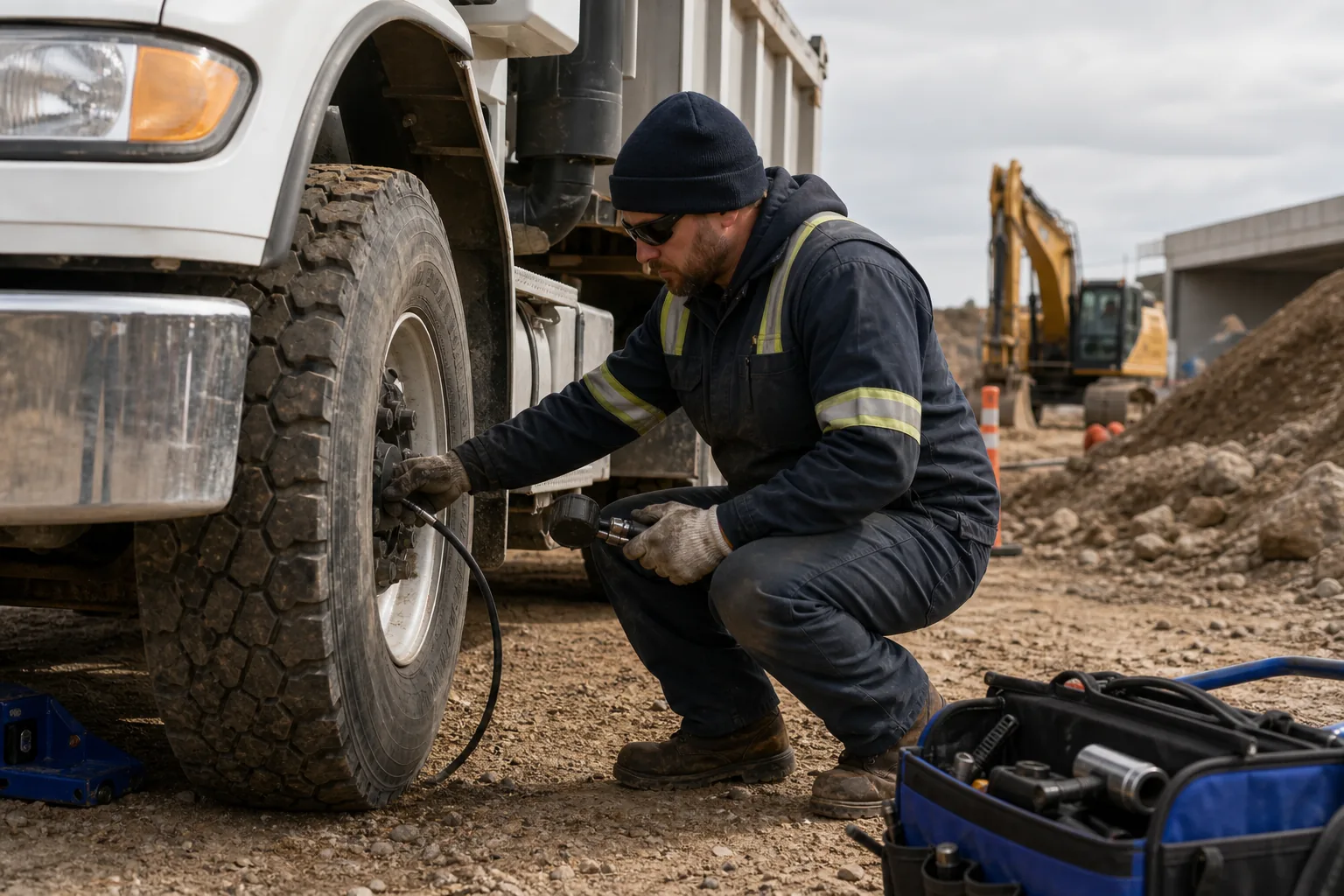
A shop-based repair may make sense when the vehicle can be moved safely and the shop can handle its tire. On-site service avoids that trip, but access and repair options still depend on the vehicle, tire, and site. Compare the safe route, not just the shortest one.
Step 4: Share Site Access Details and Coordinate the Visit
Yes, a good handoff saves time. Give the dispatcher the full job-site address, the best entrance, and a clear description of where the vehicle is parked. If the site has several gates or work zones, name the right entrance and provide a map pin if your team can share one.
Explain any rules the service crew must follow before entering. These might include checking in with a site lead, wearing required protective gear, or using a designated route. Tell the dispatcher if the route has low clearance, soft ground, tight turns, or active equipment crossings.
Choose one person to meet the technician. That person should know the vehicle location and be able to answer questions about the incident. Share the person’s name and a safe way to reach them through your normal work process. Keep the access plan current if the vehicle or work area changes.
Before dispatch, confirm what the provider understood: vehicle type, tire size, visible damage, location, and access steps. Ask for an arrival estimate and what the crew needs ready. If the site requires a work permit or equipment escort, arrange it before the vehicle arrives at the gate.
Ask how the technician will inspect the tire and what may change the plan. A repair might be possible after an inspection, while severe damage may call for replacement. If a specific tire must be sourced, ask how that affects the visit. Don’t promise the crew a quick repair before the tire has been checked.
Use your fleet maintenance program, if you have one, to record the service request and keep the shift lead informed. A maintenance program is a shared way to track inspections, repairs, and follow-up work. The record can help the next shift see which vehicle is still out of service.
Pro Tip:Send one clear photo of the tire and one of the site entrance, if your process allows it. Make sure both images can be taken from a safe place.
Step 5: Confirm the Repair and Check Before Returning to Work
Yes, wait for the technician’s inspection and repair decision. Don’t treat a tire as ready just because it holds air or looks better. Ask what work was done and whether the technician recommends repair, replacement, or more inspection before the vehicle goes back into service.
Ask the technician to explain any limits or next steps in plain language. If the tire was replaced, confirm that it matches the equipment’s requirements. If the tire was repaired, ask what type of damage was addressed and what checks were completed. Keep the work record with the vehicle’s maintenance notes.
Before the operator takes the vehicle back, follow your company’s start-up and return-to-work checks, and address any safety concern before use.
Have the operator check the work area from a safe position. Confirm the service crew has cleared its tools and that no one is in the vehicle’s path. Follow the equipment maker’s instructions and your site rules before moving the machine. If the technician or operator has a concern, keep the vehicle out of service until the concern is resolved.
Record the date, vehicle, tire position, work performed, and any follow-up the technician advised. This gives the fleet manager a useful service trail and helps the next shift understand what happened. It can also flag a repeat problem that deserves a closer look during planned maintenance.
Our truck tire repair service overview can help you think through mobile support for commercial vehicles. For your current job, the next move is simple: confirm the vehicle is safe to return before releasing it to the operator.
Frequently Asked Questions
Can a construction vehicle tire be repaired on site?
Yes, a construction vehicle tire may be repairable on site, but a technician must inspect it first. The damage, tire condition, and equipment requirements affect the decision. If the tire can’t be repaired safely, replacement may be needed. Share the tire size and a clear description of the damage when arranging the visit.
Do mobile tire services work at construction sites?
Some mobile tire services can work at construction sites, but you should confirm coverage for your exact location. Give the provider the site address and explain gate rules or access limits. Also ask whether the crew can handle the vehicle and tire type involved. A nearby service may still be unable to enter a controlled site.
Is mobile tire repair available 24/7 in DFW?
Some providers advertise emergency service around the clock, but availability can vary by provider and location. Ask whether a technician can be dispatched at the time you need service and request an arrival estimate. Tell the dispatcher if the vehicle is blocking a route or creating a safety concern so the site lead can manage access.
What details should I share when requesting tire help?
Share the site location, vehicle type, tire size, affected wheel, and visible damage. Include safe access instructions and any site check-in rules. A photo can help if you can take it without approaching an unsafe vehicle. These details help the provider assess the request and decide what equipment or tire may be needed.
Conclusion
Clear the work area first, then share the tire and site details with a mobile commercial tire provider. The Tire Specialist serves DFW commercial vehicles with on-site tire repair, replacement, and roadside assistance. Confirm coverage for your location and keep the vehicle out of service until the repair and return-to-work checks are complete.
Comments