
Semi Truck Steer Tire Tread Depth: How to Check
- Aug 5
- 7 min read
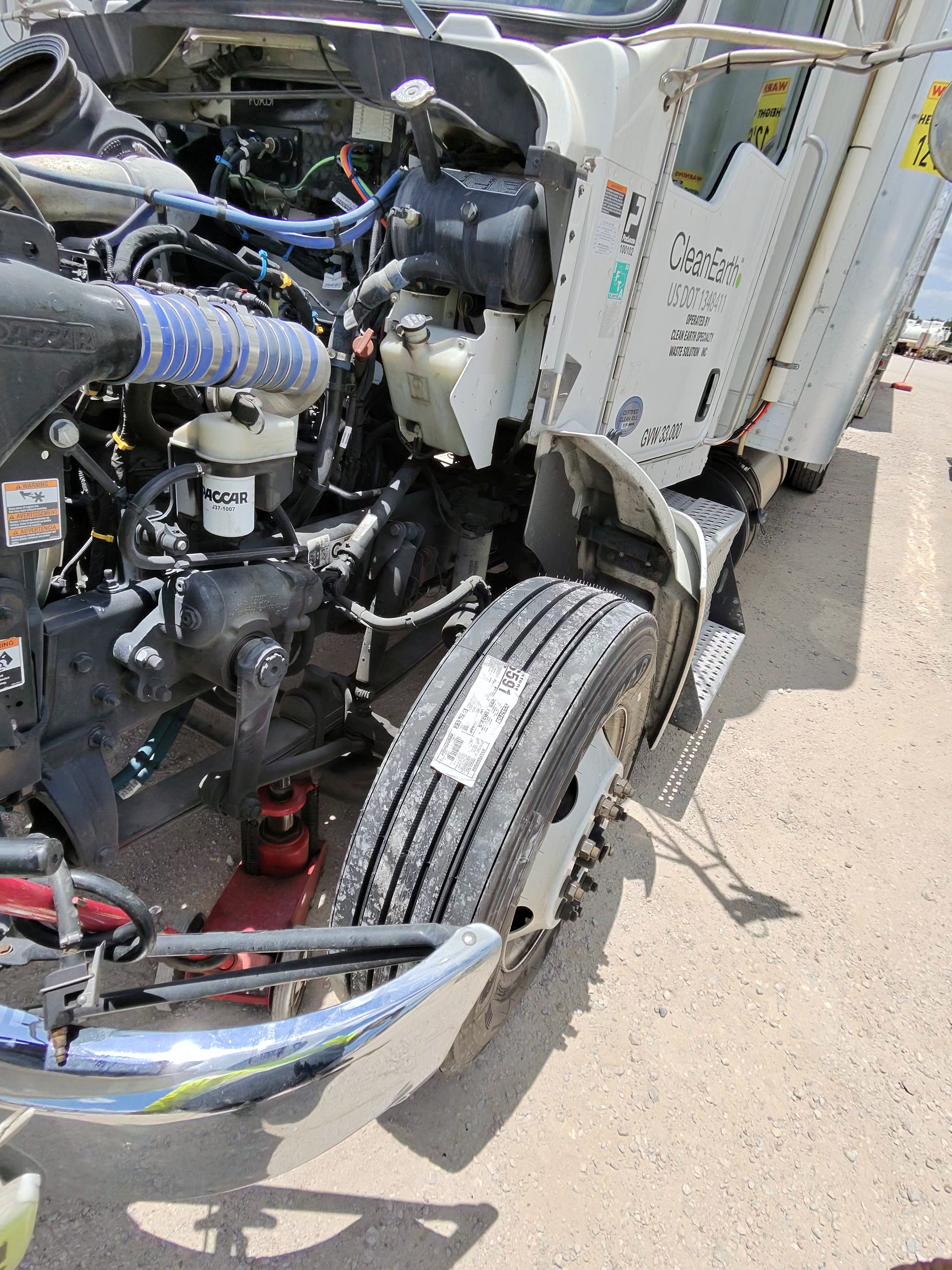
A steer tire can look fine and still fail a roadside check. We’ll show you how to measure semi truck steer tire tread depth, find the legal limit, and spot wear before it causes trouble.
The minimum is 4/32 of an inch, or about 3.2 mm, in a major groove. We’ll also explain why a quick penny check is only a rough screen, not proof of compliance.
Table of Contents
Step 1: Know the Legal Minimum and Prepare the Tire
Yes, the federal rule sets the steer-tire minimum at 4/32 of an inch. We start with that number before we inspect any semi truck steer tire tread depth.
The rule also covers tires with exposed belts, exposed body ply, tread separation, cuts, flat tires, or audible leaks.
For comparison, drive and trailer tires have a 2/32-inch federal minimum in a major groove. That lower number doesn’t apply to steer tires. The front axle handles steering, so we treat its condition with more care.
Before measuring, park on firm ground. Set the parking brake and shut off the engine. Wear gloves, then remove mud and loose stones from the grooves.
Use a depth-measuring tool that reads in 32nds of an inch.
Check dark or dirty grooves carefully.
Look for cuts, bulges, cracks, exposed cords, and objects in the tread.
Do not measure on a tread-wear bar or stone ejector.
Those raised parts can make a worn tire look deeper than it is. If we see damage or a leak, we stop the inspection and arrange expert help. The Tire Specialist can check commercial tires on-site across the Dallas-Fort Worth area, which helps a fleet avoid an unnecessary trip to a shop.
Key Takeaway:A steer tire fails the federal tread rule when any measured point in a major groove is below 4/32 inch.
Step 2: Measure Steer Tire Tread Depth with a Measuring Tool
To measure semi truck steer tire tread depth well, we use a measuring tool and take the lowest reading. One strong spot doesn’t cancel out a worn spot elsewhere.
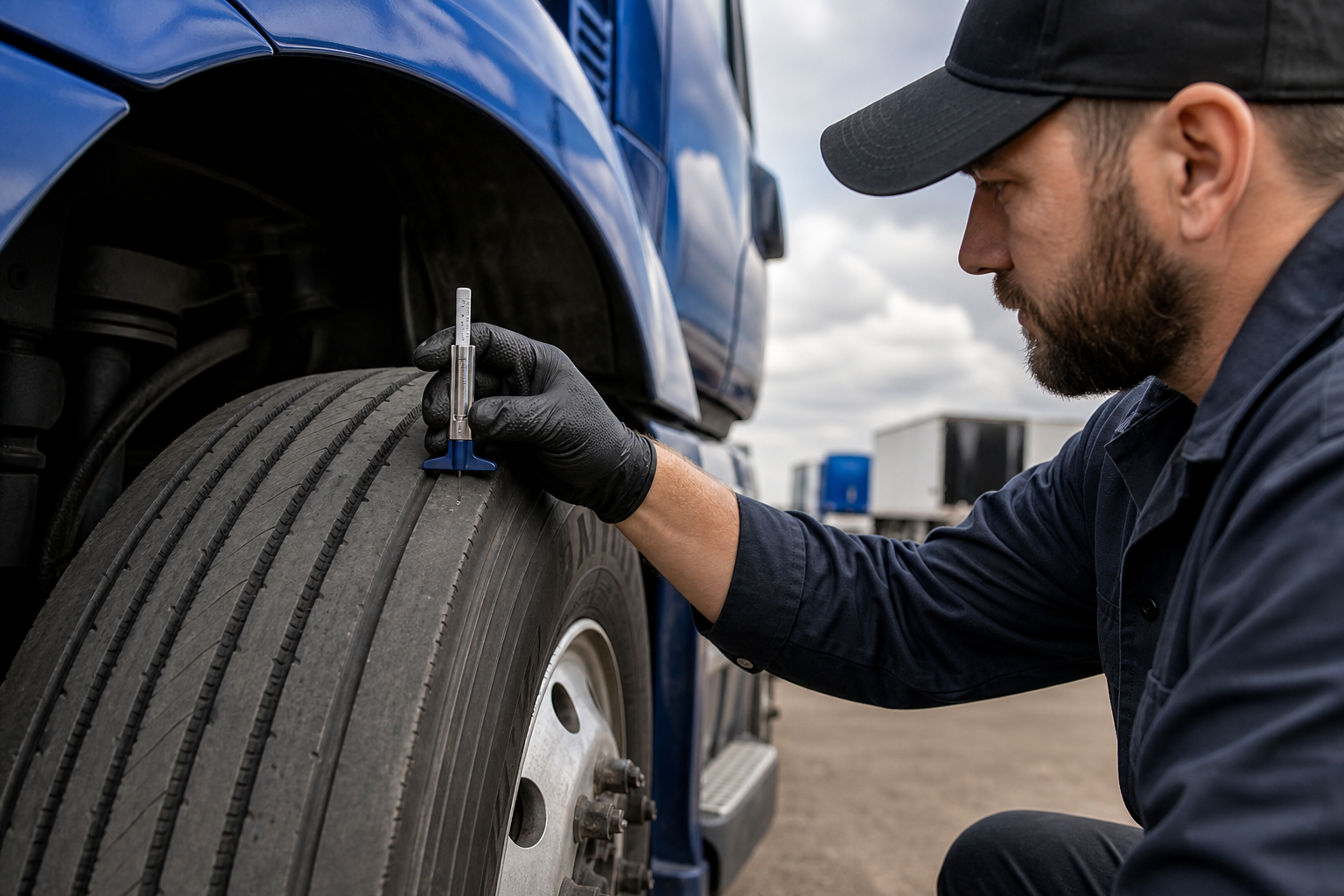
Hold the measuring tool so its probe points straight into the groove. Place the tool shoulders flat against the tread. The probe must reach the bottom of the groove while the tool stays perpendicular to the tread surface.
Push down until the probe stops. Lift the measuring tool without twisting it, then read the scale. Most truck measuring tools show 32nds of an inch. A reading of 4 means 4/32 inch. A reading of 3 means the tire is below the minimum for a steer tire.
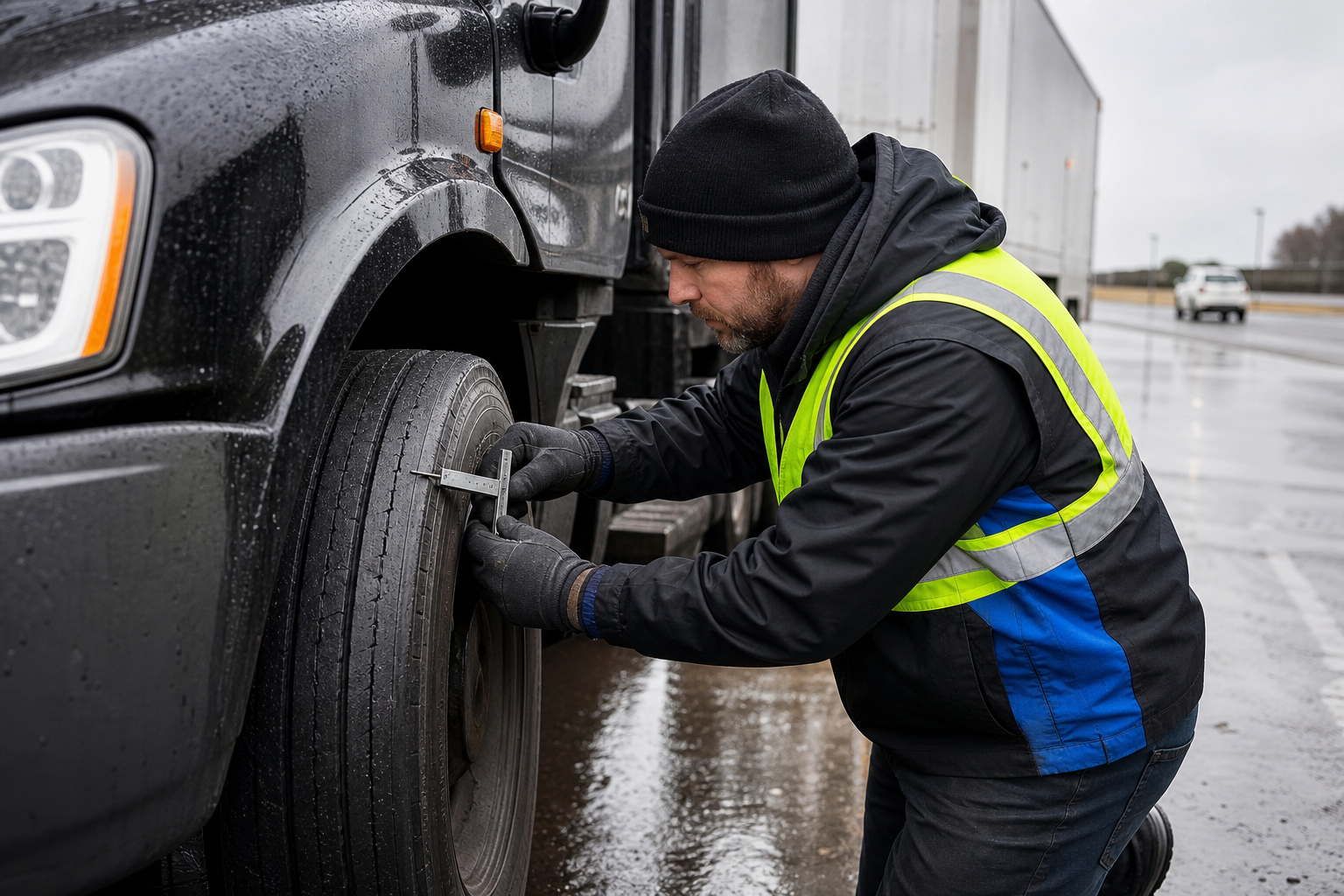
Measure across the tread at several points. A useful pattern is the outside edge, the center, and the inside edge near the top of the tire. Then repeat at other positions around the tire. If the tire sits on the ground, rotate the wheel or measure accessible points around the upper half.
For steer-tire tread inspection techniques , clean the groove, place the measuring tool straight, and record the lowest result.
Reading or condition | What we do next | Why it matters |
5/32 inch or more at all checked points | Keep the tire in service if its condition is sound | There is some tread above the minimum |
Exactly 4/32 inch | Flag it for close tracking and maintenance planning | It is at the legal floor for a steer tire |
Below 4/32 inch at any major groove point | Remove it from service before the next trip | It does not meet the steer-tire rule |
Uneven readings across the tread | Check alignment, pressure, suspension, and wheel condition | The wear pattern may point to a separate fault |
Don’t press the measuring tool on top of a stone ejector or wear bar. Move slightly along the same major groove until the probe reaches true tread rubber. That small detail can change the result.
Step 3: Use Quick Checks Carefully and Confirm the Result
A penny test can screen a tire, but it cannot replace a gauge for semi truck steer tire tread depth. We use it only when a gauge is not available.
Hold a penny with Lincoln’s head facing down. Insert it into a major groove. If the top of his head is visible, the tread may be near or below the limit. If part of his head is covered, the tire may have more tread than that rough test suggests.
The problem is scale. A penny does not show a precise 32nd-inch reading. It also won’t help us compare the inner edge with the center or reveal one shallow section around the tire. Dirt can hide the top of Lincoln’s head, too.
Use the penny as a reason to stop and get a proper reading. Don’t use coins, stickers, or a phone camera as your compliance record. A digital gauge can make the number easier to read, while another gauge works well when held straight.
We also check the sidewall and tread for defects. Tire safety involves more than depth. A tire with exposed belt material, a serious cut, separation, or an audible leak may be unsafe even when the tread reading looks acceptable.
Use the video as a visual reminder of where the gauge goes. Then confirm the result with your own measurements across the tire. If the readings disagree, use the lowest reliable reading and ask a qualified tire technician to inspect the tire.
Step 4: Interpret the Reading and Decide When the Tire Needs Attention
Yes, a reading below 4/32 inch means the steer tire needs service before the truck runs again. We also act sooner when the wear pattern or tire condition raises concern.
Tread gives water a path out of the contact area. As tread gets shallow, wet-road grip can fall. The tire may hydroplane sooner, which means it can ride on water instead of staying firmly on the road. Aquaplaning, also called hydroplaning , can reduce a driver’s control during rain.
Shallow tread isn’t the only concern. A tire can have enough depth but still show a bulge, sidewall cut, exposed cord, tread separation, or an air leak. We treat those signs as service issues, not cosmetic flaws.
Uneven wear also needs an answer. If the inner edge reads 4/32 and the center reads 7/32, the tire is still at the limit because the lowest point controls. We then ask what caused the difference. Possible checks include inflation pressure, alignment, suspension parts, and wheel balance.
Our safety threshold may sit above the legal floor when a fleet runs heavy loads, wet routes, or long highway legs. The exact replacement point belongs in the fleet maintenance program, which is the written plan for inspections and repairs. Waiting until a tire barely passes can leave little room for weather or an uneven wear pattern.
When a reading is close to the limit, we plan the replacement rather than gamble on the next route. The Tire Specialist provides mobile commercial tire service and on-site replacement, so fleet teams can address a tire issue where the truck is located.
Step 5: Build a Repeatable Inspection and Compliance Record
A repeatable record turns one tread check into a fleet maintenance program. We want the next driver or manager to see what was measured, where, and what action followed.
Inspect tires during every pre-trip check. Add a dee on a set schedule, such as a monthly review. A maintenance guide can help organize the process. Increase the review rate when a tire shows fast wear, when seasons change, or when a truck runs through rough sites.
For each tire, record:
Truck or unit ID.
Axle position and tire position.
Date and odometer reading.
Readings from the inner, center, and outer tread areas.
Damage found during the visual check.
Person who inspected it and the action assigned.
Use the lowest measurement as the decision point. Keep the gauge clean and compare it with a known reference when your shop process calls for tool checks. A consistent method matters more than switching between coins, stickers, and different gauges.
During a roadside inspection, poor tread can lead to a citation. If the condition falls below an applicable out-of-service threshold, the truck may be stopped until the issue is fixed. The Commercial Vehicle Safety Alliance publishes inspection and out-of-service guidance used during commercial vehicle checks, so we keep our records aligned with current fleet policy.
If your team finds a tire below the limit, don’t send the truck back into traffic. We can help arrange a mobile inspection, repair assessment, or on-site tire replacement through The Tire Specialist. That keeps the handoff clear for the driver and the maintenance desk.
Frequently Asked Questions
What is the minimum tread depth for semi truck steer tires?
The minimum for a semi truck steer tire is 4/32 of an inch in a major groove. The measurement must come from actual tread rubber, not a wear bar or stone ejector. If any checked point falls below 4/32 inch, we treat the tire as out of compliance and remove it from service before the next trip.
How do you measure steer tire tread depth?
Measure steer tire tread depth with a measuring tool held straight in a major groove. Press its shoulders flat against the tread, push the probe to the groove bottom, then read the scale in 32nds. Check several points across the tread and around the tire. The lowest accurate reading controls the decision.
Can I use a penny to check semi truck tire tread?
A penny can give a quick warning, but it cannot prove legal semi truck steer tire tread depth. Put Lincoln’s head down in a groove and look for the top of his head. If it shows, stop and use a suitable measuring tool. Coins don’t provide a precise reading or reveal uneven wear across the tire.
Do drive and trailer tires have the same tread rule?
Drive and trailer tires have a 2/32-inch federal minimum in a major groove, while steer tires require 4/32 inch. We don’t apply the drive-axle number to the front axle. Each tire also needs a visual check for leaks, exposed material, cuts, separation, and other defects.
When should a fleet replace a steer tire?
A fleet should replace a steer tire before the next trip when any major groove measures below 4/32 inch. We also schedule service sooner for exposed cords, sidewall damage, tread separation, air leaks, or severe uneven wear. Your maintenance policy may set a higher replacement point to leave room for wet roads and route demands.
Use a suitable measuring tool, measure several real groove points, and act on the lowest reading. For a below-limit tire or a reading you can’t trust, contact The Tire Specialist for mobile commercial tire help in the Dallas-Fort Worth area. A short inspection now can prevent a roadside delay later.


Comments