
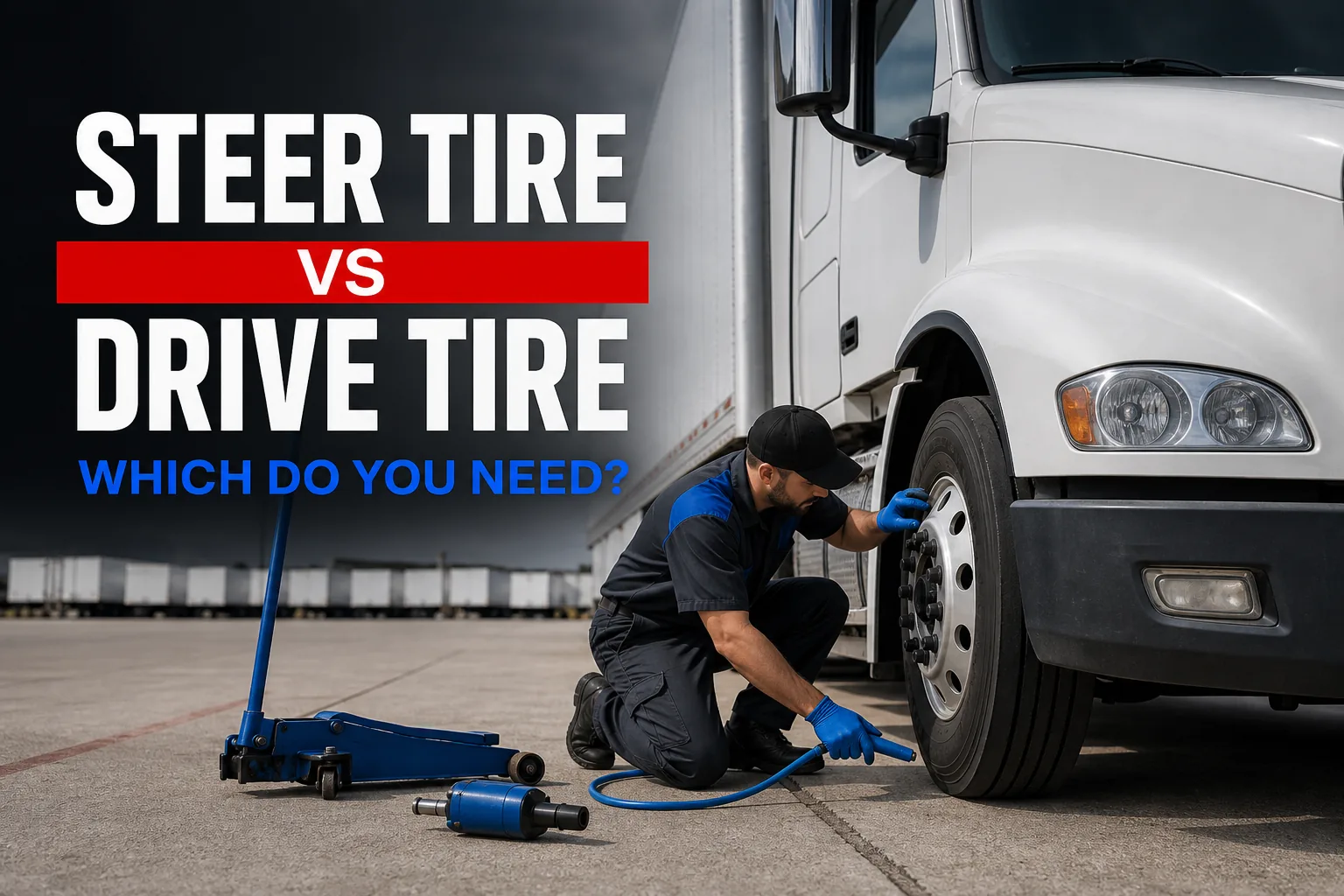
Steer Tire vs Drive Tire: Which Do You Need?
- 1 hour ago
- 9 min read
A steer tire and a drive tire may look similar at a glance, but they handle very different work. One guides the truck. The other puts engine power on the road. We’ll show you how to match each tire to its axle, load, route, and weather, then explain how The Tire Specialist helps reduce downtime with on-site commercial tire service.
Table of Contents
1. The Tire Specialist
Yes, the first step is to identify the tire position and the service plan. The Tire Specialist is a Dallas-Fort Worth mobile tire service company for commercial trucks and fleet vehicles. We provide on-site repair, replacement, and roadside assistance where the truck is stopped.
That matters when a flat tire blocks a tractor at a customer site or leaves a trailer on the shoulder. A tire shop may have the right tire, but your truck still has to reach the shop. Our mobile service brings the work to the vehicle, which can help a fleet manager protect a delivery window and avoid an extra tow.
We support semi-trucks, trailers, buses, and other fleet vehicles. We can inspect the failed tire, confirm the axle position, and help determine whether the unit needs repair or replacement. We’ll also give you a clear estimate before work begins, without discussing a tire choice based on tread alone.
For fleet managers, the service handoff matters as much as the tire specification. Give us the unit location, tire size, axle position, and problem you see. If you have the sidewall details, share those too. That information helps us prepare for on-site tire replacement instead of treating the breakdown as a guess-and-check job.
We also recommend that fleet teams keep a written commercial truck tire selection plan . It should note which tread type belongs on each axle and how your team handles worn casings, spares, and emergency service.
Our view is simple: the right tire protects control and traction, while mobile service protects uptime. You need both.
Step 2: Compare Tread Patterns for Control and Traction
Steer tire vs drive tire starts with the tread pattern . The front axle needs steady contact and predictable steering. The powered rear axle needs bite when torque reaches the pavement.
Steer tires use ribs for control
A steer tire normally has a straight ribbed tread. The ribs run around the tire and keep more rubber in steady contact with the road. That design supports precise steering and helps resist irregular wear.
The front tires also carry the steering forces from every turn. On a wet road, they meet standing water first. A steer tire therefore needs a tread and casing suited to directional control, wet-road handling, and the front axle’s load.
MICHELIN X LINE ENERGY Z is one example of a steer-position tire with a dual-compound tread design. The source material lists it for auto haulers, line haul, and regional work. It also lists a 700,000-mile mileage rating, but fleet results still depend on inflation, alignment, load, and route.
Drive tires use lugs for grip
A drive tire usually has a deeper, more open lug pattern. Its blocks form biting edges that help the truck move under engine torque. This matters when a loaded tractor pulls away from a stop or climbs a wet grade.
Drive tires also face repeated acceleration and braking forces. They often wear faster than steer tires because they do more power-transfer work. Highway routes may favor a closed-shoulder design. Regional routes with frequent stops may need more open tread for added grip.
MICHELIN X LINE ENERGY D+ is a drive-position example listed for long-haul and line-haul use. Its stated design focus combines low rolling resistance with traction. That trade-off is worth checking against your route. A highway fleet may value low rolling resistance more than a truck that spends each day on rough access roads.
A tire selection guide connects tread design with steering response, traction, wear, rolling efficiency, and durability. We use the same order when reviewing a fleet: start with the job, then choose the tread.
Keep dedicated tires in their intended positions
Do not place a drive tire on the steer axle simply because the size fits. The tread may not deliver the same steering feel or even wear. A steer tire placed on a drive axle may also lack the traction pattern needed to transfer power.
All-position tires can simplify inventory because one approved tread may work across more than one axle. The trade-off is performance. An all-position tire may not grip like a dedicated drive tire or steer as cleanly as a dedicated steer tire in demanding conditions.
Key Takeaway:Ribs support front-axle control. Lugs support rear-axle traction. Fitment must follow the axle job, not just the tire size.
Step 3: Match the Tire to Load, Route, and Weather
Yes, the best choice in a steer tire vs drive tire comparison depends on how the truck works. Axle position is the starting point. Load, road surface, distance, and weather finish the decision.
Start with the axle load
Confirm the tire size, load range, load index, and speed rating against the truck maker’s requirements. Never assume that a tire with the correct diameter can carry the required weight. The front axle may have a different load need than the drive axles, even on the same tractor.
Check the actual operating load too. A truck that runs empty between short local jobs faces a different pattern than one that pulls a full trailer over long highway runs. Record the heaviest normal load, not only the average day.
Then map the route
Use these route questions:
Does the truck stay on smooth interstate pavement?
Does it make repeated turns at docks and tight yards?
Does it travel gravel, construction access roads, or mixed pavement?
Does it face steep grades, frequent stops, or long steady runs?
Does it work through heavy rain, heat, or occasional snow?
Highway work often favors a steer tread that rolls smoothly and a drive tread that balances traction with low rolling resistance. Regional work may need more bite because the truck turns, brakes, and accelerates more often. A rough route can also punish sidewalls and shoulders, so casing strength and inspection habits deserve attention.
Steer tires need predictable handling in rain because they guide the vehicle into a wet surface first. Drive tires need grip under power and braking. Trailer tires have another job: they carry load while resisting scrub during tight turns.
Each tire type is designed for its matching axle position. Selection also considers weather, tire size, downtime, fuel efficiency, and mileage.
Fleet condition | Steer position | Drive position | Decision to make |
Long highway haul | Rib tread for stable contact | Drive tread with low rolling resistance | Prioritize steady wear and fuel use |
Regional stop-and-go | Strong steering response | More traction for repeated starts | Check shoulder and lug wear often |
Wet or changing weather | Water control and predictable handling | Grip during acceleration and braking | Replace worn tread before storms |
Rough access roads | Inspect sidewalls and shoulders | Choose a tread suited to the surface | Watch for cuts, chips, and impact damage |
Some listed Michelin steer and drive models carry the same 700,000-mile rating. That shows why a mileage number alone cannot decide the axle role. The route and tread job still control the fit.
When the route changes, review the tire plan with it. A highway tractor moved into regional work may need a different drive tread, even if its tire size stays the same.
Step 4: Check Fitment, Wear, and Replacement Safety
Steer tire vs drive tire decisions fail when teams inspect only the center tread. We check the full tire, then look for the vehicle issue that caused the wear.
Confirm the sidewall and axle data
Read the tire size, load information, position marking, and speed rating on the sidewall. Compare them with the truck records. Check dual-drive assemblies for matching inflation and compatible tire size.
Do not install a new tire beside a badly mismatched partner. Differences in diameter or inflation can make one tire work harder. Ask a qualified tire technician to confirm the pairing before the truck leaves.
Measure instead of guessing
Use a tread depth gauge. Look across the inner edge, center, and outer edge. Then inspect the full circumference as far as access allows.
Common patterns can point to a larger fault:
One-sided wear may point to alignment or axle geometry.
Feathered ribs may point to toe or lateral forces.
Flat spots may point to braking, balance, suspension, or pressure issues.
Center or shoulder wear may point to incorrect inflation or a mechanical fault.
Replacing the tire without fixing the cause may repeat the same wear on the replacement. That turns a tire problem into a maintenance loop.
Federal rules and fleet policies can use different tread thresholds by position. Measure the tire against the current requirement for that vehicle and axle. A damaged sidewall, exposed cord, bulge, separation, or repeated air loss calls for immediate service, regardless of tread depth.
Our team at The Tire Specialist can inspect a commercial tire at the truck’s location. That helps a fleet manager make the repair decision without moving a potentially unsafe unit through traffic.
Pro Tip:Record the lowest tread reading, not the best reading. The lowest point usually controls the next service decision.
Step 5: Use the Steer-versus-Drive Checklist Before You Buy or Call
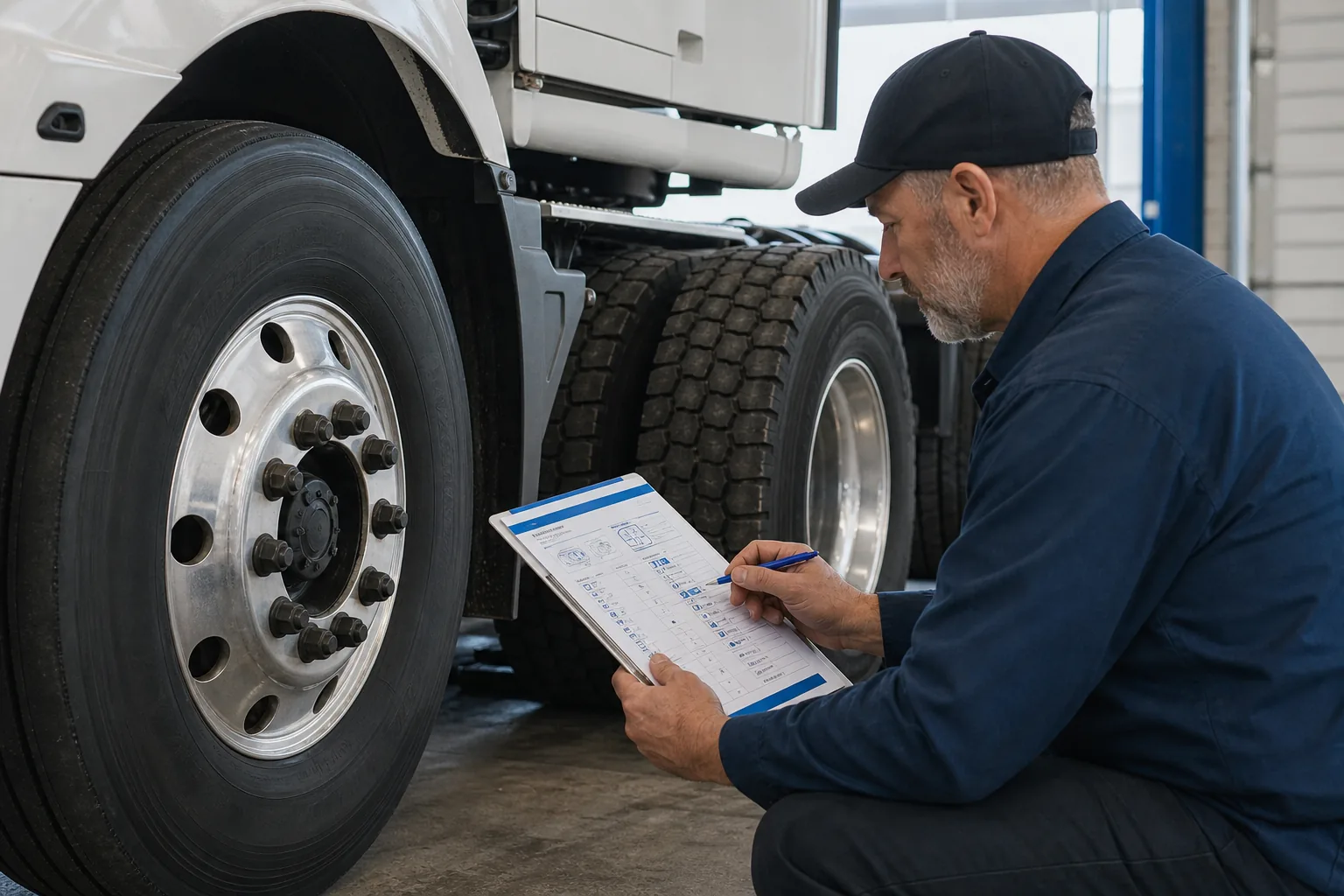
It’s simple: answer the same questions for every tire request. A short checklist keeps a rushed replacement from becoming a poor axle match.
Which axle needs the tire?Mark steer, drive, or trailer. If the answer is unclear, stop and verify it.
What size and load rating does the truck require?Read the sidewall and compare it with the vehicle record.
What work does the unit perform?Note long haul, regional delivery, yard work, or mixed routes.
What surface does it see?Record highway pavement, wet roads, gravel, construction access, or frequent dock turns.
What caused the removal?Separate normal wear from a puncture, alignment issue, pressure loss, impact, or sidewall damage.
What is the replacement plan?Decide whether the unit needs one tire, a matched pair, or a wider axle review.
Where is the truck now?A precise location helps us plan mobile service and reduce delay.
For pressure, use the tire maker’s load chart and the truck maker’s guidance. The correct pressure depends on size, axle weight, and configuration. More air is not automatically safer.
Keep the inspection record with the unit number, axle position, tread readings, pressure reading, damage notes, and assigned action. That record helps the next driver, shop lead, or fleet manager see what changed.
Our semi-truck tire pressure guide explains why steer and drive positions may need different inflation settings. Use it as a quick reference, then confirm the exact requirement for your tire and load.
If the truck is down in the DFW area, send The Tire Specialist the checklist details with the unit location. We can help assess whether the need is a flat repair, tire replacement, or inspection before the vehicle returns to work.
FAQ
What is the difference between a steer tire and a drive tire?
A steer tire guides the truck from the front axle, while a drive tire transfers engine power at the rear axle. Steer tires usually use ribbed tread for stable contact and precise control. Drive tires usually use deeper lugged tread for traction under torque. The two positions also face different wear forces, so they should not be swapped without approval.
Can you put a drive tire on the steer axle?
You generally should not put a drive tire on the steer axle unless it is specifically approved for that use. The front axle needs a tire built for steering forces and its required load. A poorly matched tire can affect handling and wear. Check the sidewall marking and vehicle guidance before any replacement.
Are steer tires more important than drive tires?
Neither position is optional, but steer tires directly affect directional control. Drive tires provide the traction needed to move and stop a loaded truck. A steer tire with poor contact can make handling unpredictable. A worn drive tire can spin or lose grip. We inspect both positions by their actual job.
Can all-position tires replace steer and drive tires?
All-position tires can work across approved axle positions, but they may give up some specialized performance. They can simplify fleet inventory when conditions are moderate. A dedicated steer tire may control better up front, while a dedicated drive tire may grip better under heavy torque. Confirm approval for each axle before fitting one.
When should a commercial truck tire be replaced?
A commercial truck tire should be replaced when it reaches the applicable tread limit or shows unsafe damage. Exposed cords, sidewall bulges, separation, severe cuts, or repeated air loss need prompt attention. Uneven wear also calls for a cause check. We recommend measuring the tire and recording the lowest reading before deciding.
Can The Tire Specialist replace a tire at the roadside?
Yes, The Tire Specialist provides mobile commercial tire repair and replacement in the Dallas-Fort Worth area. We work on-site for commercial trucks and fleet vehicles, which can help avoid moving a disabled unit to a shop. Share the truck location, tire details, and axle position so we can plan the right response.
Conclusion
Choose a ribbed steer tire for front-axle control and a traction-focused drive tire for powered axles. Before buying, confirm the load, route, weather, and wear cause. If a truck is already down in DFW, send The Tire Specialist the unit details and location so we can help plan on-site service and get your fleet moving again.

Comments