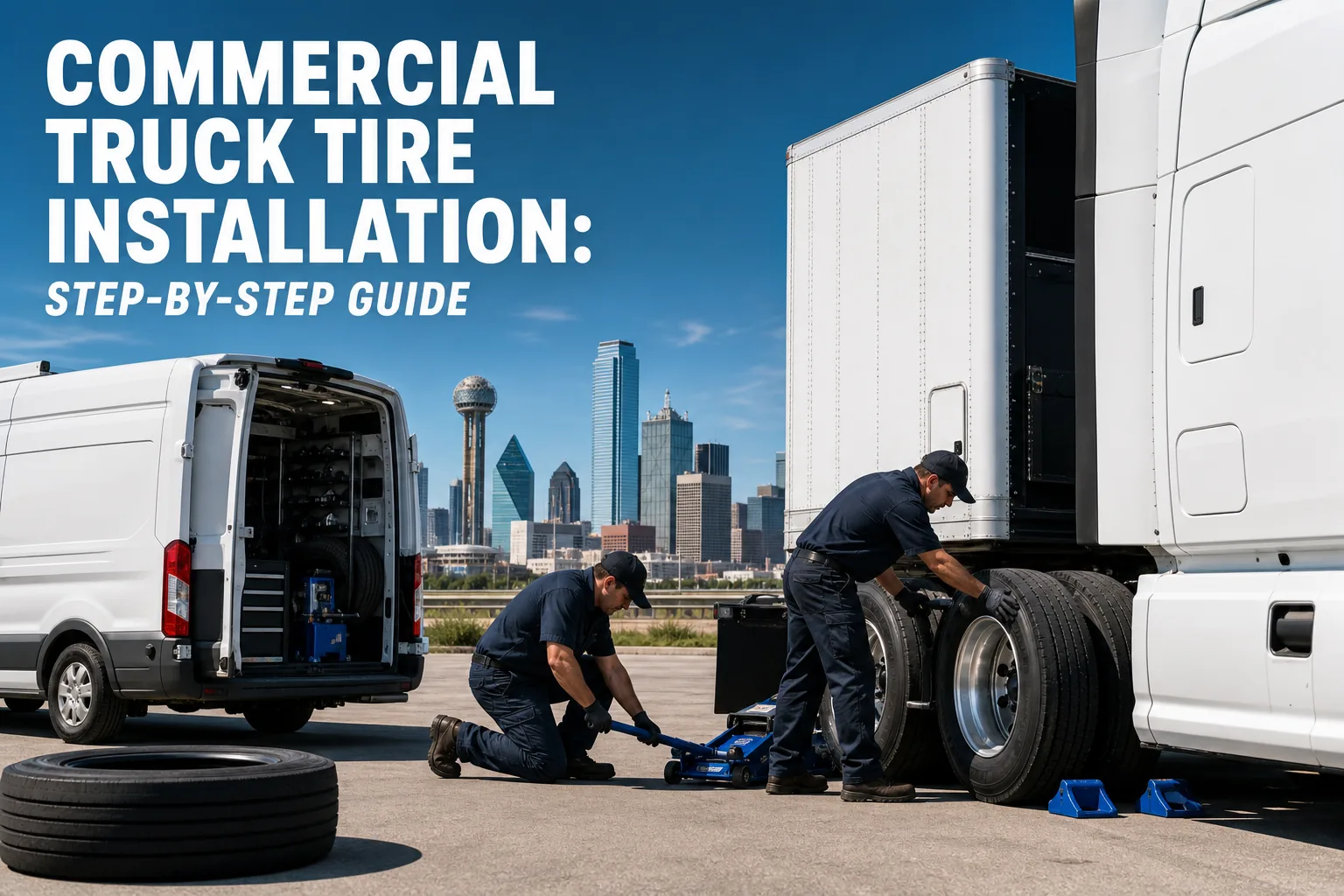
Commercial Truck Tire Installation: Step-by-Step Guide
Your fleet can’t wait for a flat to ruin a schedule. We walk you through every move needed to get a commercial truck back on the road fast and safe. Below are the exact steps we use on every job.
Table of Contents
Step 1: Confirm the Truck, Tire, and Installation Requirements
First, pull the truck’s VIN and match it to the tire spec sheet. The sheet lists the correct size, load index, and speed rating. If the numbers don’t line up, the tire could fail under load.
Next, read the sidewall markings . They give you the DOT code, load range, and cold inflation pressure. Double-check the numbers yourself. A sidewall guide breaks down each code in plain terms.
We also verify that the rim width matches the tire’s recommended range. A rim that’s too narrow can crush the bead; too wide can cause uneven wear.
Before any lift, we confirm the truck’s axle rating and the intended duty cycle. Heavy‑haul routes need a higher load index than city delivery runs.
Need to know when a repair is better than a replace? Can a Commercial Truck Tire Be Repaired, or Should It Be Replaced? gives the decision flow we follow.
Key Takeaway:Matching the exact size, load index, and rim width prevents premature wear and costly downtime.
Step 2: Secure the Truck and Prepare the Work Area
Park the truck on a level surface. Engage the parking brake and turn off the engine. Place wheel chocks in front of the front wheels and behind the rear wheels to stop any movement.
Our chocks are made of heavy‑duty polyurethane, which resists oil, chemicals, and extreme weather. The design meets DOT safety standards, so you know they’ll hold even on a loaded axle. Purpose-built wheel chocks are a common industry choice for this reason.
Set up a safety cone perimeter around the vehicle. This warns other drivers and keeps tools from rolling into traffic.
Make sure you have the right lifting equipment. A hydraulic floor jack that matches the truck’s lift points is essential. Never use a jack that can’t reach the center of the axle.
Looking for air‑loss clues? Why Does My Commercial Truck Tire Keep Losing Air? explains the most common culprits we inspect before we lift.
Step 3: Remove the Wheel and Install the Replacement Tire
Start by loosening the lug nuts with a breaker bar while the wheel is still on the ground. Turn them counter‑clockwise just enough to break the seal.
Raise the truck with the floor jack until the wheel clears the ground. Support the axle with a jack stand before you fully trust the load.
Remove the lug nuts fully and pull the wheel straight off. Watch for any stuck studs; a gentle tap with a hammer can free them.
Inspect the hub and brake components for damage. If you see cracks or excessive wear, note them for the follow‑up inspection.
Slide the new tire onto the hub, align the bolt pattern, and hand‑tighten the lug nuts in a star pattern. This prevents the wheel from sitting crooked.
We recommend a quick safety briefing for any crew member who will be near the lift.
Pro Tip:Keep a torque wrench calibrated on‑site. An out‑of‑spec wrench can over‑tighten and strip threads.
Step 4: Inflate, Mount, Torque, and Balance the Assembly
First, check the tire’s recommended cold inflation pressure on the sidewall. Use a digital gauge for accuracy.
Inflate the tire to the exact pressure. Over‑inflating can cause a harsh ride; under‑inflating leads to excess heat and wear.
Once the pressure is set, use a calibrated torque wrench to tighten each lug nut to the manufacturer’s spec. For most commercial tires this falls between 120‑140 ft‑lb, but always follow the exact figure on the wheel’s data plate.
After torquing, spin the wheel to check for wobble. If you notice vibration, send the assembly to a balancer. Proper balancing spreads the load evenly and extends tire life.
Our fleet partners often ask how to track balance data. Texas Commercial Tire’s fleet program logs each balance reading in a cloud portal, giving managers a clear view of tire health.
Step 5: Complete the Final Inspection and Fleet Handoff
Do a visual walk‑around. Look for any debris, correct lug nut torque, and confirm the tire pressure matches the spec.
Run a short test drive if the schedule allows. Listen for unusual noises and check that the steering feels straight.
Document the job in your fleet management system. Record tire serial number, installation date, pressure, and torque values. This data helps plan future rotations and predicts wear.
When the paperwork is done, hand the service report to the fleet manager. They can file it with the rest of the vehicle’s maintenance log.
Want to see why 24‑hour service matters for fleets? Advantages of 24‑Hour Commercial Tire Services and Emergency Tire Repair Services explains the uptime boost.
FAQ
What is the first thing to check before installing a new truck tire?
The first thing is to verify the tire size, load index, and rim compatibility against the vehicle’s spec sheet. Matching these numbers prevents fit issues and unsafe operation.
How long does a full commercial truck tire installation take?
A typical on‑site install runs about 45‑60 minutes from lift to final torque check, assuming the wheel and hub are in good condition.
Do I need special tools for torqueing lug nuts on a truck?
Yes, you need a calibrated torque wrench that can reach the higher foot‑pound values used on heavy‑duty wheels. Using a regular ratchet can over‑tighten or under‑tighten the nuts.
Can someone install a tire without being a certified technician?
No, commercial truck tire work should be handled by a trained technician.
What should I do if a tire shows damage after installation?
If you notice cuts, sidewall bulges, or bead damage, stop the vehicle and have the tire inspected immediately. Continuing to drive can cause a blowout and jeopardize safety.
How often should I rotate my fleet’s tires?
Rotate tires according to load patterns and the vehicle’s maintenance guidance.
Keeping your trucks rolling smoothly starts with a solid installation process. Follow these steps on every job, and you’ll cut downtime and protect your drivers.
Ready to get your fleet back on the road? Best Commercial Truck Tire Repair in Dallas (2026) shows how our mobile team can handle any size job, day or night.
Ready to put this into practice? The Tire Specialist was built for exactly this.


Comments