.png)
How to Manage Truck Fleet Maintenance Efficiently
Your trucks lose money when they sit idle. The key is to keep them on the road with a solid maintenance routine. Below you’ll find five clear steps that get the job done.
Step 1: Set Up a Preventive Maintenance Schedule
First, map out a calendar that tells each truck when to get oil changes, filter swaps, and major checks. A schedule removes guesswork and spreads work out so you never have a surprise breakdown.
We recommend starting with the fleet maintenance programs guide from The Tire Specialist. It walks you through building a calendar that matches your trucks’ mileage and usage patterns.
Next, pull the manufacturer’s service booklet for each model. Those booklets list the exact mileage or hours between each service. Plug those numbers into a spreadsheet or a fleet‑management app. The result is a master schedule that flags upcoming tasks weeks in advance.
Make sure the schedule includes seasonal items, like coolant flushes before summer heat and battery checks before winter. Seasonal tweaks keep engines happy when the weather pushes them hard.
Finally, assign responsibility. One person should own the calendar, send reminders, and confirm completion. When the owner knows who to call, the process stays smooth.
Key Takeaway:A written, mileage‑based calendar stops emergency calls before they happen.
For background on why preventive work matters, see Wikipedia’s preventive maintenance page . It explains how regular checks lower wear and extend vehicle life.

Step 2: Conduct Regular Inspections
Inspections are the front line of safety. Drivers should do a quick walk‑around before each shift and a deeper check in practice.
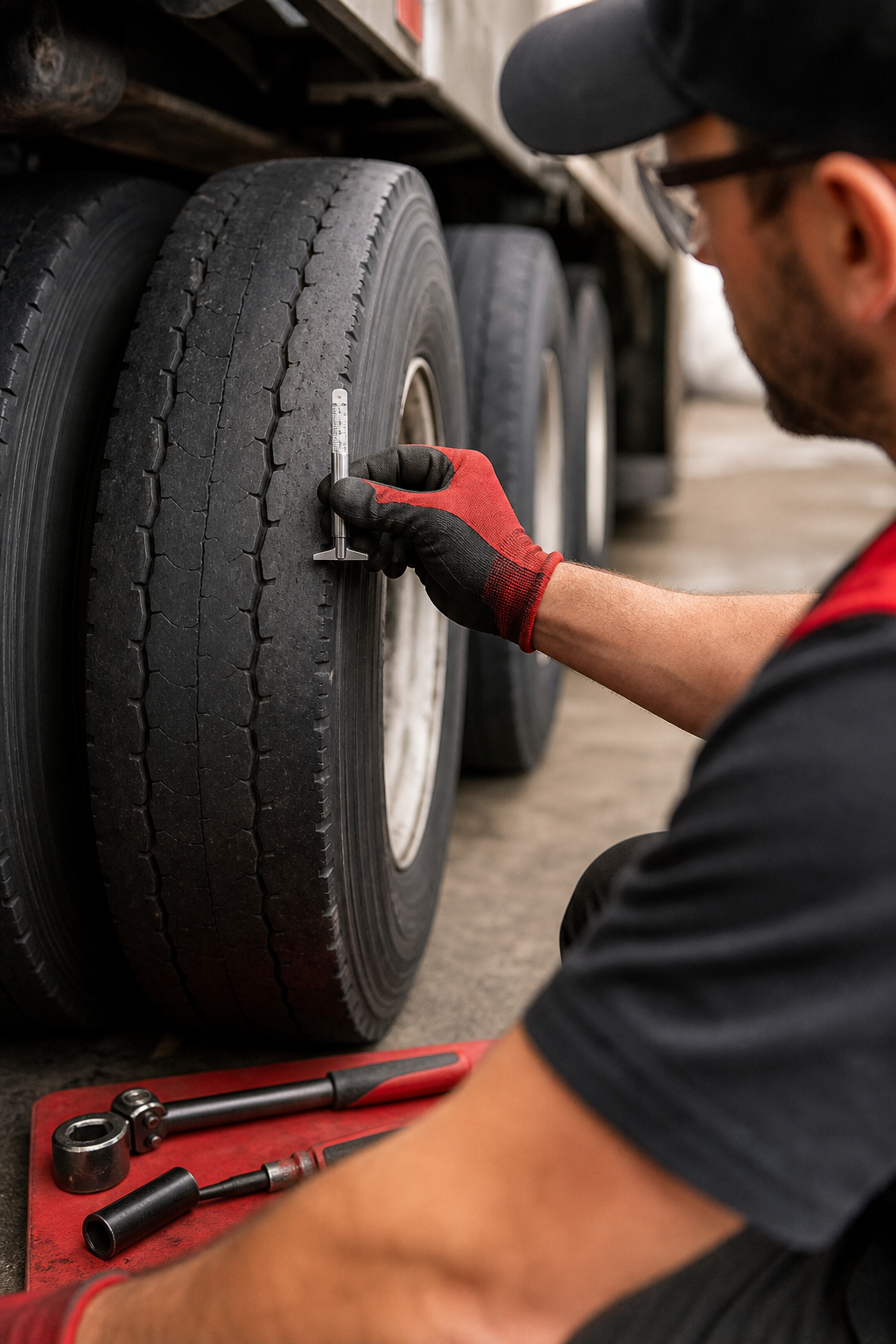
A pre‑trip walk looks for tire pressure, tread depth, lug nuts, lights, and any visible damage. A post‑trip check logs anything that changed during the day, like a cracked hose or a worn brake pad.
According to FMCSA data , vehicle‑related issues cause about 10‑12% of large‑truck crashes. Most of those issues are caught early with a solid inspection routine.
Use a simple checklist that groups items into brakes, tires, lights, fluid levels, and cab safety. When drivers tick each box, the data can be entered into a digital log. Digital logs timestamp each entry, making it easy to spot patterns.
Review the logs weekly. If a specific truck shows repeated brake wear, schedule a brake system overhaul before it fails on the road.
Pro Tip:Train drivers to note the exact mileage when they log a defect. That number helps you predict when the same issue might pop up on another truck.
Step 3: Manage Tire Care and Rotations
Tires are the only contact point between your fleet and the road. Keeping them healthy saves fuel, reduces wear, and prevents blowouts.
Start with a weekly pressure check. Under‑inflated tires wear the edges fast and raise fuel use. Over‑inflated ones can crack the sidewall.
Rotate tires every 6,000, 8,000 miles. Rotation evens out wear across all four corners, extending overall tread life. When you rotate, also inspect each tread for cuts, bulges, or uneven wear patterns.
Our commercial tire buying tips article explains how to choose the right tread pattern for your routes. The same principles guide maintenance, highway‑focused tires need less aggressive rotation than all‑terrain models.
Balance and alignment checks should follow each rotation. Mis‑alignment can cause one side of the tread to wear faster, shaving hundreds of miles off the tire’s useful life.
When a tire shows a nail or puncture, act fast. Small holes can be patched, but a cut that reaches the cords means replacement.
Step 4: Keep Detailed Maintenance Records
Every service, inspection, and repair belongs in a central log. Records let you see the big picture, how often a truck needs brake work, which tires wear fastest, and where costs are climbing.
Use a cloud‑based system that tags each entry with the truck’s VIN, mileage, and service type. The system should generate a PDF report each month so you can share it with finance or compliance teams.When you review the reports, look for trends. If three trucks all need brake pads at 40,000 miles, you might adjust the brake‑service interval to 35,000 miles and avoid premature failures.
Regulators require you to keep DVIR records for a set period. A digital log satisfies that rule without a mountain of paperwork.
Make the log accessible to drivers, mechanics, and managers. When a driver spots a problem, they can add a note right away, and the mechanic sees it before the truck reaches the shop.
Step 5: Use Mobile Services for Quick Repairs
Even the best schedule can’t stop every flat or sudden failure. That’s where a mobile tire service shines.
The Tire Specialist offers on‑site repair, replacement, and roadside assistance for commercial trucks in the Dallas‑Fort Worth area. Their 24/7 crew can patch a tire, replace a wheel, or jump‑start a battery without a tow.
Because the service comes to you, drivers stay on the road and deliveries stay on schedule. The crew also fills out a service record on the spot, feeding the data straight into your maintenance log.
Mobile teams can perform minor engine checks, replace filters, and even handle brake inspections if you need a quick fix between scheduled shop visits.
When you pair a mobile provider with a solid schedule, you cut downtime dramatically. A driver who gets a flat at 3 am still gets back on the road within an hour, instead of waiting for a shop to open.
FAQ
What is truck fleet maintenance?
Truck fleet maintenance is the routine work that keeps all vehicles in a fleet running safely and efficiently. It includes scheduled services, daily inspections, tire care, record keeping, and quick‑response repairs.
How often should preventive maintenance be scheduled?
Most manufacturers recommend oil changes every 5,000, 7,500 miles and filter swaps at similar intervals. Adjust the calendar based on your trucks’ mileage, load, and operating environment to avoid over‑ or under‑servicing.
What should a pre‑trip inspection cover?
A pre‑trip inspection checks tire pressure, tread depth, lug nuts, lights, brakes, fluid levels, and visible damage. It also verifies that the driver’s safety equipment, seatbelts, mirrors, and fire extinguisher, is in good shape.
How can I track maintenance records efficiently?
Use a cloud‑based fleet‑management platform that lets you log each service with VIN, mileage, and notes. The platform should generate monthly reports and support DVIR compliance.
Why use a mobile tire service for my fleet?
A mobile service brings repairs to the truck, eliminating tow time and keeping deliveries on schedule. It also provides on‑site documentation that feeds directly into your maintenance records.
Can better maintenance reduce downtime?
Yes, regular inspections and timely repairs catch issues before they cause breakdowns. Studies show that proactive maintenance can cut unplanned downtime by up to 30%.
For more ideas on keeping your trucks rolling, check out our essential strategies to avoid costly roadside breakdowns . Start building your schedule today and watch downtime shrink.



Comments