Top 5 Signs You Need New Truck Tires
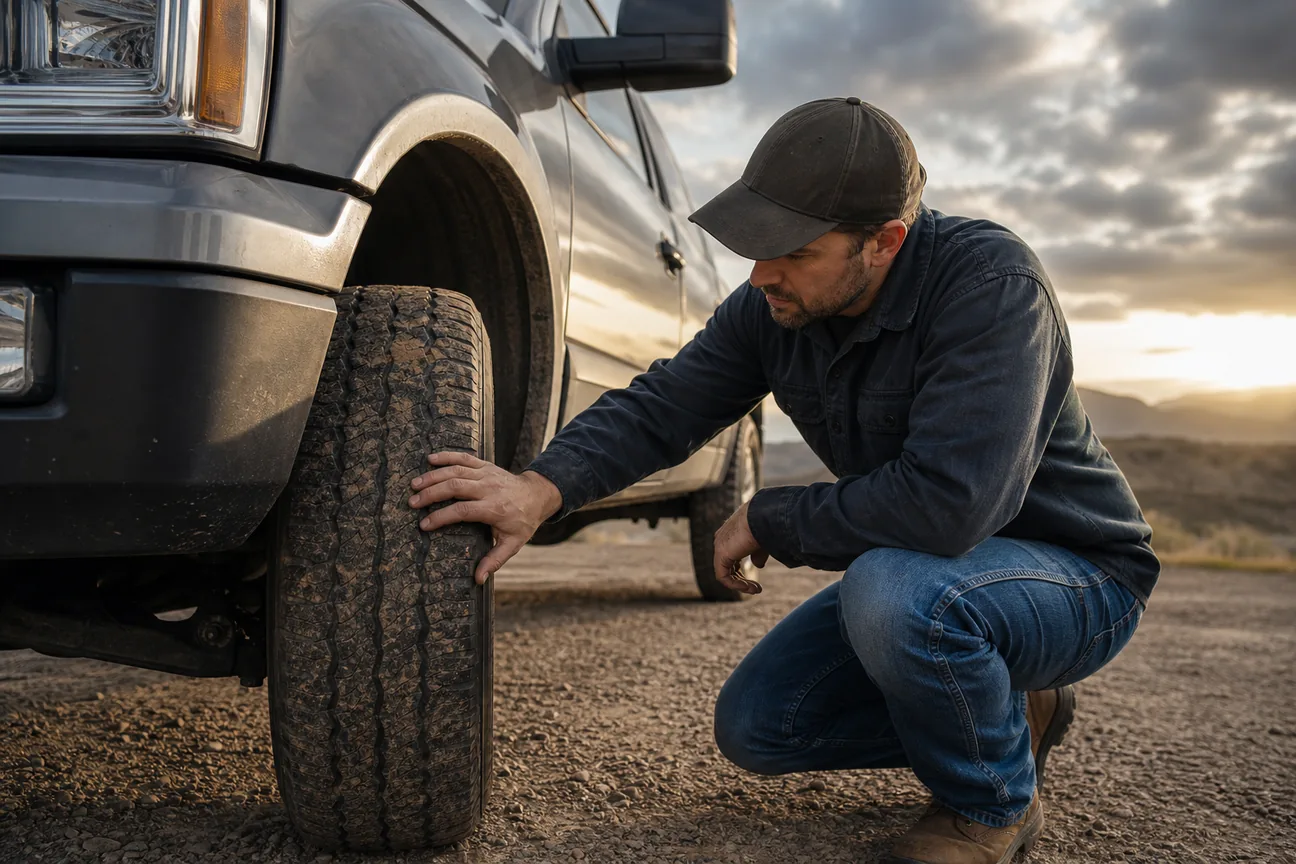
We know a flat tire can halt a whole route. Spot the clues early and you stay moving. Below are the five signs that tell you it’s time for new truck tires.
Table of Contents
Who to Call: The Tire Specialist
The Tire Specialist is a Dallas‑Fort Worth mobile tire service that comes to your yard, depot or roadside. We handle on‑site repair, replacement and emergency assistance for commercial trucks and fleets. Because we come to you, your trucks spend less time off the road.
We’re best for fleets that can’t afford a shop visit and need fast, reliable service. When to Replace Truck Tires: Essential Guide for Fleet Safety walks you through the routine checks that prevent surprise failures.
If a tire shows any of the signs below, call us and we’ll be there.
1. Center Wear — Tread Worn More in the Middle
Center wear looks like a shallow groove across the middle of the tread while the shoulders stay deeper. It usually means the tire is over‑inflated or the load is too high for the pressure you’re running.
Over‑inflation squeezes the tire’s contact patch, so the center bears the brunt of the road. The result is faster wear right in the middle. If you ignore it, you lose traction and the tire can overheat.
Inspect the tread regularly and compare the depth at the center versus the shoulders. When the center reads at least two‑thirds of the shoulder depth, it’s time to adjust pressure or replace the tire. Center wear can be linked to overinflation, load, or application conditions.
And a quick fix is to drop the pressure to the manufacturer’s recommended PSI for your load. If the wear continues, rotate or replace the tire.
For more on checking tread depth, see Minimum Tread Depth for Truck Tires: How to Check . That helps you gauge when the center wear reaches a risky level.
Over‑inflated tires give you a smooth center but a shorter, riskier life span.
2. Outer‑Edge or Shoulder Wear — Tread Wearing Away at the Sides
When the outer edges or shoulders wear faster than the middle, the tire is under‑inflated or the axle is misaligned. You’ll see a thin strip of tread missing on the inside or outside edge.
This pattern often shows up on trailer axles that carry uneven loads. The tire squishes more on the side that bears the extra weight, so the rubber erodes quicker.
Check the pressure when the tires are cold and compare it to the load chart on the sidewall. If the pressure is low, add air. If it’s correct, have a mechanic look at the alignment.
One‑sided shoulder wear is a red flag for an alignment issue. Fix the geometry before you replace the tire, or you’ll keep buying new ones.
And if you notice the wear on only one side of a pair, rotate the tires to balance the load.
3. Cupping or Scalloping — Repeating High and Low Tread Spots
Cupping looks like a series of small hills and valleys across the tread. Scalloping is a deeper, wave‑like pattern. Both point to suspension or shock problems.
When a shock can’t control the tire’s bounce, each bounce leaves a little dent. Over time those dents become a wavy surface that feels uneven under the hand.
Drivers may hear a rhythmic thump on the road or feel vibration in the cab. That vibration is the tire’s response to the uneven surface it’s creating.
Before swapping the tire, inspect shocks, bushings and wheel bearings. Replacing a tire without fixing the root cause just repeats the problem.
According to FreightWaves , cupping often signals worn shocks or loose wheel‑end components. Address those first for a lasting fix.
Pro Tip:Keep a simple log of any vibration you feel. Match the date and location to see if a particular route or load triggers the cupping.
Bottom line: cupping means something in the suspension is out of whack. Fix it, then replace the tire.
4. Feathering or Diagonal Wear — Tread Blocks Wearing at an Angle
Feathering shows up as tread blocks that feel sharp on one side and smooth on the other, often at a diagonal angle. The pattern points to toe‑alignment issues.
When the wheels are slightly out of line, the tire scrapes sideways instead of rolling straight. That scraping shaves off a thin layer on one side of each block.
It’s common on steer tires that pull the truck to one side. If you notice feathering, have the alignment checked and adjust the toe angle.
Sometimes the cause is a worn tie‑rod or bushing. Replacing those parts restores proper steering geometry and stops the feathering.
And don’t just rotate the tires to hide the pattern, rotation won’t fix the underlying misalignment.
Feathering tells you the wheels need a proper alignment check before you buy new tires.
5. Visible Tire Damage — Bulges, Cracks, or Exposed Cords
Bulges, cracks and exposed cords are the most urgent signs. A bulge means the internal steel cords have broken and the sidewall is swelling.
Cracks often start as fine spider‑web lines and grow deeper with heat and ozone exposure. Once a crack reaches the cord layer, the tire can blow out.
Exposed cords happen when the rubber tears away, leaving the steel visible. That tire has lost structural integrity and must be replaced immediately.
These defects cannot be repaired safely. Even a small patch won’t restore the tire’s strength under heavy loads.
And because these issues can happen without warning, schedule regular visual inspections, especially after long hauls or rough roads.
Bottom line: visible damage is a clear call for immediate replacement.
How to Choose the Right Service
Look for mobile response, time is money.
Ask about technician training and whether they stock your tire sizes.
Check reviews for on‑site repairs versus shop‑only services.
If a provider ticks those boxes, you’ll get the tire back on the road fast and stay safe.
FAQ: Signs You Need New Truck Tires
What tread depth means it’s time to replace a tire?
The direct answer: 4/32 of an inch on steer tires and 3/32 on drive or trailer tires. Below those numbers, grip drops and the risk of a blowout rises sharply.
Can I repair a tire with a sidewall bulge?
No, you cannot safely repair a sidewall bulge. The bulge shows internal cord damage, and any patch will fail under load.
How often should I check tire pressure?
Check pressure before each shift and again after long hauls. Cold‑inflated readings give the most accurate picture.
Is feathering a sign I need new tires?
Feathering itself doesn’t demand a new tire, but it signals alignment problems. Fix the alignment first; otherwise new tires will wear the same way.
What causes cupping and how can I prevent it?
Cupping is caused by worn shocks or loose wheel‑end parts. Regular suspension inspections and timely shock replacement keep cupping at bay.
Conclusion
When any of these five signs appear, act fast and call The Tire Specialist for on‑site replacement. Keeping your fleet rolling starts with catching tire trouble early.
Key Takeaway:Any bulge, crack or exposed cord means the tire must be replaced right away; never attempt a patch.


Comments